A stiff neck after long hours at a desk, a shoulder that never quite settles after tennis, or recurring lower-back tightness can make ordinary movement feel guarded. Tuina massage is a hands-on Traditional Chinese Medicine treatment that is often used to address these patterns with more purpose than a general relaxation massage. The focus is on how your body moves, where tension is held, and what may be contributing to ongoing discomfort.
At Y TCM Clinic, Tuina is approached as personalized therapeutic care. A licensed TCM physician or experienced therapist considers your symptoms, health history, daily habits, and treatment goals before selecting techniques and pressure. This allows care to be adapted for an active adult recovering from a strain, an office worker with postural tension, or someone seeking supportive treatment alongside a broader TCM plan.
What Is Tuina Massage?
Tuina, also written as Tui Na, is a traditional Chinese manual therapy. Its name refers to pushing and grasping, but treatment can also include kneading, rolling, pressing, stretching, mobilization, and rhythmic tapping. Practitioners use these techniques along muscles, joints, soft tissues, and meridian pathways according to TCM principles.
Unlike a spa-style massage designed mainly for relaxation, tuina massage is usually more assessment-led and goal-oriented. A session may concentrate on one area, such as the neck and upper back, or work across related regions that influence the concern. For example, hip stiffness and prolonged sitting may be relevant when someone experiences recurring low-back tension.
Pressure does not need to be intense to be effective. Some people benefit from firmer work on dense muscle tension, while others require a gentler approach because of sensitivity, fatigue, age, or an acute injury. The appropriate method depends on the person and the stage of their condition.
How Tuina Massage May Support Recovery
From a TCM perspective, Tuina aims to encourage the smooth flow of Qi and blood, ease areas of stagnation, and restore a more balanced relationship between the body’s systems. In practical terms, patients commonly seek it for muscle tightness, restricted movement, aches related to posture, and recovery support after physical activity.
Manual treatment may help relax guarded muscles and improve a sense of ease around a joint. When movement has become limited by tightness or discomfort, a carefully selected combination of soft-tissue work and gentle mobilization can support better range of motion. It can also be a useful part of an overall plan that includes acupuncture, herbal medicine, home care, or movement guidance when clinically appropriate.
Results vary. A recent overuse strain may respond differently from discomfort that has built up over years of desk work, poor sleep, and reduced activity. Some people feel looser after one session, while others need a series of treatments and changes to their daily routine before progress becomes more noticeable. Responsible care means setting expectations based on your condition rather than promising a fixed result.
Common reasons people consider Tuina
Tuina may be considered for neck and shoulder tension, upper- and lower-back discomfort, muscle soreness, sports-related overuse, headaches associated with muscular tension, and stiffness that affects everyday movement. Some patients also choose it when stress shows up physically through jaw clenching, shallow breathing, or persistent tightness around the shoulders.
It is not limited to pain concerns. In TCM, manual therapy may also form part of supportive care for fatigue, sleep disruption, or a feeling of general bodily tension. The treatment plan should remain individualized, particularly where symptoms are recurrent or accompanied by other health concerns.
What Happens During a Tuina Massage Appointment?
A good Tuina session begins before hands-on treatment. Your practitioner should ask about the location and nature of your discomfort, when it began, what aggravates or relieves it, and whether you have had injuries, surgeries, or relevant medical diagnoses. They may observe posture, test comfortable movement, and feel for areas of tension or tenderness.
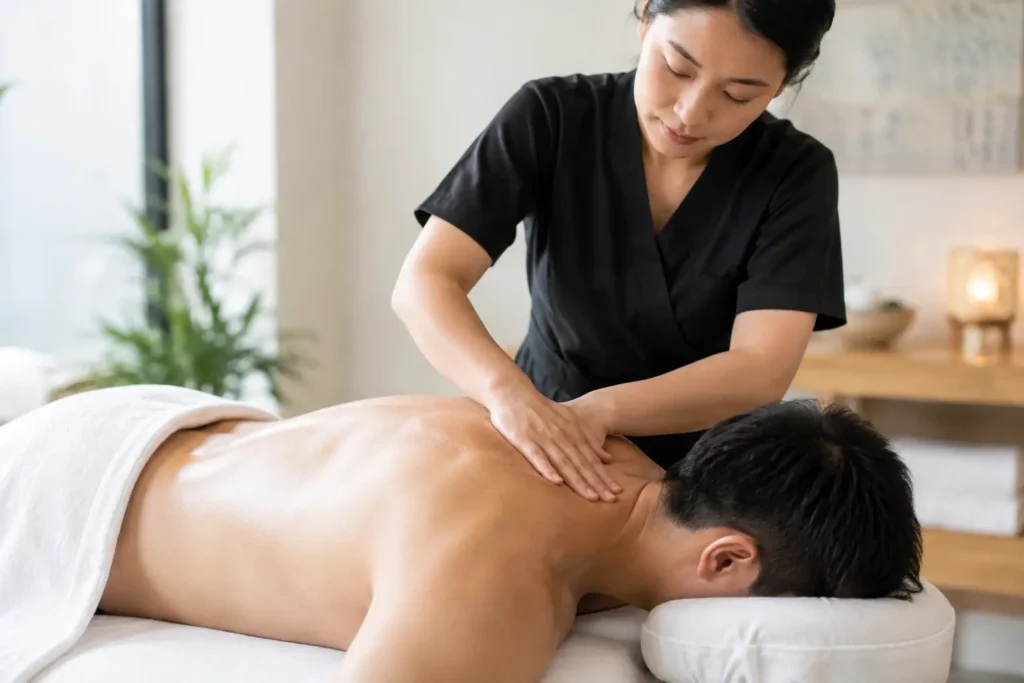
Treatment is typically performed through comfortable clothing or with appropriate draping, depending on the area being treated and the clinic’s protocol. The therapist may work with the hands, fingers, palms, forearms, or elbows. You should expect clear communication about pressure and positioning throughout the session. If a technique feels too sharp, too strong, or simply unsuitable, let the practitioner know immediately.
Afterward, you may feel more relaxed, warmer in the treated area, or temporarily tender, particularly if the tissues were very tight beforehand. Gentle movement, hydration, and avoiding unusually strenuous exercise for the rest of the day may be advised depending on what was treated. Your practitioner may also suggest simple stretches, posture adjustments, or a follow-up schedule.
Tuina Massage Compared With Relaxation Massage
Both treatments use touch to support comfort, but their purpose and structure can differ. A relaxation massage commonly uses long, flowing strokes across much of the body to promote calm. Tuina may involve more focused, repeated techniques on particular muscles, joints, or meridian areas, with treatment choices guided by a TCM assessment.
That does not mean Tuina must feel harsh or uncomfortable. Therapeutic work can be calm and respectful. The distinction is that pressure and technique are selected to address a clinical goal, not simply to create a pleasant massage experience.
For some people, a relaxation massage is exactly what they need. For persistent stiffness, movement restriction, or recurring muscular discomfort, Tuina may be the more suitable option because it can be integrated into a broader treatment plan. The right choice depends on your symptoms, preferences, and health status.
Safety Matters in Tuina Care
Tuina is not appropriate for every situation. Tell your practitioner if you are pregnant, take blood-thinning medication, have osteoporosis, varicose veins, skin infections, fractures, recent surgery, fever, cancer, or a diagnosed vascular condition. Extra care is also needed if you have numbness, unexplained weakness, severe swelling, or pain that is rapidly worsening.
A qualified practitioner will adjust treatment, defer hands-on work, or recommend medical evaluation when needed. Seek prompt medical care for chest pain, sudden severe headache, loss of bladder or bowel control, significant trauma, or new neurological symptoms. Tuina should complement appropriate medical care, not delay it.
Professional standards also matter. Choose a clinical setting that values hygiene, proper assessment, informed communication, and practitioners who understand when referral is necessary. These details are especially important when you are seeking treatment for a new injury or a condition that has not yet been assessed.
Frequently Asked Questions About Tuina Massage
Does Tuina massage hurt?
Tuina can involve firm pressure, especially around pronounced muscle tightness, but it should remain within a tolerable range. Sensations may include pressure, warmth, stretching, or temporary tenderness. Pain is not a requirement for a useful session. Your feedback helps the practitioner adjust the treatment safely.
How many sessions of Tuina will I need?
There is no universal number. A mild, recent tension pattern may need less care than a long-standing concern involving work habits, old injuries, or repeated physical demands. Your practitioner can discuss a reasonable plan after assessing your symptoms and response to the first treatment.
Can Tuina be combined with acupuncture?
Yes, it is often combined when appropriate. Acupuncture and Tuina use different approaches and may be selected together to support comfort, mobility, and overall balance. Whether they should be used in the same visit depends on your condition, tolerance, and treatment objectives.
If tension or recurring discomfort is changing the way you work, sleep, exercise, or move through the day, a thorough consultation can provide a clearer starting point. The most useful treatment is not necessarily the strongest one. It is the one that respects your body’s current needs and gives you a realistic path toward more comfortable movement.