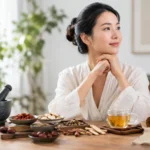

Acupuncture appointments sometimes include more than needles. Chinese herbs used in acupuncture may be recommended when a licensed TCM physician believes herbal medicine can complement a patient’s wider treatment plan – whether the concern involves recurring muscle tension, fatigue, sleep disruption, digestive discomfort, or recovery after physical strain.
This does not mean herbs are placed on acupuncture needles or that every acupuncture patient needs a herbal prescription. Acupuncture and Chinese herbal medicine are distinct TCM therapies that can be used separately or together. The appropriate choice depends on a thorough assessment, your health history, current symptoms, medications, and treatment goals.
How Chinese herbs used in acupuncture work together
In Traditional Chinese Medicine, acupuncture is often used to support the flow and balance of the body’s meridian system through carefully selected points. Chinese herbal medicine uses plant, mineral, and, in some traditional formulas, other natural medicinal materials prepared in measured combinations. A physician may use both approaches when they see a reason to address symptoms during and between clinic visits.
For example, someone receiving acupuncture for persistent neck and shoulder tightness may also report poor sleep, digestive changes, or low energy. Needling may be one part of care focused on discomfort and movement, while a tailored herbal formula may be considered for the broader pattern identified during consultation. This is not a one-size-fits-all protocol. Two people with the same area of pain may receive very different recommendations.
The goal is not to promise a quick fix. It is to create a considered plan that supports comfort, recovery, and longer-term body balance while monitoring how you respond.
A prescription starts with assessment, not a standard formula
TCM herbal care is most useful when it is individualized. Before recommending herbs, a licensed TCM physician will usually ask about your main concern, when it began, what makes it better or worse, sleep, appetite, digestion, stress, menstrual history where relevant, activity level, and past medical conditions. They may also use traditional observation methods, such as examining the tongue and feeling the pulse.
The same symptom can have different patterns
A headache after long hours at a desk is not automatically treated the same way as a headache that occurs with poor sleep, menstrual changes, sinus symptoms, or dehydration. Similarly, fatigue in a busy working parent can have many possible contributors. TCM assessment seeks to understand the whole presentation rather than treating a symptom label alone.
That approach also helps set reasonable expectations. Some concerns may be suitable for supportive TCM care, while others need prompt assessment by a medical doctor or another healthcare professional. A responsible physician will recognize those boundaries and advise accordingly.
Formulas are designed as combinations
Chinese herbal prescriptions are usually made up of several ingredients rather than one “best herb” for a condition. In classical formula design, individual ingredients may have different functions within the combination. One may be central to the treatment focus, while others support the formula, moderate its effects, or help make it more suitable for the individual.
This is one reason self-prescribing based on a social media post or a friend’s leftover herbs is not advisable. The name of an herb does not tell you whether it is appropriate for your constitution, symptoms, medications, or stage of recovery.
What forms can Chinese herbal medicine take?
Herbal medicine may be dispensed in several forms. The right option depends on the prescription, convenience, taste tolerance, and the physician’s clinical judgment.
Raw herbs are traditionally simmered into a decoction. They can be highly customizable, but preparation takes time and the taste can be strong. Herbal granules are concentrated extracts that are dissolved in warm water, making them a practical option for many people with work and family commitments. Pills, capsules, powders, and prepared formulas may also be used in selected situations.
Convenience matters, but it should not be the only consideration. A formula that is simple to take consistently may be more realistic than one that is difficult to prepare, provided it remains clinically appropriate. Your physician should explain how to take the prescription, how long to use it, and when to check in about your response.
Common herbs are not universal remedies
You may recognize names such as ginger, astragalus, goji berry, licorice root, peony root, or angelica root in Chinese medicine discussions. These ingredients have long histories of use, but their traditional use does not make them suitable for everyone or for every symptom.
For instance, an herb traditionally selected to support energy may not be right for a person with certain acute symptoms, uncontrolled health conditions, or medication considerations. Licorice root can be clinically significant for some people, particularly at higher exposure or alongside certain medicines. Even familiar kitchen ingredients can have relevant effects when used in medicinal amounts or combinations.
The useful question is not, “Which herb should I take for this?” It is, “What is driving this concern, and is herbal medicine appropriate for me?” That is where an in-person consultation adds value.
What to expect when herbs are part of your acupuncture plan
If herbal medicine is recommended alongside acupuncture, you should receive a clear explanation of why it is being considered and how it fits your plan. You can expect guidance on dosage, timing, food or drink considerations if relevant, possible mild reactions to watch for, and the planned review period.
Your plan may change over time. An herbal prescription suitable during an acute phase of discomfort may not be the right choice once symptoms settle or your body’s needs change. Follow-up appointments allow the physician to reassess your progress, adjust acupuncture points, modify the formula, or decide that herbs are no longer needed.
At Y TCM Clinic, personalized care begins with listening carefully to what you are experiencing and understanding the practical demands of your daily life. Treatment recommendations should feel explained, not rushed or mysterious.
Safety considerations before taking Chinese herbs
Natural does not automatically mean risk-free. Tell your TCM physician about all prescription medicines, over-the-counter products, supplements, and herbs you use. This includes blood thinners, diabetes medications, blood pressure medications, immunosuppressants, and treatments that affect hormones or mood. Herbal and drug interactions are possible, and coordinated care is particularly important if you see more than one healthcare provider.
Pregnant or breastfeeding patients, children, older adults, and people with liver or kidney disease need additional care. The same applies to anyone with known allergies, a history of serious reactions to supplements, or upcoming surgery. Do not stop prescribed medication or replace medical treatment with herbal medicine without discussing it with the clinician managing your care.
Seek urgent medical attention for warning signs such as sudden severe pain, chest pain, difficulty breathing, fainting, weakness on one side of the body, high fever, severe allergic symptoms, unexplained bleeding, or rapidly worsening symptoms. TCM can be a valuable complementary form of care, but it should not delay urgent evaluation.
Questions patients often ask
Do I have to take herbs if I am having acupuncture?
No. Acupuncture can be provided on its own. Herbal medicine may be suggested only when it is relevant to your assessment and preferences. You should feel comfortable asking why a recommendation is being made and discussing alternatives.
Can I take Chinese herbs with my regular medication?
Sometimes, but this requires careful review. Bring a current medication and supplement list to your appointment. Your TCM physician may advise a different formula, altered timing, closer monitoring, or consultation with your prescribing doctor.
How quickly will I notice a difference?
It depends on the concern, its duration, your overall health, and how consistently the plan is followed. Some patients notice changes early, while others need time and reassessment. A careful plan prioritizes safe, observable progress over unrealistic promises.
If you are considering acupuncture, herbs, or both, begin with a consultation where your questions are welcome. The right treatment plan should leave you with a clear sense of what is being recommended, why it may help, and how your care will be reviewed.