
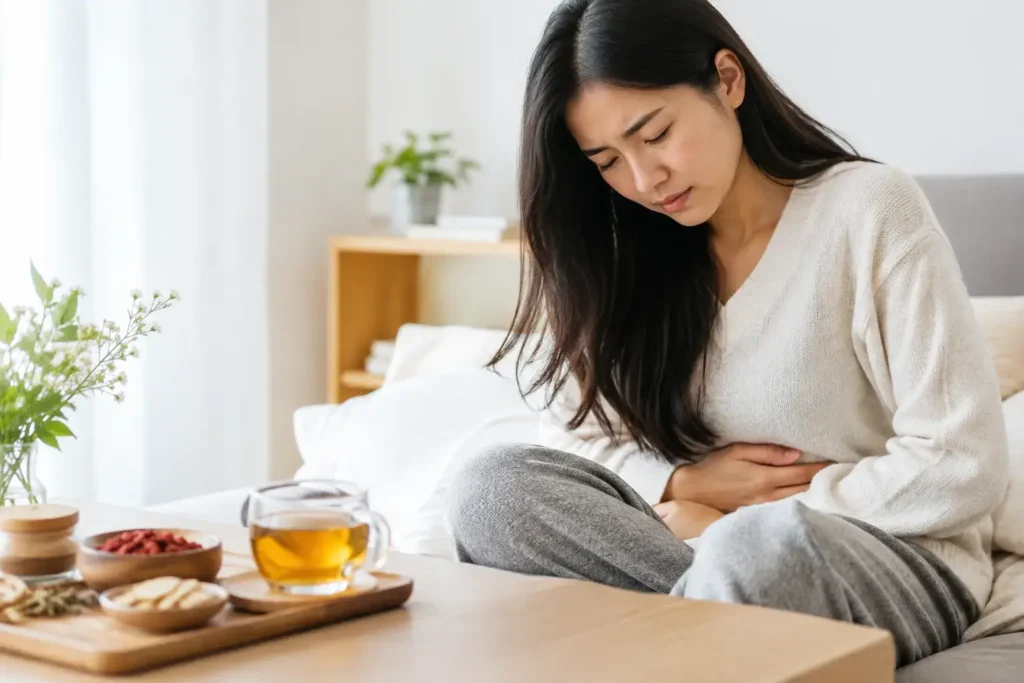
A TCM menstrual pain case is never just about the pain score on the first day of a period. For many women, cramps arrive alongside low back aching, fatigue, nausea, disrupted sleep, bowel changes, or anxiety about whether another workday will be lost. A careful Traditional Chinese Medicine consultation looks at that wider pattern, while also recognizing when medical evaluation is needed.
The following is an illustrative clinical-style example, not a promise of a specific outcome. Menstrual pain can have different causes, and the right treatment plan depends on an individual assessment by a licensed TCM physician and, when appropriate, coordination with a primary care physician or gynecologist.
The Patient Concern: Pain That Was Becoming a Monthly Disruption
A working professional in her early 30s sought care for menstrual cramps that had gradually worsened over the past year. Her pain usually began the day before bleeding and was strongest during the first two days of her period. She described cramping in the lower abdomen, a heavy sensation in the pelvis, low back discomfort, and occasional nausea.
Over-the-counter pain medication offered partial relief, but she preferred not to rely on it every month if other supportive options were appropriate. She also noticed that long workdays, irregular meals, limited sleep, and cold drinks seemed to make her symptoms feel worse. Her cycle was generally regular, although the first day of bleeding was sometimes accompanied by small clots.
This type of concern deserves more than a generic recommendation. Before discussing acupuncture, herbal medicine, or manual therapy, a responsible practitioner needs to understand the pattern, its history, and any signs that point to a medical issue requiring further investigation.
A TCM Menstrual Pain Case Begins With Assessment
At Y TCM Clinic, care begins with a thorough consultation rather than a standard treatment sequence. The physician may ask about cycle timing, pain location and quality, flow, clotting, mood changes, digestion, sleep, energy, medical history, current medication, fertility plans, and past gynecological findings.
In TCM, menstrual discomfort may be viewed through patterns involving constrained circulation, cold, deficiency, or an imbalance affecting the Liver, Spleen, and Kidney systems. These terms describe a traditional clinical framework. They are not a substitute for a biomedical diagnosis, and they should be explained in language the patient can understand.
For this patient, the physician would also consider whether symptoms had changed suddenly, whether pain occurred outside menstruation, and whether there was pain during intercourse, unusually heavy bleeding, fever, fainting, or a possibility of pregnancy. These details matter because conditions such as endometriosis, fibroids, pelvic inflammatory disease, ovarian cysts, or pregnancy-related concerns need medical assessment.
A licensed TCM physician may observe the tongue and assess the pulse as part of a traditional evaluation. More importantly, the findings are considered together with the patient’s symptoms, lifestyle, and health history. The goal is to form an individualized care plan, not to force every patient with cramps into the same TCM pattern.
The Personalized Care Plan
For an uncomplicated presentation where medical red flags had been excluded, a plan may include acupuncture, Chinese herbal medicine, and practical cycle-supportive guidance. The exact combination, timing, and frequency vary. Some patients prefer acupuncture alone, while others may be suitable for a physician-prescribed herbal formula as part of a broader plan.
Acupuncture for Comfort and Regulation
Acupuncture may be recommended before the expected period, during the cycle, or both. The treatment approach may focus on easing abdominal and low back tension, supporting circulation in TCM terms, and helping the body settle from a heightened stress response.
Many patients ask whether they should wait until cramps begin. It depends on the case. For recurring symptoms, beginning care earlier in the cycle may give the physician an opportunity to monitor patterns and adjust the plan before the most difficult days. When pain is already acute, the session may focus more directly on comfort and relaxation.
Treatment should be carried out with single-use sterile needles in a clean clinical environment. A patient should feel comfortable asking what the physician is doing, what sensations are normal, and when to speak up. Mild heaviness, warmth, tingling, or a brief dull sensation can occur, but sharp or persistent discomfort should always be reported.
Chinese Herbal Medicine, When Appropriate
Herbal medicine is not automatically necessary for every menstrual pain case. When it is considered, a licensed physician should review the patient’s full health picture, including medications, supplements, allergies, digestive sensitivity, and pregnancy plans.
In TCM practice, herbal formulas are selected to suit the individual pattern rather than simply being labeled as a remedy for cramps. A formula that is appropriate for someone whose symptoms are associated with feeling cold and eased by warmth may not be appropriate for another person with a different presentation.
Patients should not self-prescribe concentrated herbs or combine multiple products without guidance. Natural does not always mean suitable, particularly for people taking blood-thinning medication, managing chronic conditions, trying to conceive, pregnant, or breastfeeding.
Supportive Hands-On Care and Daily Habits
For some patients, TCM Tuina therapeutic massage or carefully selected meridian-based adjunctive treatments may complement acupuncture, especially when lower back or hip tension is part of the monthly pattern. These therapies should be adapted to the patient’s comfort level and avoided when symptoms or health conditions make them unsuitable.
The physician may also discuss realistic routines that support the treatment plan. Regular meals, adequate hydration, gentle movement, and sufficient rest can make a meaningful difference for people whose symptoms worsen during stressful or depleted periods. A warm compress may feel soothing for some types of cramping, while others may benefit more from light stretching or a short walk.
These are supportive measures, not rules to follow perfectly. The purpose is to help the patient notice which habits reliably affect her cycle, rather than adding another demanding wellness checklist to an already busy month.
Monitoring Progress Across Several Cycles
One treatment session may provide temporary comfort, but recurring menstrual pain is usually best reviewed over several cycles. In this illustrative case, the patient might track when pain begins, its severity, medication use, flow changes, sleep quality, bowel symptoms, and activities missed due to discomfort.
That record gives the physician useful clinical feedback. If cramps become less intense but still start early, the timing of care may be adjusted. If pain remains severe despite consistent treatment, or if the symptom pattern changes, referral for medical evaluation becomes especially important.
Progress does not always look like pain disappearing immediately. For one person, an early improvement may be less low back tension or fewer days relying on pain medication. For another, it may be better sleep before menstruation or a more manageable first day of bleeding. Setting realistic goals helps keep care focused and honest.
When Menstrual Pain Needs Medical Attention
Severe or changing period pain should not be dismissed as something a person simply has to endure. Seek prompt medical care for severe sudden pelvic pain, fainting, fever, persistent vomiting, very heavy bleeding, a positive pregnancy test with pain or bleeding, or symptoms that feel significantly different from usual.
A gynecological review is also wise when cramps are progressively worsening, begin for the first time later in adulthood, occur between periods, interfere substantially with daily life, or are associated with pain during intercourse, bowel movements, or urination. TCM can be part of supportive care, but it should not delay necessary diagnosis or treatment.
A thoughtful approach to menstrual health begins with being heard. When pain has become a monthly interruption, a personalized consultation can help clarify the next sensible step, whether that means TCM support, medical assessment, or both.