A neck that feels permanently tight, a shoulder that will not move freely, or calves that stay sore after activity can make everyday movement feel guarded. Understanding how Bojin releases fascia can help set realistic expectations: this is a focused, hands-on therapy intended to ease tissue tension and support more comfortable movement, not a quick fix for every source of pain.
Bojin is commonly used in Traditional Chinese Medicine as an instrument-assisted bodywork technique. A trained practitioner uses a smooth, shaped tool with controlled pressure and strokes along selected muscles, soft-tissue areas, and meridian pathways. At Y TCM Clinic, treatment begins with an assessment so the approach can be adjusted to your symptoms, health history, comfort level, and movement needs.
What fascia does in the body
Fascia is a network of connective tissue that surrounds and connects muscles, nerves, blood vessels, and other structures. Rather than acting as separate wrapping around each body part, it forms an interconnected system. It helps tissues slide and transmit force as you reach, walk, train, sit, or turn your head.
When an area has been overloaded, underused, held in one position for long periods, or affected by an injury, it may feel stiff, tender, or restricted. The reasons can vary. Muscle guarding, altered movement habits, local sensitivity, recovery after strain, and general stress can all contribute to the sensation that tissues are “stuck.”
It is useful to be precise about the word “release.” Fascia is not simply broken apart or melted away during a treatment. More often, manual therapy may influence tissue hydration and glide, nervous-system sensitivity, muscle tone, and a person’s awareness of how they move. These changes can create a meaningful feeling of ease, especially when treatment is paired with appropriate movement and recovery habits.
How Bojin releases fascia-like tension
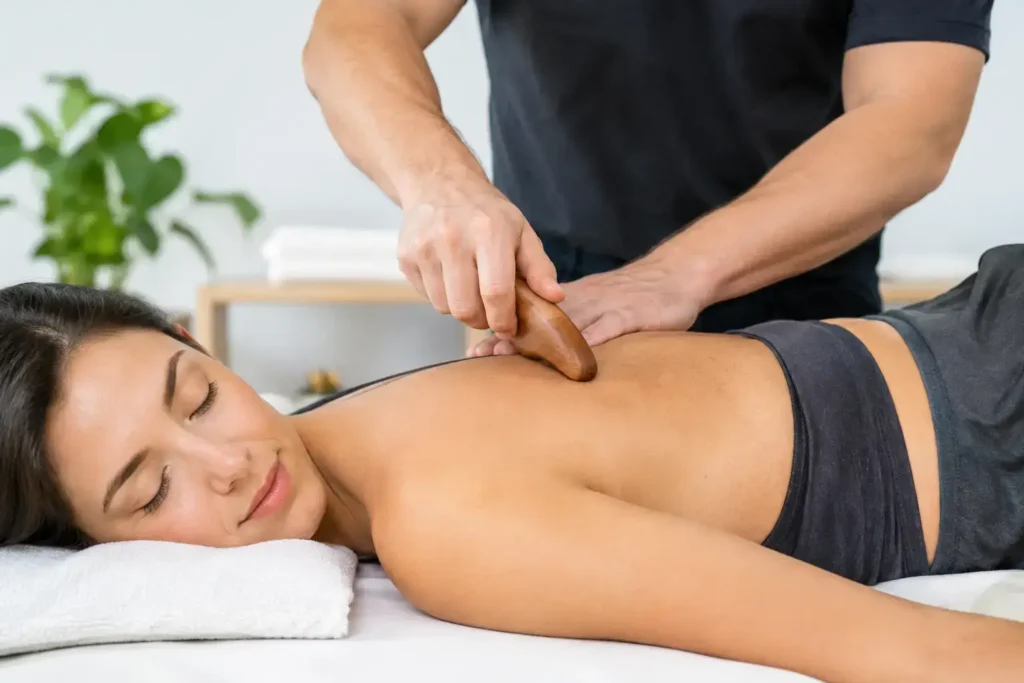
During Bojin therapy, the practitioner applies a small amount of oil or balm so the tool can move smoothly across the skin. They then use measured strokes, pressure, and angles over appropriate areas. The technique may be applied to the neck, shoulders, back, arms, hips, legs, or other regions identified during assessment.
The sensation is often deeper and more specific than a relaxation massage. You may feel pressure, warmth, stretching, or temporary tenderness in areas that are particularly tight. Good treatment is not about tolerating maximum pain. The practitioner should check in with you, adapt the pressure, and work within a level that is therapeutic and manageable.
Supporting tissue glide and movement
Repetitive sitting, training, carrying a child, or working at a computer can lead to movement patterns that repeatedly load the same tissues. Bojin strokes may help reduce the immediate sensation of tightness around these areas and encourage more comfortable movement afterward.
For example, a person with upper-back stiffness may notice that turning their head feels easier after treatment. Someone recovering from exercise-related leg tightness may feel less pulling when walking. The response differs from person to person and depends on the underlying cause, which is why a thorough assessment matters.
Influencing muscle guarding and pain sensitivity
Tightness is not always a sign that a muscle needs stronger force. Sometimes the body is protecting a sensitive area by increasing muscle tone or limiting movement. Carefully delivered manual therapy can provide sensory input that helps the nervous system tolerate movement more comfortably.
This does not mean Bojin can diagnose or treat every pain condition. Persistent pain may involve joints, nerves, tendons, stress, sleep, workload, or medical concerns beyond soft tissue. A licensed TCM physician or experienced therapist can help determine whether Bojin is suitable as part of a broader personalized care plan.
Working within TCM principles
In TCM practice, Bojin may also be used along meridian pathways to support the smooth flow of Qi and Blood, particularly where there is tension, discomfort, or a feeling of blockage. This traditional framework guides the choice of treatment areas alongside practical observations such as posture, tenderness, range of motion, and daily activity demands.
For patients, the key point is simple: treatment should be individualized. Two people with shoulder tension may receive different care because their symptoms, constitution, work routines, sleep, exercise, and relevant health history are different.
What to expect during a Bojin session
A clinical Bojin session should not begin with the tool. It should begin with a conversation. Your practitioner may ask when the discomfort started, what makes it better or worse, whether there was an injury, and whether you have had numbness, weakness, swelling, fever, or other symptoms that need medical attention.
They may assess posture and basic movement, then identify the areas most relevant to your concern. Treatment is usually targeted rather than applied indiscriminately over the whole body. Depending on your needs, Bojin may be combined with TCM Tuina, acupuncture, cupping, heat therapy, or advice on gentle mobility and activity modification.
After the session, the treated area may feel lighter, warmer, or more mobile. Mild temporary soreness can occur, particularly when tissues have been sensitive or heavily loaded. Some people notice redness from the strokes. This should be explained before treatment, and the intensity should always be adjusted to your comfort.
Hydration, adequate rest, and light movement can be helpful after treatment. If a practitioner recommends home exercises, they should be simple and appropriate for your condition. Aggressive stretching immediately after deep work is not always necessary, especially if an area feels tender.
When Bojin may be useful, and when to pause
Bojin may be considered for common soft-tissue concerns such as desk-related neck and shoulder tension, upper- and lower-back stiffness, exercise-related muscle tightness, feelings of heaviness in the limbs, or restricted movement after a minor strain. It can also be part of ongoing maintenance for active adults who want support with recovery and body awareness.
However, more pressure is not always better, and Bojin is not appropriate for every situation. Treatment may need to be avoided, postponed, or modified over open wounds, active skin infections, acute inflammation, unexplained swelling, suspected fractures, certain vascular conditions, or areas with significant bruising. People who use blood-thinning medication, have a bleeding disorder, are pregnant, or have complex medical conditions should disclose this before treatment.
Seek prompt medical evaluation for severe or sudden pain, chest pain, difficulty breathing, new weakness, loss of bladder or bowel control, major trauma, or numbness that is progressing. These symptoms need medical assessment rather than manual therapy alone.
Getting more lasting benefit from treatment
The best results rarely come from one technique in isolation. If your body repeatedly returns to the same pattern of strain, it helps to look at what is driving it. That might be a workstation setup, training load, sleep position, repetitive lifting, limited recovery time, or stress that keeps the shoulders elevated all day.
A personalized plan may include a short course of treatment followed by reassessment, rather than automatically scheduling the same therapy indefinitely. Your practitioner can monitor whether pain, range of motion, daily function, and recovery are actually improving. If they are not, the plan should change, or you may need referral for further evaluation.
Bojin can be a valuable part of careful musculoskeletal care when it is delivered with appropriate pressure, good hygiene, and clear clinical judgment. If persistent tension is limiting how you work, exercise, or rest, a consultation can clarify whether this approach fits your needs. The aim is not simply to chase a temporary release, but to help you move with greater comfort and confidence over time.