A stiff neck after long hours at a desk, knee pain that returns after a run, or lower-back tension that interrupts sleep can leave people asking the same practical question: acupuncture versus physiotherapy, which is the better choice? The most helpful answer is usually not a simple either-or. Each approach has a different focus, and the right plan depends on your diagnosis, symptoms, movement limitations, health history, and recovery goals.
For many people, acupuncture and physiotherapy can be complementary parts of care. One may help reduce pain or muscle guarding enough for the other to become more effective. A thorough assessment helps determine whether either treatment is appropriate, whether they can be combined, and when medical evaluation should come first.
Acupuncture versus physiotherapy: the key difference
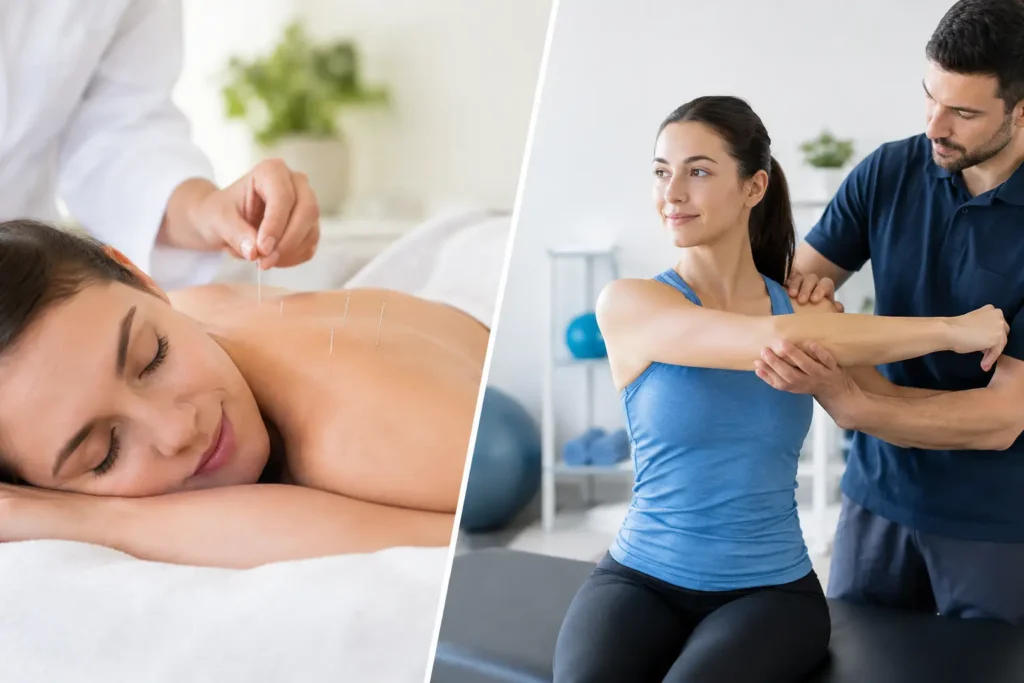
Physiotherapy is primarily centered on physical function. A physiotherapist assesses how you move, identifies factors such as weakness, joint restriction, poor load tolerance, or altered movement patterns, and uses rehabilitation strategies to improve function. Treatment may include guided exercises, manual techniques, education about activity modification, and a progressive return to daily activities or sport.
Acupuncture is a core treatment within Traditional Chinese Medicine. Fine, sterile needles are placed at selected points based on a licensed TCM physician’s assessment. In TCM, treatment aims to support the body’s balance and the smooth flow of qi and blood through meridians. From a modern clinical perspective, acupuncture is commonly used as a complementary approach for pain, muscle tension, and recovery support.
The practical distinction is this: physiotherapy often focuses directly on restoring capacity and movement, while acupuncture may focus on easing discomfort, reducing muscular tightness, and supporting overall recovery. Neither approach should be treated as a guaranteed quick fix. Meaningful progress often requires time, appropriate activity changes, and a plan that is adjusted as symptoms change.
When acupuncture may be a suitable option
Acupuncture may be considered when pain, stiffness, or muscle tension makes it difficult to move comfortably or participate fully in rehabilitation. Some patients seek it for recurring neck and shoulder tension, lower-back discomfort, headaches associated with muscular tightness, knee discomfort, or sports-related muscle strain.
A TCM consultation considers more than the sore area. A licensed TCM physician may ask about the onset and nature of pain, sleep, energy, digestion, stress, training habits, past injuries, and other health concerns. This broader assessment is especially relevant for people whose symptoms recur without a clear single injury, or whose discomfort is accompanied by fatigue, tension, or a sense of poor recovery.
Acupuncture is not only for pain. Depending on the individual assessment, TCM care may also include Tuina therapeutic massage, herbal medicine, or other meridian-based treatments. However, treatment should always be personalized. What suits one person’s shoulder tension may not suit another person’s pain after a fall or a recent surgery.
People often notice different responses. Some feel relaxed or less tight after a session, while others need several treatments before assessing whether the approach is helping. A responsible care plan sets realistic expectations and reviews progress rather than assuming that more sessions are always better.
When physiotherapy may be the stronger first step
Physiotherapy is often especially valuable when the main goal is to restore strength, mobility, balance, coordination, or confidence in movement. This may include recovery after an ankle sprain, return to running after knee pain, rehabilitation after surgery, or improving shoulder control after a repetitive strain.
Exercises are not simply generic stretches. A well-designed program should match the person’s current ability and the demands of their daily life. Someone who needs to carry a child, sit through long meetings, climb stairs, or play tennis needs a plan that prepares the body for those specific tasks.
Physiotherapy may also be a better starting point when there is a clear functional problem, such as difficulty bearing weight, limited joint range, repeated instability, or loss of strength. In these cases, pain relief alone may not address the reason symptoms keep returning. Building capacity gradually is often essential for long-term recovery.
That said, rehabilitation can be difficult when pain causes a person to guard the area or avoid movement altogether. This is one situation where acupuncture may be considered alongside physiotherapy, with the aim of making movement and exercise more tolerable.
Can acupuncture and physiotherapy be combined?
Yes, in some circumstances a combined approach can be practical. For example, an active adult with a calf strain may need a graded loading program to return to sport, while also experiencing significant tightness and discomfort that affects walking or sleep. Physiotherapy can guide the return to loading, while acupuncture may be used as complementary support for symptoms and muscular tension.
The order and timing matter. Acute injuries may need rest, protection, and medical assessment before hands-on treatment. During later stages, the emphasis may shift toward restoring movement and strength. Clear communication between providers helps avoid conflicting advice and keeps care focused on measurable goals.
A combined plan should not become an endless cycle of passive treatment. The purpose is to help you return to comfortable, capable movement and maintain it. If treatment is not producing meaningful improvement after a reasonable period, the plan should be reviewed.
Safety and when to seek medical care first
Both acupuncture and physiotherapy should be provided by appropriately trained professionals who take a full history, explain the proposed treatment, and respect contraindications. At Y TCM Clinic, care begins with a personalized assessment by licensed TCM physicians, with attention to hygiene, comfort, and individual health needs.
Acupuncture uses single-use sterile needles. Mild temporary effects, such as slight soreness, small bruising, or lightheadedness, can occur. Tell your practitioner if you are pregnant, have a bleeding disorder, use blood-thinning medication, have a pacemaker or implanted electrical device, are managing a serious medical condition, or have concerns about needles.
Do not rely on complementary care alone for symptoms that require prompt medical attention. Seek urgent evaluation for severe or worsening pain after trauma, a visibly deformed joint, inability to bear weight, sudden weakness, numbness that is spreading, loss of bladder or bowel control, chest pain, fever with severe back pain, unexplained weight loss, or signs of infection. These symptoms need timely medical assessment.
How to choose the right path for your recovery
Start with the question that matters most: what is stopping you from living normally? If the main issue is pain, tightness, poor sleep, or recurring tension, acupuncture may be a reasonable option to discuss with a licensed TCM physician. If your main limitation is weakness, instability, reduced mobility, or difficulty returning to a specific activity, physiotherapy may provide the more direct foundation.
You do not need to diagnose yourself before seeking help. Bring useful details to your consultation: when symptoms began, what makes them better or worse, what movement you have stopped doing, treatments you have already tried, medications, and any relevant scans or medical advice. This information supports a safer and more precise plan.
The best choice is the one that respects your condition, supports your goals, and is reviewed as you progress. Whether you begin with acupuncture, physiotherapy, or a coordinated combination, attentive assessment and steady follow-through can help you move toward recovery with greater confidence.