A tennis elbow treatment example is most useful when it begins with the actual problem, not simply the location of the pain. A sore outer elbow can affect typing, lifting a pan, carrying a child, shaking hands, or gripping a tennis racket. Although the discomfort is often called tennis elbow, many people develop it without playing tennis at all.
Tennis elbow, also known as lateral epicondylitis or lateral elbow tendinopathy, involves irritation or degeneration around the tendons that attach forearm muscles to the outside of the elbow. Repetitive gripping, wrist extension, poor workstation habits, a sudden increase in sport, or physically demanding work can all contribute. A thoughtful treatment plan should therefore consider both pain relief and the movement or loading pattern that may be keeping the area irritated.
What a Tennis Elbow Treatment Example May Look Like
Consider an office professional who also plays recreational tennis on weekends. Over several weeks, they develop a sharp ache on the outside of the right elbow. Opening jars, using a mouse, lifting a coffee pot, and hitting a backhand become uncomfortable. They have continued their usual activities, hoping the discomfort will settle on its own, but the pain is becoming more persistent.
At a first consultation, a licensed TCM physician would begin with a thorough assessment. This includes asking when symptoms began, which activities aggravate them, whether there was a specific injury, and whether numbness, neck pain, weakness, or swelling is present. The practitioner may observe shoulder, wrist, and elbow movement, assess tender areas of the forearm, and consider how the person uses their arm at work, at home, and during exercise.
This assessment matters because not every outer-elbow complaint is the same. Pain referred from the neck, nerve irritation, arthritis, a tendon tear, or a recent traumatic injury may need a different approach or medical evaluation. Personalized care starts by avoiding assumptions.
A measured treatment plan
If the presentation is consistent with an uncomplicated overuse-related elbow condition, treatment may combine acupuncture, therapeutic soft-tissue work, activity modification, and a gradual return to strengthening. The precise combination depends on the person’s pain level, general health, goals, and response between visits.
Acupuncture may be used around the elbow and forearm, with additional points selected according to the physician’s clinical assessment. Some patients find that acupuncture supports short-term pain relief and muscle relaxation, making it easier to begin gentle movement and rehabilitation. It is not intended to force activity through significant pain or replace appropriate medical assessment when warning signs are present.
TCM Tuina therapeutic massage or carefully applied myofascial techniques may address tightness in the forearm extensor muscles, wrist, shoulder, or upper back. For someone who spends long hours at a computer, treatment may include the forearm as well as the surrounding areas that influence arm posture and loading. Pressure is adjusted to the patient’s tolerance. More intense work is not automatically better when a tendon is highly sensitive.
In some cases, a licensed physician may also discuss Chinese herbal medicine as part of a broader TCM plan. This is individualized rather than routine. Current medications, allergies, pregnancy status, digestive concerns, and relevant medical history should be reviewed before herbs are considered.
Why Rest Alone Is Not Always Enough
Reducing aggravating activity can calm a painful flare, but complete rest for an extended period may leave the forearm less prepared for normal demands. The practical aim is relative rest: temporarily reduce the movements that clearly provoke symptoms while keeping comfortable movement in the arm.
For the office professional in this example, that may mean shortening tennis sessions, avoiding repeated backhands for a time, using a lighter grip on the mouse, taking brief movement breaks, and changing how heavy objects are lifted. It does not necessarily mean stopping all daily activity.
Once pain is more manageable, controlled strengthening is often an important part of recovery. A clinician may recommend simple wrist and forearm exercises, beginning with low resistance and progressing slowly. The appropriate timing depends on irritability. If a brief exercise causes mild discomfort that settles quickly, it may be acceptable. If it produces sharp pain or leaves the elbow more painful the next day, the load may need to be reduced.
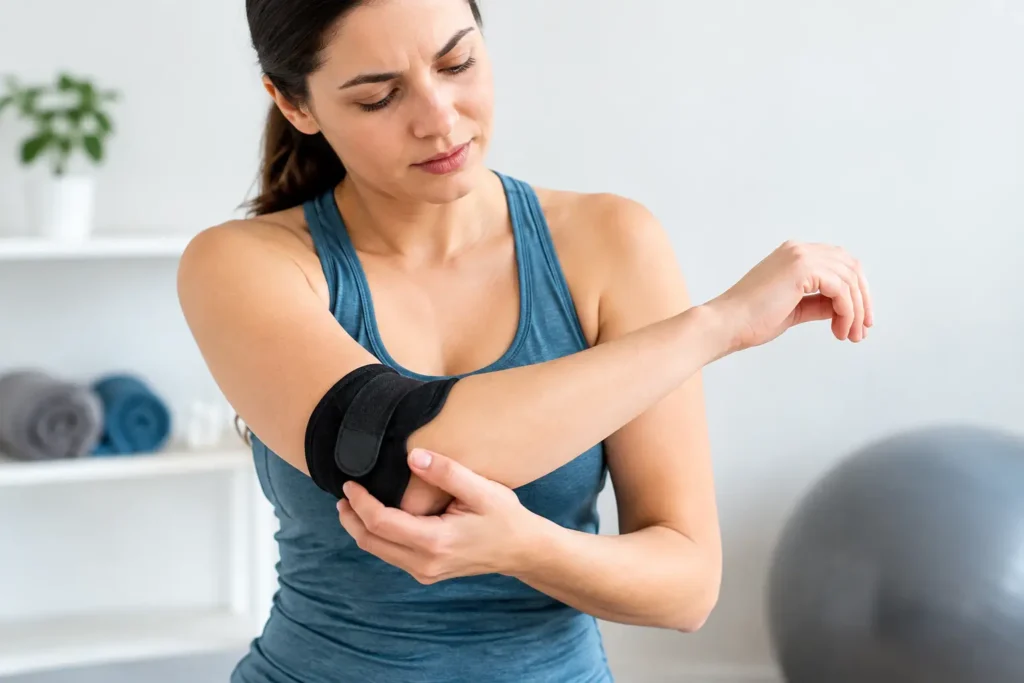
A brace or counterforce strap may provide temporary comfort for some people during work or sport. Others find it restrictive or do not notice much benefit. It can be a useful tool, but it should not become a reason to ignore worsening symptoms or return to full activity too quickly.
What Home Care Can Support Treatment
Home care should be simple enough to follow consistently. A cold pack may help after an activity that has aggravated the area, while gentle warmth can feel more comfortable for muscle tightness before movement. Protect the skin by wrapping hot or cold packs in a cloth, and limit each application to a comfortable duration.
Pay attention to the activities that create the most strain. Repeated wrist motion, forceful gripping, and carrying heavy items with the palm facing down can be common triggers. Holding an object closer to the body, using two hands when practical, and taking short breaks from repetitive tasks can reduce unnecessary load on the tendon.
Ergonomics also deserve attention. A mouse that requires constant reaching, a keyboard placed too high, or a workstation that encourages a bent wrist can contribute to forearm tension over many hours. Small adjustments may not solve the condition by themselves, but they can support the progress made in treatment.
At Y TCM Clinic, care is guided by a personalized consultation rather than a fixed sequence of sessions. The goal is to understand the pattern behind the discomfort, provide hands-on care appropriately, and help patients make realistic changes that support longer-term recovery.
When Elbow Pain Needs Medical Attention First
Traditional Chinese Medicine can be a complementary part of care for many overuse-related concerns, but it is not appropriate to self-treat every elbow problem. Seek prompt medical assessment for pain after a fall or direct injury, obvious deformity, marked swelling, fever, redness or warmth around the joint, sudden loss of strength, persistent numbness or tingling, or an inability to use the arm normally.
It is also sensible to consult a physician if elbow pain is severe, worsening, unexplained, or not improving despite sensible activity changes. People with diabetes, inflammatory arthritis, bleeding disorders, or those taking blood-thinning medication should share this information before acupuncture or hands-on treatment.
How long does recovery take?
Recovery varies. A recent mild flare may begin improving within weeks when the aggravating load is reduced and rehabilitation is consistent. Long-standing symptoms, ongoing job demands, poor sleep, or repeated return to painful activity can make recovery slower. A treatment plan should be reviewed as symptoms and function change, rather than continued unchanged for months.
The most helpful next step is usually not to chase a quick fix, but to identify what your elbow can tolerate today and build from there. With careful assessment, appropriate treatment, and gradual loading, daily tasks can become less guarded and more comfortable again.