A neck that will not turn comfortably when reversing the car, shoulders that feel raised after a day at a desk, or calves that stay tight after a run can make ordinary movement feel guarded. Understanding how tuina eases stiffness starts with recognizing that stiffness is not always simply a “tight muscle.” It can reflect overuse, prolonged posture, a recent strain, reduced movement, stress-related muscle guarding, or an underlying condition that needs medical attention.
Tuina is a therapeutic form of Traditional Chinese Medicine bodywork. At a clinical appointment, it is not a generic relaxation massage. A licensed TCM physician or trained therapist considers the location and pattern of discomfort, range of motion, recent activity, health history, and individual sensitivity before selecting techniques. The aim is to help ease restricted, uncomfortable tissues while supporting more comfortable movement and longer-term body balance.
What stiffness is telling you
Stiffness is often the body’s protective response. When a muscle, tendon, or surrounding connective tissue has been overloaded or held in one position for too long, the nervous system may increase muscle tone to limit movement. This can create the familiar sensation of pulling, heaviness, or resistance when you try to bend, reach, squat, or turn.
For many people, the pattern builds gradually. Laptop work can leave the chest and front of the shoulders shortened while the upper back works continuously to hold posture. Long periods of driving or sitting can make the hips and lower back feel less mobile. Training hard without enough recovery may leave the legs sore and guarded. In each case, forceful treatment is not automatically the answer. The right pressure and technique depend on what is irritated, what feels restricted, and whether there are warning signs of injury.
From a TCM perspective, stiffness may be discussed in terms of reduced circulation of qi and blood through the channels, sometimes influenced by strain, external cold and dampness, or constitutional factors. This framework guides assessment and treatment selection. A careful practitioner also respects the practical physical contributors: workload, sleep, movement habits, prior injuries, and recovery capacity.
How tuina eases stiffness in a treatment session
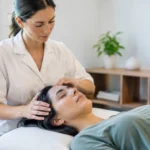
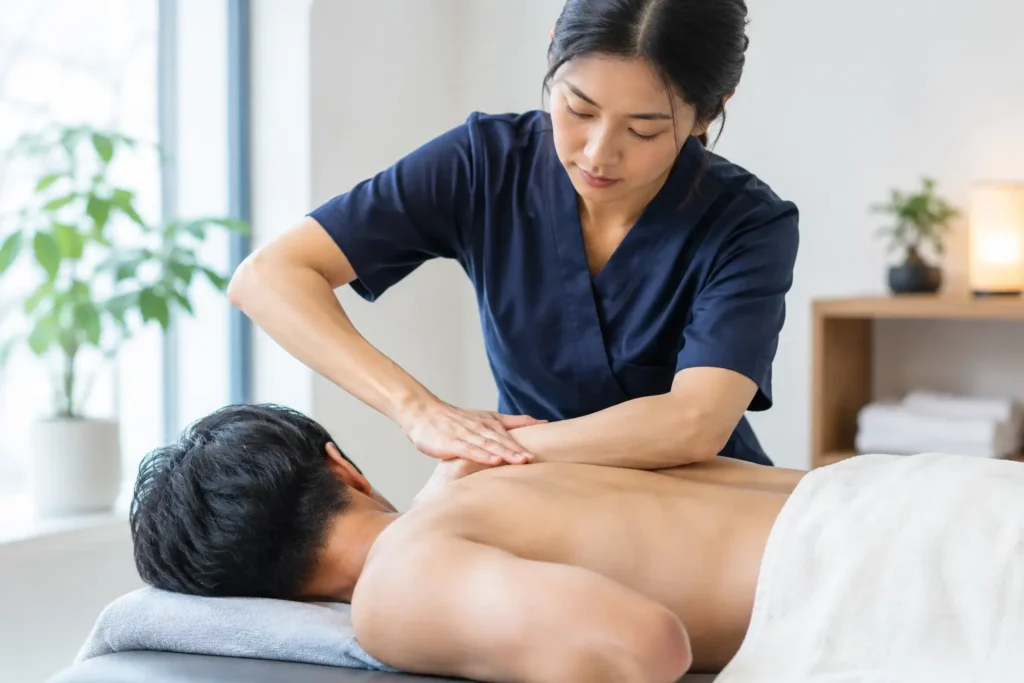
Tuina uses purposeful hand techniques rather than a single routine. Depending on the assessment, a session may include pressing, kneading, rolling, rubbing, gentle stretching, mobilizing joints, and work along relevant muscles or meridian pathways. The pressure can be adjusted throughout. Therapeutic does not need to mean painful.
It helps calm protective muscle guarding
When muscles have been working defensively, well-paced touch and movement can help reduce the sense of threat around a stiff area. As the body relaxes its guard, a patient may find it easier to move the shoulder, rotate the neck, or bend the hip with less resistance. Relief can be immediate for some people, while others notice a gradual change over several sessions.
This response is not a promise that every source of pain will resolve with bodywork. Stiffness caused by a significant tear, inflammatory arthritis, nerve compression, or structural joint problem needs a different level of assessment and, in some cases, medical care. Tuina should be part of a considered plan, not a reason to ignore persistent symptoms.
It supports circulation in restricted tissues
Focused manual work may temporarily increase local blood flow and warmth in the area being treated. This can contribute to the looser, lighter feeling many people notice afterward. In TCM terms, treatment aims to promote the movement of qi and blood where stagnation is contributing to discomfort.
The effect is most useful when paired with sensible daily habits. A single session may make movement easier, but returning immediately to the same unbroken hours of sitting or the same training load can allow tightness to return. A practitioner may suggest simple movement breaks, a change in exercise intensity, heat where appropriate, or a few manageable mobility exercises based on your presentation.
It addresses connected areas, not only the sore spot
The place that feels stiff is not always the only area involved. For example, an uncomfortable lower back may be affected by hip tightness, gluteal muscle fatigue, or sustained sitting. A stiff shoulder may relate to tension through the chest, upper back, and neck. Tuina treatment can include these connected regions rather than repeatedly pressing the most tender point.
This broader approach matters because overly aggressive work directly on an irritated area can sometimes leave it more sensitive. A trained therapist may begin around the region, assess how it responds, and progress carefully. Treatment can be adapted for people who prefer lighter pressure, are returning after an injury, or have a lower tolerance due to fatigue or stress.
It can improve comfort during guided movement
Tuina is often combined with assisted stretching or gentle joint movement. These techniques give the practitioner information about which motions feel limited and how the body responds as the range changes. The goal is not to force flexibility. It is to encourage more comfortable, controlled motion within an appropriate range.
For active adults, this may support recovery after training or help prepare the body to return gradually to activity. For office workers, it can help interrupt a cycle of tension that develops across the neck, shoulders, forearms, hips, and back. Results vary with the cause and duration of stiffness, so a personalized plan is more realistic than expecting a single treatment to fix every recurring issue.
What a personalized Tuina assessment should include
Good Tuina care begins before the hands-on treatment. At Y TCM Clinic, care is guided by a thorough assessment and delivered with attention to hygiene, comfort, and individual needs. A practitioner should ask when the stiffness started, what makes it better or worse, whether there was a fall or sports injury, and whether symptoms travel into the arm or leg.
They may also assess posture, tenderness, muscle tone, and movement patterns. This helps distinguish a straightforward tension pattern from a situation that may need referral or further medical evaluation. Patients should feel able to describe pressure preferences and to ask why a particular area is being treated.
Tuina may be used on its own or alongside other TCM approaches, such as acupuncture, herbal medicine, or meridian-based therapies, when clinically appropriate. The best combination depends on the person. Someone with acute muscle soreness after an unfamiliar workout may need a gentler approach than someone with long-standing desk-related upper-back tension. Likewise, treatment frequency should reflect progress, not follow a fixed package for everyone.
When Tuina may not be the right first step
Hands-on therapy is not suitable for every type of stiffness. Tell your practitioner about pregnancy, recent surgery, fractures, osteoporosis, bleeding disorders, blood-thinning medication, skin conditions, fever, active infection, cancer treatment, or significant medical diagnoses. These factors may change the techniques used or mean treatment should be postponed.
Seek prompt medical evaluation for stiffness or pain that follows major trauma, is accompanied by severe swelling, fever, unexplained weight loss, chest pain, sudden weakness, numbness, loss of bladder or bowel control, or pain that is rapidly worsening. New pain that shoots down an arm or leg, especially with weakness or persistent tingling, also deserves proper assessment.
A responsible TCM practitioner will not treat through these concerns simply to complete a session. Clinical care means knowing when gentle treatment is appropriate and when another healthcare professional should be involved.
Getting more from treatment between visits
The benefits of Tuina are often easier to maintain when daily movement is realistic. After a session, drink water as you normally would, avoid immediately overloading the treated area, and pay attention to how your body responds over the next day. Mild tenderness can occur after deeper work, particularly when muscles have been sensitive for some time. It should not feel like sharp, escalating pain.
For desk-related stiffness, brief movement every hour is usually more helpful than one long stretch at the end of the day. For exercise-related tightness, recovery may mean adjusting training volume, warming up more gradually, and allowing enough sleep. Your practitioner can help identify the smallest changes that fit your routine instead of offering a demanding plan that is hard to sustain.
How many sessions are needed?
It depends on the cause, severity, and duration of the stiffness. A recent, mild tension pattern may respond quickly. Long-standing discomfort, repeated strain, or movement habits that continue to aggravate the area often require a course of care and active self-management. Progress should be reviewed regularly.
Does Tuina have to hurt to work?
No. Some areas may feel tender during therapeutic pressure, but pain is not a measure of effectiveness. Clear communication allows the practitioner to adjust the pressure, pace, and techniques so treatment remains appropriate and tolerable.
Stiffness is often a useful signal to pause, assess, and give the body more thoughtful support. With qualified care and a plan that respects both your symptoms and your daily demands, Tuina can be a practical way to make room for easier, more confident movement.