A tongue can change after a strong coffee, a spicy dinner, poor sleep, or a busy week. That is why a Chinese medicine tongue diagnosis guide should be used as a starting point for observation, not as a tool for self-diagnosis. In Traditional Chinese Medicine, licensed physicians consider the tongue alongside your symptoms, health history, pulse, lifestyle, and, where needed, appropriate medical evaluation.
Tongue observation has been used in Chinese medicine for centuries because it offers a visible, non-invasive part of a broader clinical assessment. For patients seeking support for recurring muscle tension, fatigue, digestive discomfort, stress, menstrual concerns, or recovery after activity, it can help a TCM physician build a more personalized picture of the body’s current balance.
What Tongue Diagnosis Looks At
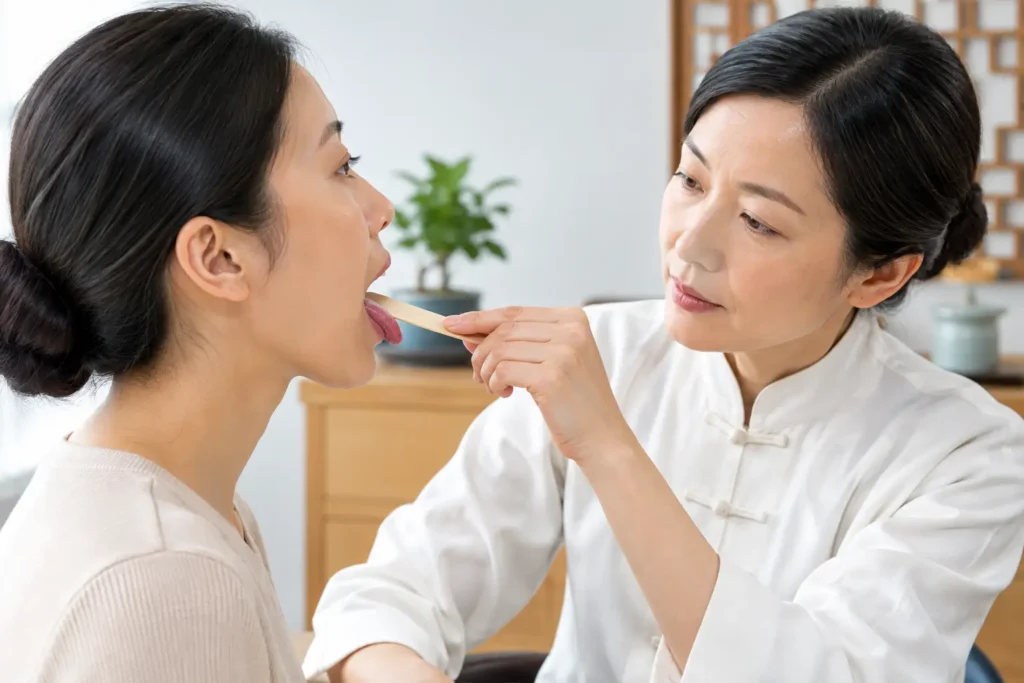
During a consultation, a TCM physician typically observes the tongue’s body color, shape, moisture, movement, and coating. The location of changes can also be considered. These observations are interpreted through TCM principles, which describe patterns involving qi, blood, fluids, yin, yang, and organ systems.
This does not mean that one feature produces one fixed answer. A pale tongue, for example, may be considered alongside energy levels, appetite, sleep, menstrual history, circulation, and pulse quality. The same appearance can have different relevance from one person to another.
For the clearest view, the tongue is usually observed in natural light before brushing the tongue, drinking coffee or tea, eating strongly colored foods, or using mouthwash. Beetroot, berries, turmeric, candy, smoking, dehydration, and some medications can all temporarily affect its appearance.
Tongue Body Color
A healthy tongue is often described in TCM as light red or pale red, with a thin white coating. Small variations are common and do not automatically signal a concern.
A paler-than-usual tongue may, in TCM assessment, be associated with patterns involving reduced qi, blood, or warming function. A physician may ask whether you also experience low energy, feeling cold easily, dizziness, shortness of breath with exertion, or heavy menstrual bleeding.
A red or deeply red tongue may be interpreted as a sign of heat patterns in TCM. Context matters: temporary redness can follow alcohol, spicy food, fever, intense exercise, or irritation. If redness is persistent and accompanied by dryness, thirst, restlessness, mouth ulcers, or disrupted sleep, it is worth discussing during a professional consultation.
A purple or dusky tone may lead a TCM physician to consider circulation-related patterns, particularly when a patient also reports fixed pain, stiffness, old injuries, or menstrual discomfort. It is not a diagnosis of a circulation disorder. Sudden blue, gray, or markedly discolored lips or tongue require prompt conventional medical attention.
Tongue Shape and Surface
The tongue body can offer further clues when viewed with the whole clinical picture. A swollen tongue, sometimes with teeth marks along the edges, may be assessed in TCM alongside bloating, loose stools, heaviness, or water retention. A thin tongue may be considered with dryness, low body weight, prolonged stress, or recovery after illness.
Cracks are also common. Some people naturally have a fissured tongue without symptoms. In TCM, deeper or more pronounced cracks may be discussed in relation to fluid or yin patterns, especially if the tongue is dry and the person reports thirst, dry skin, constipation, or waking hot at night.
A tongue that trembles, deviates, or is difficult to move deserves careful attention. While TCM may have its own pattern-based interpretation, sudden weakness, slurred speech, facial drooping, confusion, or difficulty swallowing should be treated as urgent medical symptoms.
Coating, Moisture, and Texture
Tongue coating is the layer seen on the tongue’s surface. A thin white coating is commonly considered a normal finding. A thicker coating can occur for ordinary reasons, including dehydration, oral hygiene habits, smoking, recent illness, and food residue.
Within TCM, a thick or greasy coating may be assessed with symptoms such as fullness after eating, nausea, sluggishness, phlegm, or changes in bowel habits. A yellow coating may be considered in heat-related patterns, while a peeled or very scant coating may be discussed in relation to fluids and yin. These are clinical frameworks, not labels to apply at home.
Moisture matters as well. A dry tongue can occur with dehydration, mouth breathing, medication side effects, diabetes, fever, or stress. If dryness is ongoing, a clinician should consider both TCM patterns and possible medical contributors rather than assuming a single cause.
How a Chinese Medicine Tongue Diagnosis Guide Fits a Consultation
Online charts can be interesting, but they often make tongue diagnosis look more certain than it is. A photograph may have poor lighting, and a single feature can be influenced by sleep, diet, hydration, dental products, or a temporary illness. More importantly, it cannot capture your pulse, symptoms, medical history, or the way discomfort affects your daily life.
A thorough TCM consultation begins with listening. Your physician may ask about the main concern, its duration, triggers, sleep, digestion, stress, activity level, medications, past injuries, and relevant medical diagnoses. Tongue and pulse assessment then help guide a pattern-based treatment plan.
For one patient, care may focus on acupuncture and therapeutic Tuina for persistent neck and shoulder tension. For another, the plan may include Chinese herbal medicine, dietary guidance, or supportive treatment for digestion, fatigue, or women’s wellness concerns. The appropriate approach depends on the person, their goals, and whether TCM care is suitable alongside their existing medical care.
At Y TCM Clinic, licensed TCM physicians use tongue observation as one component of a careful, personalized assessment. The purpose is not to make dramatic claims from appearance alone. It is to better understand your symptoms and provide care in a calm clinical setting that respects both traditional principles and Singapore’s healthcare standards.
When Not to Rely on Tongue Observation
Tongue changes can occasionally point to issues that need dental or medical review. Seek prompt care for a sore, lump, ulcer, or red or white patch that does not heal within two weeks; unexplained bleeding; severe pain; trouble swallowing; or a persistent change in voice. These symptoms should not be managed through self-observation alone.
People with ongoing medical conditions, those who are pregnant, and those taking prescription medication should also share this information before beginning herbal treatment. Chinese herbal medicine can be valuable when prescribed appropriately, but it should be selected by a qualified practitioner who can consider safety, dosage, potential interactions, and your full health history.
If you are simply curious about your tongue, notice it at roughly the same time each morning for a few days rather than reacting to one observation. Look for persistent patterns, then bring your questions to a licensed TCM physician. A thoughtful consultation can turn a vague observation into a clearer, safer next step for your comfort and long-term wellbeing.