A stiff neck after long hours at a desk, a calf that remains tight after a run, or recurring low-back discomfort can make ordinary movement feel far more demanding than it should. Tuina therapy is a hands-on Traditional Chinese Medicine treatment that may help address these patterns through targeted therapeutic massage, guided by an assessment of your symptoms, movement, and overall condition.
Unlike a general relaxation massage, Tuina is typically delivered with a treatment goal in mind. A practitioner may work along muscles, tendons, joints, and TCM meridian pathways using structured techniques to reduce tension, improve comfort, and support recovery. The pressure, pace, and areas treated should be adjusted to the individual rather than following a fixed routine.
What Is Tuina Therapy?
Tuina, pronounced “twee-nah,” is a therapeutic bodywork practice within Traditional Chinese Medicine. Its name refers to two foundational hand techniques: tui, meaning to push, and na, meaning to grasp or lift. In practice, treatment can also involve kneading, rolling, pressing, stretching, mobilization, and gentle traction.
From a TCM perspective, Tuina aims to support the smooth flow of qi and blood while helping restore balance in the body. From a practical patient perspective, it is often used to work with muscle tightness, restricted movement, soft-tissue discomfort, and recovery needs. The experience may feel more focused than a spa massage because the therapist is responding to specific areas of tension or functional limitation.
Tuina is not one single pressure level or technique. A patient with acute sensitivity may need a lighter approach, while someone with long-standing muscle tightness may tolerate more sustained work. Good care begins with asking what is bothering you, how it developed, what makes it better or worse, and whether there are medical factors that affect treatment choices.
When Tuina May Be Considered
Many people seek Tuina when discomfort is linked to posture, repetitive activity, training, or everyday physical strain. It may be included in a personalized TCM care plan for neck and shoulder tightness, back discomfort, tension-related headaches, hip or leg stiffness, and muscular soreness after activity.
For active adults, Tuina can be a useful part of recovery when training volume, poor movement habits, or insufficient rest leaves the body feeling persistently tight. It may also support people returning gradually to normal activity after a minor soft-tissue strain, depending on the stage of recovery and the advice of their healthcare professional.
The right approach depends on the cause of the discomfort. A tight shoulder from prolonged computer work is not assessed in the same way as shoulder pain following a fall. Similarly, soreness after exercise is different from sudden swelling, weakness, numbness, or pain that is worsening quickly. A responsible practitioner will recognize when hands-on treatment is appropriate and when further medical assessment should come first.
What Happens During a Tuina Session?
A clinical Tuina appointment should not begin with vigorous massage. It begins with listening. Your practitioner may ask about the location and quality of your symptoms, your work or exercise routine, relevant health history, and previous injuries. They may also observe posture, check areas of tenderness, or assess how comfortably you can move.
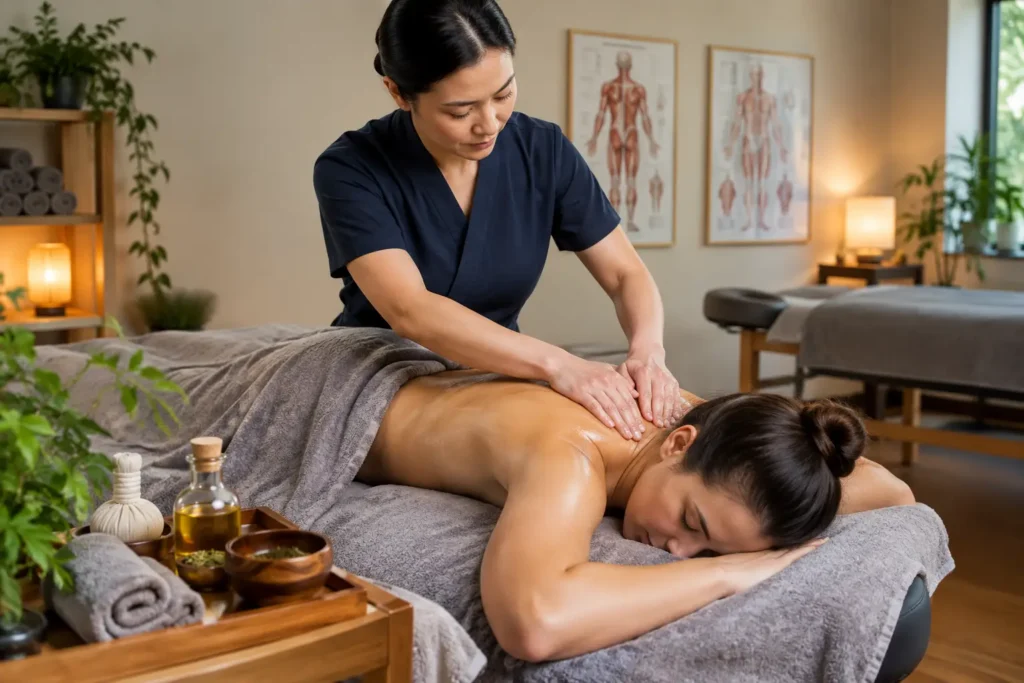
Treatment commonly takes place with the patient comfortably positioned on a treatment bed and appropriately draped. Depending on the concern, the therapist may use palms, fingers, knuckles, or forearms to apply measured pressure. Some techniques feel broad and soothing; others are more precise, especially around a tight muscle band or restricted area of movement.
You may be asked to move a limb, take a slow breath, or change position during the session. These simple adjustments help the practitioner work safely and reassess how your body responds. Communication matters throughout. Pressure should feel purposeful, not something you have to endure silently. Let the therapist know if a technique feels too intense, causes sharp pain, or creates unexpected discomfort.
Afterward, it is common to feel looser or more relaxed. Some people also notice temporary tenderness, particularly after deeper work on an area that has been tight for some time. Hydration, gentle movement, and following any individualized aftercare advice can be helpful. The practitioner may recommend a follow-up schedule, home stretches, activity modifications, or another TCM treatment where appropriate.
Tuina Therapy Is Not the Same as Relaxation Massage
Both Tuina and relaxation massage use touch to promote comfort, but their purpose and structure can differ. Relaxation massage often emphasizes a calming full-body experience. Tuina is more likely to focus on a clinical concern, such as restricted neck rotation, a tense lower back, or recurring tightness around the hip and thigh.
That does not mean Tuina must be painful or overly intense. Effective treatment is not measured by how much pressure is used. The appropriate depth depends on the tissue being treated, the person’s sensitivity, their health history, and whether the issue is recent or long-standing. A gentler session can be the better choice for some patients.
Tuina may also be combined with other elements of TCM care. For example, a licensed TCM physician may recommend acupuncture, herbal medicine, or meridian-based adjuvant treatments after a thorough assessment. Combining treatments is not automatic. It should be based on what is suitable for the patient’s goals, condition, and preferences.
Safety and When to Seek Medical Care First
Tuina is generally approached as a complementary treatment, not a replacement for emergency or necessary medical care. Before treatment, share relevant information such as pregnancy, recent surgery, anticoagulant use, osteoporosis, skin conditions, fever, cancer treatment, or a history of blood clots. This allows the practitioner to adapt the session or advise against treatment in certain areas.
Seek prompt medical attention rather than booking bodywork first if you have chest pain, difficulty breathing, sudden severe headache, new weakness, loss of bladder or bowel control, significant trauma, unexplained swelling, or numbness that is spreading. These symptoms need timely medical evaluation.
For less urgent concerns, choosing a professional setting still matters. Look for clear hygiene practices, informed consent, a proper assessment, and practitioners who explain what they are doing and why. At Y TCM Clinic, care is provided in a calm clinical environment with individualized treatment planning, helping patients understand whether Tuina is appropriate for their current needs.
Getting More From Your Treatment Plan
Tuina tends to be most helpful when it is part of a realistic recovery plan rather than a one-time fix. If desk work contributes to neck tension, treatment may need to be paired with better screen positioning, regular movement breaks, and simple mobility exercises. If training is the trigger, recovery may also involve adjusting load, sleep, warm-up habits, and return-to-activity timing.
Progress is not always linear. A problem that developed over months may take more than one session to settle, while acute soreness can sometimes improve quickly with rest and targeted care. Your response to treatment, daily activities, and any underlying health factors all influence the plan.
The most useful next step is a thoughtful assessment. When you understand what may be contributing to your discomfort, Tuina can become more than temporary relief: it can be a considered part of caring for how your body moves, recovers, and feels over time.


