A forehead line that appears after a demanding workweek, a furrow that remains even when you are relaxed, or skin that simply looks less rested can all prompt the same question: facial acupuncture versus botox, which approach makes sense? The answer depends on what you would like to change, how quickly you expect to see it, your comfort with injections and medication, and your broader health and skin-care priorities.
These treatments are not direct equivalents. Botox is a medical injectable designed to temporarily reduce muscle movement in selected areas. Facial acupuncture is a Traditional Chinese Medicine treatment that uses very fine, sterile needles as part of a personalized approach to circulation, muscle tension, and overall balance. One may suit your goals better than the other. Some people may also choose them at different points in their care, with guidance from appropriately qualified practitioners.
Facial Acupuncture Versus Botox: The Core Difference
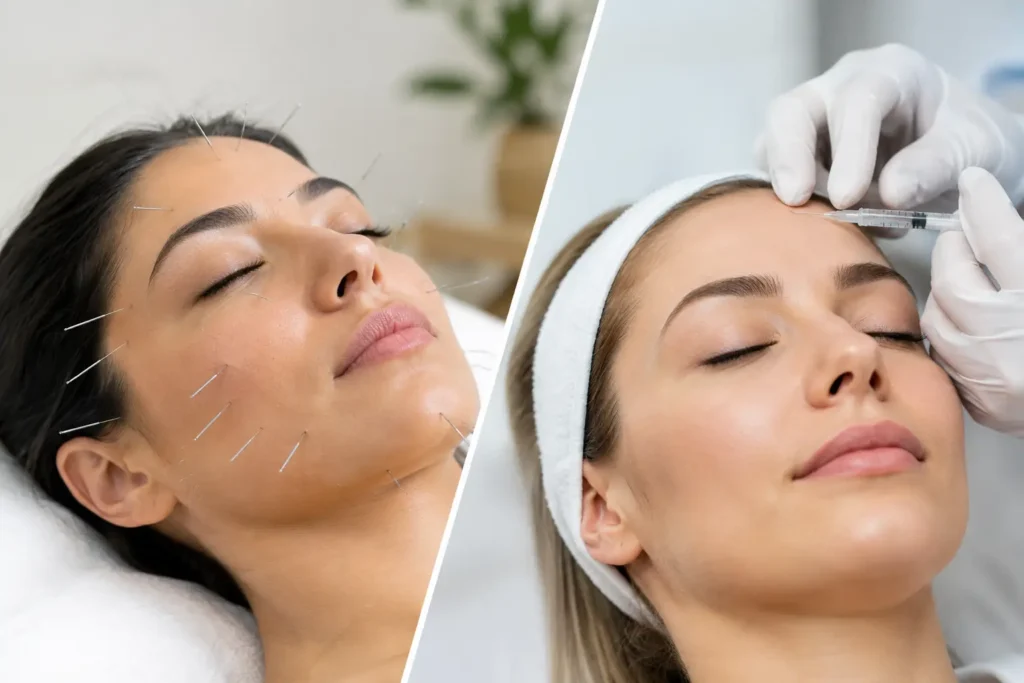
Botox is a brand name commonly used to describe botulinum toxin injections. In cosmetic use, it is injected into specific facial muscles to temporarily soften dynamic lines, such as frown lines, forehead lines, and crow’s feet. When the treated muscle contracts less strongly, the skin above it can look smoother. Results commonly begin to appear within several days and are temporary, often lasting a few months.
Facial acupuncture takes a different path. A licensed TCM physician first considers your skin concerns alongside factors such as sleep, stress, muscle tension, energy levels, digestion, and general health. Very fine needles may be placed on the face and at selected points elsewhere on the body. In TCM practice, this is intended to support the flow of qi and blood, address patterns of imbalance, and relax areas of tension.
For aesthetic concerns, patients often seek facial acupuncture because they want a natural-looking approach and value the wider wellbeing focus of TCM. Some report that their complexion looks more refreshed or that facial tension feels reduced after a course of care. However, research on cosmetic facial acupuncture remains more limited than the evidence and regulatory use surrounding botulinum toxin for specific wrinkles. It should not be presented as a substitute for Botox if your main goal is a predictable reduction in strong expression lines.
What Results Can You Realistically Expect?
Botox tends to offer a clearer, more targeted outcome for movement-related wrinkles. If you want to soften a pronounced glabellar line between the eyebrows or reduce forehead movement for an event, it may be the more direct option. It does not improve every aspect of skin quality, though. Texture, pigmentation, dryness, sun damage, and lines that are present even when the face is fully at rest may need different care.
Facial acupuncture results are usually gradual and subtle. Rather than freezing or weakening a muscle, treatment may be used to support relaxation and an overall healthier appearance. A person with jaw clenching, facial tightness, poor sleep, or stress-related tension may find the broader consultation particularly valuable. A series of sessions is commonly recommended because changes, when they occur, build over time and vary considerably between individuals.
Neither choice can stop natural aging, replace sun protection, or compensate for chronic sleep deprivation and smoking. A realistic plan may include daily sunscreen, gentle skin care, hydration, nutrition, stress management, and professional advice tailored to the concern. The best aesthetic care does not promise a different face. It supports you in looking rested, comfortable, and like yourself.
Safety and Qualifications Matter
Any procedure involving needles deserves careful screening and professional hygiene. Botox should be performed by a properly qualified medical professional who understands facial anatomy, approved uses, dosing, potential interactions, and what to do if complications occur. Common temporary effects can include redness, swelling, tenderness, bruising, headache, or an uneven result. Less common but more serious complications may include eyelid drooping, asymmetry, or unintended muscle weakness.
Botulinum toxin may not be appropriate for everyone. Tell your provider if you are pregnant or breastfeeding, have a neuromuscular condition, have an active skin infection at the injection site, use certain medications, or have had a previous reaction to botulinum toxin. A responsible provider will discuss your medical history rather than treating every face with the same pattern of injections.
Acupuncture should likewise be provided by a licensed TCM physician using single-use sterile needles in a clean clinical setting. Mild pinpoint bleeding, temporary soreness, light bruising, or brief dizziness can occur. Your physician should ask about medications, especially blood thinners, bleeding conditions, pregnancy, recent cosmetic procedures, skin infections, and a history of fainting with needles.
At Y TCM Clinic, a thorough assessment is central to care. Your physician should understand whether your concern is primarily cosmetic, related to jaw or facial tension, or part of a wider pattern involving stress, fatigue, or discomfort. Clear expectations and informed consent are just as important as the treatment itself.
When Facial Acupuncture May Be the Better Fit
Facial acupuncture may be worth considering if you prefer to avoid neurotoxin injections, want a TCM-based approach that considers whole-body wellbeing, or are concerned about facial tightness alongside your aesthetic goals. It can also suit people who are comfortable committing to a course of treatments and appreciate gradual change rather than an immediate, highly defined effect.
It is not a guaranteed facelift, and it should not be marketed that way. Individual response depends on age, skin condition, lifestyle, underlying health factors, and consistency of care. If you have a major skin condition, sudden facial weakness, persistent rash, or significant pain, seek appropriate medical assessment rather than treating the issue as a cosmetic concern.
When Botox May Be the Better Fit
Botox may be the more suitable choice when a specific dynamic wrinkle is your main concern and you want a temporary result with a relatively established treatment pathway. It is often chosen by people who want to reduce the visible pull of particular muscles without a course of repeated acupuncture sessions.
Even then, less is not always more. An overly aggressive approach can leave the face looking less expressive or create results that do not reflect your preferences. Discuss how much movement you want to retain, whether you have had previous injections, and how quickly you need to return to work or social plans if bruising is a concern.
Can You Combine Facial Acupuncture and Botox?
Some patients use both approaches, but timing and communication are essential. If you have had Botox recently, tell your TCM physician before booking facial acupuncture. Your physician may recommend avoiding needling directly in the treated area for a period, depending on your skin, treatment timing, and the reason for acupuncture. Similarly, tell your Botox provider about any recent facial treatments, medications, or skin reactions.
A combined plan should never be automatic. If Botox already meets your goals and you have no tension or broader wellness concern, additional treatment may not add meaningful value. If you are seeking support for facial tension, stress, sleep, or a more holistic care routine, acupuncture may have a role that is separate from wrinkle reduction.
Start With the Question Behind the Treatment
Before choosing, ask yourself what you are hoping to see or feel. Is it a softer frown line, a more rested appearance, relief from jaw tightness, or confidence that your care plan respects your preference for a natural approach? Bring that answer to a qualified provider and be open about your health history, budget, timeline, and concerns.
The right decision is not about declaring one treatment better than the other. It is about choosing care that is safe, appropriately qualified, and aligned with your goals – with enough time to make a decision you feel comfortable carrying on your face.