
A stiff neck after long hours at a desk, a calf that never quite loosens after a run, or a familiar ache around the shoulder blade can all have one thing in common: irritated or restricted fascia. This myofascial recovery guide explains how to respond thoughtfully, rather than simply pushing through discomfort or relying on a quick massage whenever tension returns.
Fascia is the connective tissue that surrounds and supports muscles, nerves, blood vessels, and other structures throughout the body. It helps tissues glide as you move. When an area is overloaded, injured, held in one position for too long, or not given enough recovery time, the surrounding muscles and fascia may become sensitive and feel tight, tender, or less mobile.
Recovery is rarely about forcing the body to “release.” It is about understanding why symptoms developed, reducing aggravating factors, and gradually restoring comfortable movement. For persistent pain or recurring injuries, a thorough assessment can make the process safer and more effective.
What Myofascial Discomfort Can Feel Like
Myofascial discomfort does not always stay exactly where it starts. A tight upper back may be felt as neck tension or headaches. Restricted hip and gluteal muscles may affect the lower back, thighs, or knees. Some people notice a clear tender point, while others describe a broad sense of heaviness, pulling, or reduced range of motion.
Common signs include soreness that builds after repetitive activity, pain with a particular movement, stiffness after sitting or waking, and muscles that feel guarded even after rest. These symptoms can overlap with tendon, joint, nerve, or medical conditions, so self-diagnosis has limits. Numbness, tingling, weakness, sudden swelling, fever, unexplained weight loss, loss of bladder or bowel control, or pain following significant trauma should be assessed promptly by an appropriate medical professional.
A Myofascial Recovery Guide Starts With Load Management
The most useful first step is often not more pressure. It is adjusting the activity that keeps provoking the area.
If your shoulder becomes painful after swimming, your back tightens after a long commute, or your calf flares after increasing your running distance, reduce the intensity, duration, or frequency temporarily. Complete rest may be appropriate for a short period after an acute injury, but prolonged inactivity can also increase stiffness and reduce confidence in movement. The goal is usually relative rest: staying gently active without repeatedly triggering significant pain.
Use symptoms as feedback. Mild discomfort during rehabilitation can be acceptable for some people, particularly when rebuilding strength or mobility. Sharp pain, worsening symptoms that last into the next day, or a steady loss of function suggests that the current load may be too much.
Sleep, hydration, nutrition, and stress also affect recovery. They do not replace treatment for an injury, but they influence how well the body tolerates activity and how sensitively pain is experienced. For busy professionals and active adults, improving recovery sometimes begins with a realistic change in training schedules, desk setup, or break habits.
Gentle Movement Before Deep Pressure
When tissue feels tight, vigorous stretching or intense foam rolling can be tempting. Yet more force is not always better. Aggressive pressure may leave a sensitive area bruised, more guarded, or temporarily relieved without addressing the movement pattern that caused the problem.
Start with controlled, comfortable movement. For example, someone with upper-back tension may try slow shoulder rolls, gentle thoracic rotation, and short walking breaks. For hip or calf stiffness, an easy walk, ankle movements, or gradual bodyweight exercises may be more appropriate than immediately forcing a deep stretch.
The right choice depends on the affected area and the person. A recent sports injury needs a different approach from long-standing desk-related tension. Similarly, a highly flexible person may benefit more from stability and strength than from further stretching. A personalized assessment helps distinguish these patterns.
How self-massage can help
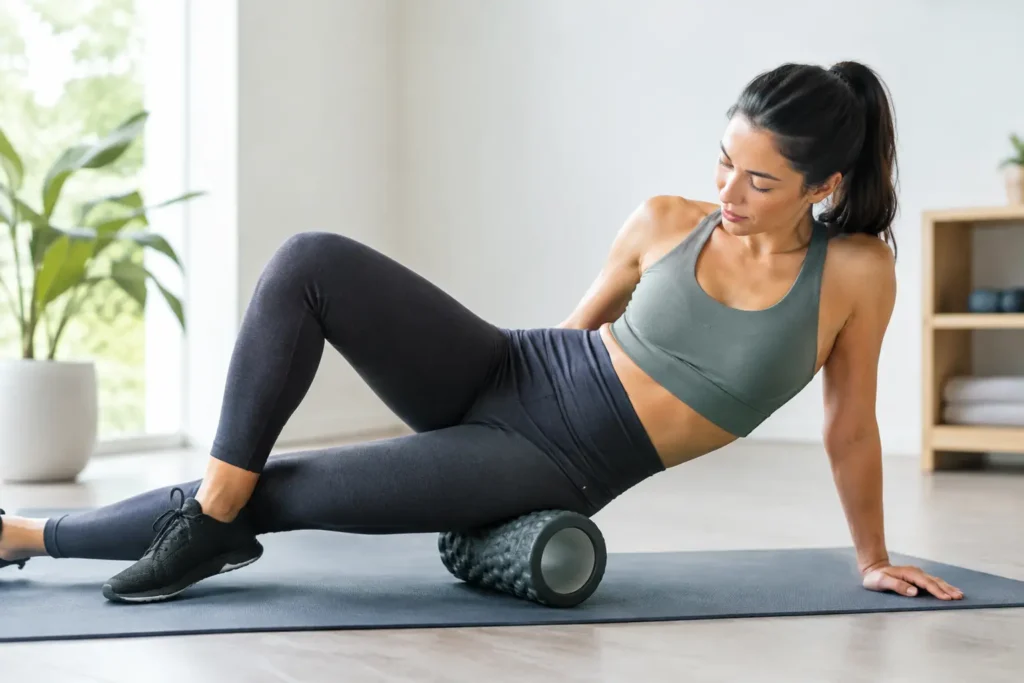
A massage ball, foam roller, or hands-on self-massage can offer short-term comfort and improve awareness of tight or tender areas. Use moderate pressure and move slowly. Aim for a sensation that is tolerable, not sharp, burning, numb, or intensely painful.
Spend a brief period on one area, then check how it feels when you stand, walk, or repeat the movement that was limited. If you feel more comfortable and mobile, that is useful information. If symptoms increase, ease off and choose a gentler method.
Avoid pressing directly over bony areas, open skin, varicose veins, an acute tear, or a painful swollen joint. People using blood-thinning medication, those with reduced sensation, or anyone with a significant medical condition should seek professional advice before using deep pressure tools.
Restore Strength and Everyday Movement
Lasting myofascial recovery usually requires more than a temporary reduction in tightness. The body needs gradual exposure to the activities it must perform: carrying a child, climbing stairs, working at a computer, playing tennis, or returning to the gym.
This may involve rebuilding strength in the hips and core for recurring lower-back discomfort, improving shoulder-blade control for neck and shoulder tension, or progressively loading the calves after a running-related issue. Exercises should be selected according to your symptoms, movement capacity, and goals. A routine copied from social media may not suit a recent injury, a postural habit, or a person with joint instability.
Small changes performed consistently tend to be more helpful than occasional intense sessions. A five-minute mobility break during the workday, a gradual return-to-training plan, and attention to lifting technique can all support recovery when matched to the individual.
How TCM May Support Myofascial Recovery
Traditional Chinese Medicine views pain and restricted movement through patterns of circulation, tension, and overall body balance. In a clinical setting, care may combine modern musculoskeletal assessment with TCM treatment principles to address both the immediate area of discomfort and contributing patterns elsewhere in the body.
Depending on the assessment, a licensed TCM physician may recommend acupuncture, therapeutic Tuina, Bojin therapy, or meridian-based adjuvant treatments. These approaches may be used to support comfort, circulation, relaxation, and movement as part of a personalized recovery plan. Treatment should not be presented as a substitute for urgent medical evaluation, imaging, rehabilitation, or specialist care when those are indicated.
At Y TCM Clinic, care begins with understanding the history of your symptoms, daily demands, injury pattern, and treatment goals. This matters because two people with the same complaint, such as lower-back tightness, may need very different care. One may be recovering from a sports-related overload, while another may be affected by prolonged sitting, stress, sleep disruption, or a prior injury.
A considered plan may include hands-on treatment alongside practical advice on movement, activity modification, and follow-up care. The intention is not to chase pain from one area to another, but to support a steadier return to comfortable, confident movement.
When to Seek a Professional Assessment
Consider booking an assessment when pain has not improved with reasonable self-care, keeps returning, limits work or exercise, or changes the way you walk, sleep, or move. Professional guidance is particularly valuable after a sports injury, a fall, a sudden increase in training, or repeated flare-ups in the same area.
A qualified practitioner can assess whether the issue appears primarily myofascial or whether another structure may be involved. They can also adapt treatment pressure and exercise recommendations to your tolerance. This is especially helpful for first-time TCM patients who want clear explanations, appropriate hygiene standards, and care that respects both traditional practice and modern clinical safety.
Recovery does not need to be rushed or painful to be meaningful. Pay attention to the pattern behind the tension, keep movement within a manageable range, and seek personalized care when your body is asking for more than a quick fix.