A sharp ache from the low back into the buttock or leg can make a desk chair, a car ride, or a familiar flight of stairs feel unexpectedly difficult. Sciatica is often used to describe this pattern of pain, tingling, numbness, or weakness. Many patients ask how Tuina relieves sciatica and whether hands-on TCM treatment can be part of a safe, practical recovery plan.
Tuina is not a generic relaxation massage. It is a therapeutic form of Chinese manual medicine that uses targeted techniques to address muscle tension, movement restrictions, and patterns of imbalance identified during an assessment. For some people with sciatica symptoms, it may help reduce pain, improve comfort with movement, and support recovery alongside appropriate medical care, exercise, and lifestyle adjustments.
First, understand what sciatica can mean
Sciatica refers to symptoms involving the sciatic nerve pathway, which travels from the lower back through the buttock and down each leg. The source is not always the same. A disc-related irritation in the lower spine, narrowing around a nerve, age-related spinal changes, tight or overloaded muscles around the hip, or prolonged poor positioning can all contribute to similar symptoms.
That distinction matters. Pain that begins in the lower back and travels below the knee may need a different approach from buttock pain linked primarily to hip muscle tension. A careful practitioner should not assume that every ache along the back of the leg has one cause.
At a consultation, a licensed TCM physician or trained therapist may ask where the pain begins, what movements aggravate it, whether there is numbness or weakness, and how long symptoms have been present. They may also observe posture, walking, hip and lower-back mobility, and areas of muscular guarding. This assessment guides treatment and helps determine when medical evaluation should come first.
How Tuina relieves sciatica symptoms
Tuina works through skilled, purposeful contact rather than a fixed sequence of massage strokes. Depending on the presentation, treatment may include pressing, kneading, rolling, mobilizing, stretching, and work along selected muscles and meridian pathways.
Reducing protective muscle tension
When pain is present, the body often responds by tightening surrounding muscles to protect the area. This guarding can develop in the lower back, glutes, hip rotators, hamstrings, and calves. While understandable, persistent tension may make sitting, walking, and bending feel more restricted.
Tuina techniques can help soften overactive tissue and improve local circulation. The goal is not to force a painful area to release. Instead, pressure is adjusted according to tissue sensitivity and the patient’s response. Easing tension around the low back and hip may reduce the mechanical pull or compression that is contributing to symptoms.
Supporting mobility without aggressive force
Sciatica can make people avoid movement entirely, yet prolonged stillness may increase stiffness and fear of normal activity. Gentle joint mobilization and assisted stretching may help restore more comfortable movement at the hips and lower back.
This is where individualized care is essential. A person with acute, highly irritable leg pain may benefit from a gentler approach than someone whose symptoms are improving but whose hip and hamstring mobility remain limited. More pressure is not necessarily better, especially when nerve-related symptoms are active.
Addressing the broader movement pattern
TCM Tuina considers the painful region, but it also looks at connected areas. For example, a therapist may work with the glutes, outer hip, thigh, calf, or even the abdominal and pelvic region when these tissues are affecting posture and movement. In TCM terms, treatment may aim to promote the smooth flow of qi and blood through areas of stagnation. In practical terms, patients often notice less tightness and easier movement after targeted work.
This whole-pattern approach can be useful for people whose symptoms recur after long hours at a desk, repeated lifting, intensive training, or long commutes. Still, Tuina does not remove the need to identify and change the habits or loading patterns that may be repeatedly aggravating the area.
What a Tuina session for sciatica may involve
A clinically guided session should begin with a conversation, not immediate deep pressure. Your practitioner will consider the location and severity of symptoms, your medical history, recent injuries, and any previous imaging or diagnosis. They should also ask about medications, pregnancy, osteoporosis, blood-thinning medication, and other factors that could change the treatment plan.
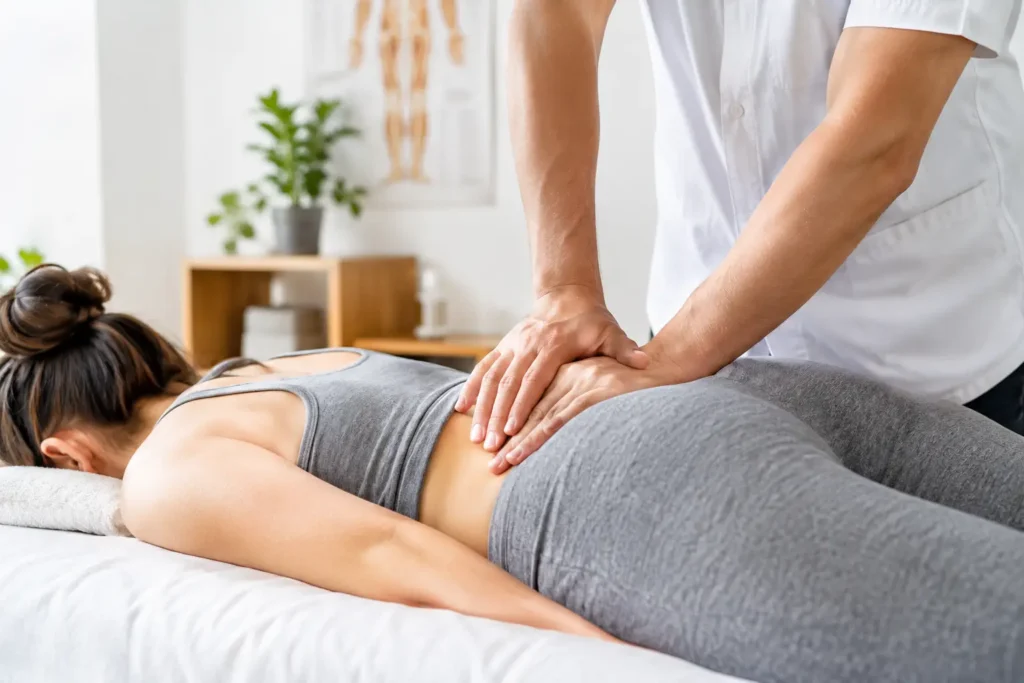
Treatment is usually performed with the patient comfortably positioned on a treatment table. The practitioner may begin away from the most tender point, such as the back, hips, or thighs, before working more specifically around areas of tightness. Some techniques can feel firm, but treatment should remain tolerable. Tell your practitioner promptly if pressure causes sharp, shooting, burning, or worsening pain down the leg.
Afterward, mild tenderness can occur, particularly when tissues have been guarded for some time. Many people are advised to stay gently active, avoid sudden heavy lifting, and notice how their symptoms respond over the next day or two. A personalized plan may include several sessions, with the frequency adjusted based on the severity and cause of symptoms rather than promised as a standard package.
When Tuina may be most helpful
Tuina may be a reasonable complementary option when sciatica-like symptoms are linked with muscle tightness, reduced mobility, postural strain, or recovery after an acute flare has been medically assessed. It can also support patients who want a hands-on approach while they work on therapeutic exercise, pacing, sleep positions, and ergonomic changes.
Results vary. If nerve irritation is driven by a significant disc injury or spinal narrowing, Tuina may help surrounding muscle tension and comfort but may not fully resolve the underlying cause on its own. It is best viewed as one part of a coordinated care plan, not a substitute for diagnosis when symptoms are severe or persistent.
At Y TCM Clinic, care is guided by a thorough assessment and delivered in a calm clinical setting by licensed TCM physicians and experienced therapists. The focus is on treatment that respects both Traditional Chinese Medicine principles and Singapore’s healthcare standards, with clear explanations at every stage.
When to seek medical care promptly
Do not wait for a massage appointment if you have new or worsening leg weakness, loss of bowel or bladder control, numbness around the groin or inner thighs, fever with severe back pain, unexplained weight loss, or pain following a major fall or accident. These symptoms can require urgent medical assessment.
It is also wise to speak with a medical professional if pain is severe, keeps worsening, significantly disrupts sleep, or does not improve with conservative care. A responsible treatment plan includes knowing when manual therapy is appropriate and when referral or further investigation is needed.
Making recovery last beyond the treatment table
The benefit of Tuina is often greater when the body is not returned immediately to the same aggravating pattern. Small, realistic changes can matter: taking brief standing or walking breaks during desk work, using careful lifting mechanics, gradually rebuilding hip and trunk strength, and avoiding long periods in one position when symptoms are active.
Your practitioner may also suggest simple mobility work appropriate for your condition. These recommendations should feel manageable, not like an exercise program that provokes a flare. Recovery is often gradual, and a meaningful improvement may look like being able to sit through a meeting, walk farther, or sleep with fewer interruptions before pain disappears completely.
Persistent sciatic pain deserves careful attention, not guesswork or forceful treatment. With an appropriate assessment and a plan tailored to your symptoms, Tuina can offer a measured way to ease muscular tension, move with greater confidence, and give your body the conditions it needs to recover.