A stiff neck after long desk hours, a calf that remains tight after running, or recurring shoulder discomfort can all feel similar day to day. Yet the tissue involved, the pattern of tension, and the most appropriate treatment approach may be quite different. When considering Bojin versus myofascial release, the useful question is not which treatment is universally better. It is which approach suits your symptoms, health history, comfort level, and recovery goals.
Both are hands-on therapies that may be used to support movement, ease muscular tightness, and promote recovery. Their methods, underlying frameworks, and treatment sensations differ. A careful assessment by a qualified practitioner helps ensure the treatment is appropriate rather than simply intense.
What Is Bojin Therapy?
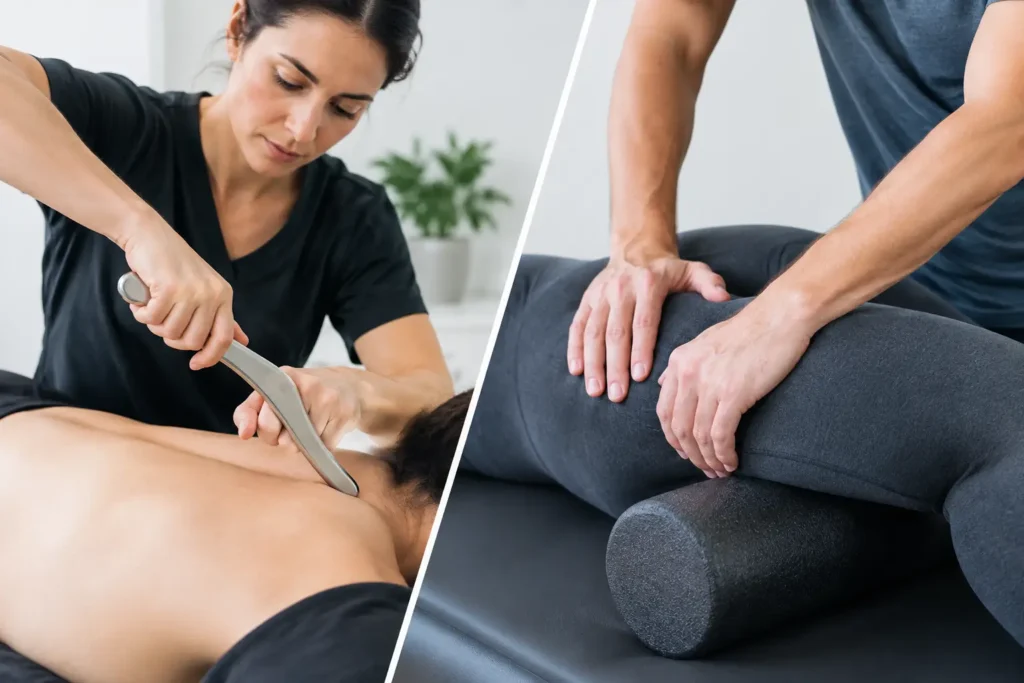
Bojin is a Traditional Chinese Medicine-inspired manual therapy that uses a smooth, specialized tool to apply controlled pressure along muscles, soft tissue, and meridian pathways. It is sometimes described as a form of instrument-assisted bodywork, but it should not be confused with a beauty treatment or a forceful scraping session.
In clinical practice, the practitioner first considers where discomfort is felt, how it developed, and whether there are broader patterns of tension, fatigue, or reduced mobility. The tool is then used with measured pressure over selected areas. The aim may be to release areas of tightness, encourage local circulation, and support the body’s natural recovery process.
Bojin treatment can feel firm, particularly around chronically tense muscles. However, firm does not need to mean unbearable. Pressure should be adjusted according to the individual’s tolerance, tissue condition, and the area being treated. Some people notice temporary redness or tenderness afterward, especially when tissue is already sensitive or congested.
From a TCM perspective, Bojin may be incorporated to support the flow of qi and blood through affected channels while addressing muscular and soft-tissue restriction. A licensed TCM physician may also consider whether acupuncture, Tuina, herbal medicine, or lifestyle guidance would better support the wider treatment plan.
What Is Myofascial Release?
Myofascial release is a manual therapy approach focused on fascia, the connective tissue that surrounds and links muscles, nerves, bones, and other structures throughout the body. When fascia and surrounding soft tissues become restricted or sensitized, movement can feel limited, pulling, or uncomfortable. This may occur after repetitive strain, prolonged sitting, exercise, injury, or periods of reduced movement.
Rather than working only on the exact spot that hurts, myofascial release often follows patterns of tension across a wider area. For example, discomfort around the lower back may be assessed alongside hip movement, gluteal tension, and the mobility of the upper leg. A therapist may use slow, sustained pressure, gentle stretching, and guided movement to work with the tissue.
The treatment is commonly slower and more targeted than a conventional relaxation massage. Some pressure may be felt, but it should remain within a manageable range. The purpose is not to force tissue to release. It is to work progressively, while observing how the body responds.
Bojin Versus Myofascial Release: Key Differences
The most visible difference is the method. Bojin uses a purpose-designed tool and is guided by TCM principles, including meridian pathways and overall body balance. Myofascial release is generally performed with hands, fingers, forearms, or elbows and centers on fascial and soft-tissue mobility.
The pace can differ as well. Bojin may involve deliberate strokes and pressure along selected pathways or muscle groups. Myofascial release often uses sustained contact, allowing the therapist to assess resistance and adjust gradually. Both may be adapted for sensitive areas, but the experience is individual.
Their clinical context also matters. Bojin may be part of a broader TCM treatment plan, particularly when a physician identifies muscle tension alongside patterns such as fatigue, stress, or reduced circulation. Myofascial release is often selected when the assessment points to movement restriction, overuse patterns, postural strain, or soft-tissue recovery needs.
Neither method should be judged by how much discomfort it creates. A treatment that leaves you severely sore for days is not automatically more effective. Clear communication during the session is essential, particularly for first-time patients, people recovering from injury, and those who are sensitive to pressure.
Which Treatment May Suit Your Needs?
Bojin may be considered when you experience broad areas of muscular tightness, a heavy or fatigued feeling in the body, or tension that appears linked to repetitive work, stress, or reduced circulation. It may also appeal to patients who prefer a TCM-informed approach that can be integrated with acupuncture, Tuina, or other physician-led care.
Myofascial release may be more suitable when a specific movement feels restricted, such as reaching overhead, turning the neck, squatting, or returning to activity after a sports-related strain. It can be useful for patients who want a focused assessment of how muscles and connective tissue may be contributing to a recurring discomfort pattern.
There is meaningful overlap. A runner with calf tightness, for instance, may benefit from either approach depending on the findings. If the main concern is localized tissue restriction affecting ankle movement, myofascial techniques may be emphasized. If there is more widespread lower-leg tension and a TCM pattern that calls for broader support, Bojin may be included. In some cases, a practitioner may recommend a combination over several sessions.
Why Assessment Matters Before Hands-On Treatment
Pain does not always originate where it is felt. Shoulder discomfort can relate to posture, neck tension, repetitive lifting, or a previous injury. Lower-back pain can involve muscles, joints, nerves, training load, or internal health considerations. This is why a thorough assessment should come before selecting a technique.
At Y TCM Clinic, licensed TCM physicians and experienced therapists assess symptoms, relevant medical history, movement limitations, and treatment preferences before recommending care. This helps distinguish ordinary muscular tension from symptoms that may require medical evaluation or a different type of support.
Tell your practitioner about recent injuries, surgery, pregnancy, medications, skin sensitivity, bleeding concerns, osteoporosis, varicose veins, numbness, unexplained swelling, fever, or significant pain. These details affect whether Bojin or myofascial release is suitable and how pressure should be applied. Hands-on therapy may need to be postponed, modified, or avoided in certain circumstances.
What to Expect After Treatment
After either treatment, some people feel lighter, looser, or more comfortable moving. Others notice mild tenderness, particularly when addressing long-standing muscle tension. This should generally settle rather than worsen over time.
Gentle movement, adequate hydration, and avoiding unusually strenuous activity immediately after a session can be sensible, depending on your condition. Your practitioner may suggest simple mobility work, posture adjustments, rest, or a follow-up plan. Lasting improvement often depends on more than one treatment. Daily workload, exercise habits, sleep, stress, and movement patterns all influence how the body recovers.
Seek medical attention promptly for severe or worsening pain, weakness, loss of sensation, chest pain, shortness of breath, unexplained swelling, or symptoms following a significant injury. Complementary care works best when it respects appropriate medical boundaries.
Choosing Care That Feels Right
Bojin and myofascial release are not competing answers to every ache or injury. They are distinct tools that can be used thoughtfully when the treatment matches the person in front of the practitioner. The right session should leave you feeling heard, informed, and comfortable asking for adjustments.
If tension or restricted movement keeps returning, a personalized consultation can offer more value than choosing a technique based on a trend. Start with the pattern you are noticing, your daily demands, and what you want to return to – whether that is a pain-free workday, exercise, parenting, or simply more comfortable movement.