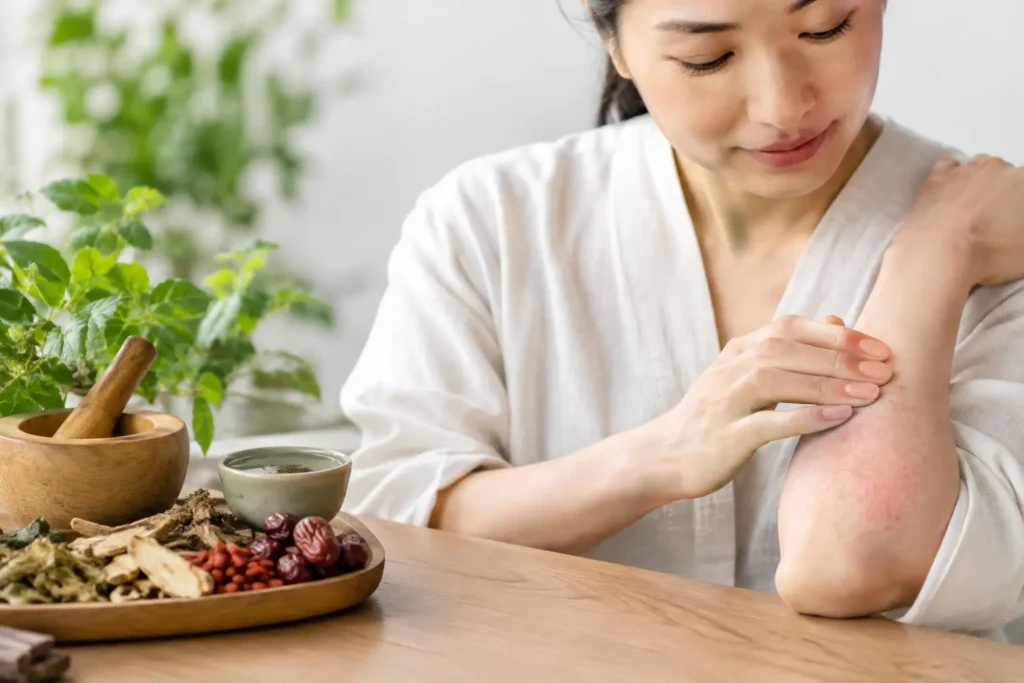
Eczema can be exhausting in ways that are easy to underestimate. Itching may interrupt sleep, visible flares can affect confidence, and the cycle of scratching and irritated skin can feel difficult to break. So, can TCM help eczema? Traditional Chinese Medicine may offer supportive care for some people, particularly when symptoms are recurring, stress-related, or affecting daily comfort. It should not replace appropriate dermatology care, especially for severe, infected, or rapidly worsening eczema.
A careful TCM approach starts with the individual, not a generic eczema protocol. A licensed TCM physician considers the pattern and location of skin symptoms, sleep, stress, digestion, energy, medical history, current medications, and what appears to trigger or worsen flares. The goal is to support comfort and overall balance while respecting the need for evidence-based skin care and medical treatment.
Can TCM Help Eczema Symptoms?
Eczema, often called atopic dermatitis, is a chronic inflammatory skin condition. It may cause dryness, redness or discoloration, itching, cracking, thickened skin, and sometimes oozing or crusting. Symptoms often come and go. Common triggers include heat, sweat, dry air, fragranced products, allergens, stress, illness, and certain fabrics.
From a TCM perspective, eczema is not treated as one identical condition for every patient. A practitioner may assess whether a flare appears more closely associated with heat, dampness, dryness, wind, or an underlying pattern of deficiency. These are traditional diagnostic concepts used to guide individualized treatment. They are not a substitute for a medical diagnosis of eczema or for allergy and dermatology evaluation when needed.
Some patients seek TCM because they want help managing the broader factors that may accompany eczema, such as poor sleep, stress, digestive discomfort, or fatigue. Acupuncture, prescribed Chinese herbal medicine, and practical lifestyle guidance may be considered as part of a personalized plan. Results vary. For many people, the realistic aim is not an instant cure, but fewer aggravating factors, better comfort between flares, and a more sustainable routine.
What a Personalized TCM Plan May Include
Acupuncture for stress and symptom support
Acupuncture uses very fine, sterile single-use needles at selected points on the body. For eczema, a licensed TCM physician may recommend acupuncture when stress, disturbed sleep, or general tension seem to be contributing to a flare pattern. The treatment may also be used to support relaxation and overall wellbeing.
Acupuncture is not a replacement for moisturizing, topical medication, or other treatment recommended by a dermatologist. Rather, it may be used alongside a medical skin-care plan when appropriate. Patients should share their eczema diagnosis, medications, allergy history, and any past reactions to treatment before beginning care.
Chinese herbal medicine with clinical oversight
Chinese herbal medicine is sometimes used in TCM for skin concerns, but it should never be treated as a casual or one-size-fits-all remedy. Herbal formulas are selected according to the physician’s assessment and may need to be adjusted as symptoms change.
This is particularly important for eczema because skin flares can have different drivers and because herbs may interact with medications or may not be suitable during pregnancy, breastfeeding, or certain health conditions. A qualified practitioner should review your medical history carefully. Avoid purchasing unverified herbal products online or combining several products without professional guidance.
Lifestyle and skin-care guidance
Small daily choices can make a meaningful difference in eczema management. A TCM consultation may include discussion of sleep, stress, food patterns, hydration, exercise, and environmental triggers. The advice should be practical, not restrictive for its own sake.
For example, people with eczema often benefit from keeping showers brief and lukewarm, applying a fragrance-free moisturizer soon after bathing, using gentle cleansers, and choosing breathable fabrics. If sweating is a trigger, changing out of damp workout clothing promptly may help. Food restrictions should be approached carefully, especially for children. Eliminating many foods without a clear reason can create nutritional problems and may not improve eczema.
The Role of Tuina and Other Hands-On Therapies
When eczema is active, inflamed, cracked, or painful, treatment directly over affected skin may not be appropriate. Massage oils, friction, and pressure can worsen irritation in some cases. This is why assessment matters.
TCM Tuina and other hands-on therapies may be considered for areas away from active lesions when muscle tension, stress, or poor sleep are part of the wider picture. However, they are not primary treatments for broken or infected skin. A responsible practitioner will adapt the session, avoid compromised skin, and prioritize patient comfort and hygiene.
What TCM Cannot Safely Replace
Eczema can sometimes lead to bacterial, viral, or fungal infection. Seek prompt medical care for increasing pain, warmth, swelling, pus, honey-colored crusting, fever, rapidly spreading redness, or clusters of painful blisters. These symptoms require medical assessment and should not be managed with herbs or massage alone.
You should also speak with a dermatologist or primary care clinician if eczema is affecting large areas of the body, disrupting sleep regularly, not responding to your usual treatment, or creating significant emotional distress. Prescription topical medications, wet wraps, allergy assessment, phototherapy, and newer systemic treatments can be important options depending on severity.
TCM is best viewed as complementary care. A good treatment plan makes room for both traditional and conventional approaches, rather than asking a patient to choose between them. Bring a list of medications, supplements, creams, and previous treatments to your consultation so that care can be coordinated thoughtfully.
How to Decide Whether TCM Is Right for You
TCM may be worth considering if you have diagnosed eczema and want additional support for recurring discomfort, stress, sleep, or lifestyle patterns that seem connected to flares. It may also suit patients who prefer a longer consultation that considers how symptoms fit into their broader health picture.
The quality of care matters more than bold promises. Look for a licensed TCM physician who takes a full history, explains the proposed treatment clearly, uses proper hygiene, and is comfortable referring you for medical evaluation when necessary. Be cautious of anyone who guarantees a cure, advises you to stop prescribed medication without consulting your doctor, or recommends extensive dietary restriction without a clear clinical reason.
At Y TCM Clinic, care begins with a thorough assessment and a personalized discussion of what may be appropriate for your symptoms, medical history, and comfort level. The aim is to provide attentive, clinically disciplined support while helping you make informed choices about your skin health.
Eczema management is often a process of observation, adjustment, and patience. When your care is coordinated, your triggers are better understood, and your skin barrier receives consistent attention, you are in a stronger position to manage flares with confidence.