
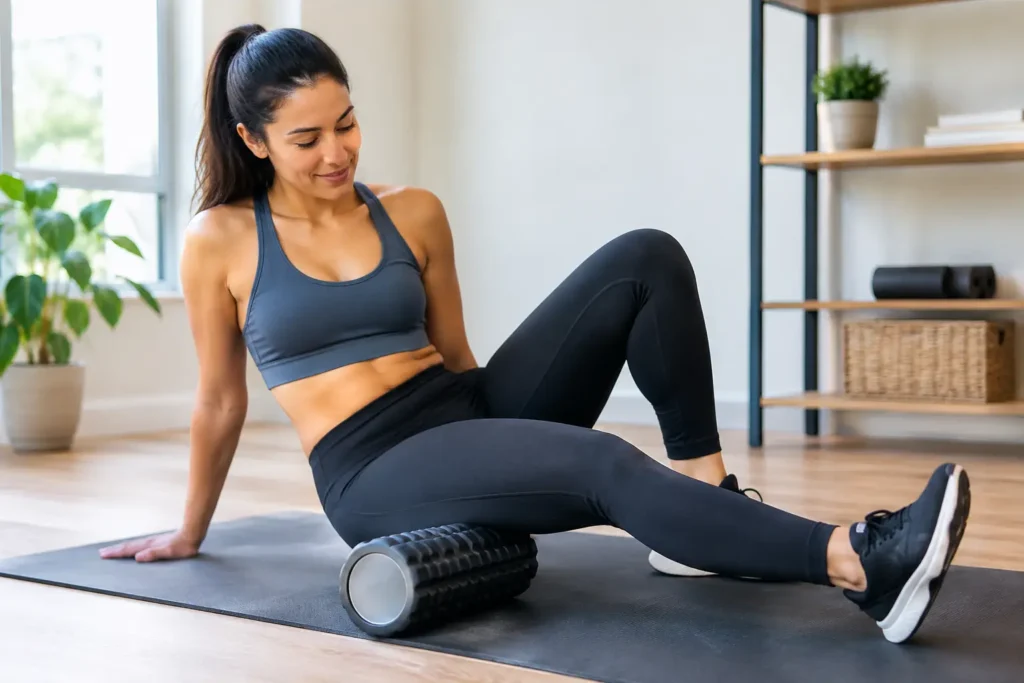
The stairs feel steeper the morning after a new strength class, a long run, or a return to the gym. Knowing how to ease workout soreness can help you stay consistent with movement without mistaking recovery for inactivity. The goal is not to eliminate every sensation immediately. It is to support your body while recognizing when soreness may be a sign that you need more than a rest day.
Understand What Normal Workout Soreness Feels Like
Delayed onset muscle soreness, often called DOMS, commonly develops 12 to 24 hours after unfamiliar or demanding exercise and may peak within one to three days. It is particularly common after exercises that lengthen a muscle under load, such as lowering into a squat, walking downhill, or the lowering phase of a weight exercise.
Typical soreness feels dull, tender, tight, or stiff in the muscles you used. It may make everyday movements less comfortable, but it should gradually improve. A little stiffness after training is not necessarily a problem. Your muscles are adapting to a new demand.
Pain that is sharp, sudden, focused around a joint, associated with notable swelling, bruising, weakness, numbness, or an inability to bear weight deserves a different response. Stop the aggravating activity and seek an appropriate medical assessment. Severe pain, dark-colored urine, fever, or rapidly worsening swelling should be evaluated urgently.
How to Ease Workout Soreness With Active Recovery
Complete rest can be useful after an exhausting session or an injury, but gentle movement often feels better for ordinary post-exercise soreness. A comfortable walk, easy cycling, relaxed swimming, or mobility work can increase circulation and reduce the feeling of stiffness without placing another heavy load on tired tissues.
Keep the effort genuinely easy. If you cannot speak comfortably, it is probably no longer recovery work. The purpose is to restore comfortable movement, not to compensate for a missed workout.
Use mobility, not aggressive stretching
Slow, controlled mobility exercises can be helpful when muscles feel guarded. Try a few minutes of easy hip circles, shoulder rolls, cat-cow movements, or bodyweight squats within a pain-free range. Dynamic movement is often more useful before activity, while gentle static stretches may feel calming afterward.
Avoid forcing a deep stretch into a sore muscle. Stretching should create mild tension, not sharp pain or a strong pulling sensation. More intensity is not always more effective during recovery.
Consider heat or cold based on the symptom
A warm shower, warm compress, or bath may relieve stiffness and help the body relax, especially when soreness is generalized and there is no acute swelling. Cold packs can feel more comfortable when there is a fresh flare of localized pain or swelling after activity. Use a cloth barrier and limit applications to short periods to protect the skin.
Neither approach repairs muscle overnight. Think of heat and cold as comfort measures that may help you move more easily while your body recovers.
Give Recovery the Basics It Needs
Recovery is influenced by what happens outside the gym as much as what happens inside it. A hard workout followed by poor sleep, inadequate food, dehydration, and another hard workout is a common route to persistent fatigue and recurring aches.
Eat enough to recover
After exercise, regular meals that include protein, carbohydrates, colorful produce, and healthy fats support normal recovery. Protein provides amino acids for muscle repair, while carbohydrates replenish energy stores used during training. There is no need for a complicated supplement routine for most people.
The right amount depends on your body size, training volume, goals, medical history, and usual diet. If you have diabetes, kidney disease, digestive symptoms, or specific dietary restrictions, individualized advice from your healthcare professional is more appropriate than generic fitness targets.
Hydrate consistently
Sweat losses can contribute to headaches, fatigue, and a heavy, cramp-like feeling after exercise. Drink fluids throughout the day rather than waiting until you are very thirsty. Water is sufficient for many sessions. During prolonged exercise, intense heat, or heavy sweating, a drink containing electrolytes may also be useful.
A practical check is your overall thirst, energy, and urine color. Very dark urine can suggest that you need more fluids, although supplements and some foods can also affect color.
Protect your sleep
Sleep is one of the most valuable recovery tools available. Aim for a regular bedtime, a cool and comfortable sleep environment, and a wind-down routine that gives your body time to settle after evening training. Even one or two nights of short sleep can make soreness feel more difficult to manage.
Massage and TCM Care for Persistent Muscle Tension
When soreness lingers, recurs in the same area, or comes with a feeling of restricted movement, hands-on care may be worth considering. A professional therapeutic massage can help reduce perceived muscle tightness and support relaxation. It should be tailored to your current sensitivity. Deep pressure immediately after a demanding session is not always the best choice, particularly if the area is very tender.
Traditional Chinese Medicine takes an individualized view of post-exercise discomfort. A licensed TCM physician may assess the location of tension, movement patterns, training habits, sleep, stress, and your wider health picture before recommending care. Depending on your needs, this may include acupuncture, TCM Tuina therapeutic massage, Bojin therapy, or other meridian-based approaches.
At Y TCM Clinic, care begins with a thorough assessment rather than assuming all muscle soreness needs the same treatment. This is especially relevant for active adults managing old sports injuries, desk-related tension, or repeated discomfort around the neck, back, hips, knees, or shoulders. Treatment should support comfort and recovery without replacing medical evaluation when a significant injury is suspected.
Adjust Your Next Workout Instead of Pushing Through
The most reliable way to reduce excessive soreness is to progress training gradually. You do not need to avoid challenge, but large jumps in volume, weight, distance, or intensity can leave your body struggling to catch up.
If soreness is mild and improves as you warm up, you may be able to train a different muscle group or perform a lighter version of your planned session. Reduce the load, shorten the workout, slow the pace, or choose lower-impact movement. If soreness changes your form, makes normal movement difficult, or worsens during exercise, take another recovery day.
For a new routine, start with fewer sets, shorter runs, or lower resistance than you think you can manage. Add demand in small increments over several weeks. This may feel conservative, but it creates a stronger foundation than alternating between overtraining and long breaks.
What Not to Rely On for Soreness Relief
Pain-relieving medication may have a role for some people, but it is not a routine substitute for recovery. Overusing it can mask symptoms that would otherwise tell you to modify activity, and certain medications are not suitable for everyone. Speak with a pharmacist or physician if you are unsure, especially if you take other medicines or have stomach, kidney, heart, or bleeding concerns.
Be cautious with intense foam rolling, percussion devices, or very deep massage when an area is acutely painful. These methods may feel helpful for some people, but more pressure can irritate already sensitive tissue. Use them gently and stop if pain increases.
It is also worth resisting the idea that soreness measures a successful workout. Progress can occur without being sore the next day. Better markers include improved control, strength, stamina, confidence, and the ability to train consistently.
When to Arrange a Professional Assessment
Consider a consultation if soreness lasts longer than about a week, keeps returning despite sensible adjustments, disrupts sleep, or limits your work and daily activities. A careful assessment can distinguish ordinary training-related discomfort from tendon irritation, joint concerns, nerve symptoms, or an injury that needs a more specific plan.
Recovery is not a test of toughness. Listen to the pattern your body is giving you, make the next session manageable, and allow steady care to do what forcing through discomfort cannot.