Knee osteoarthritis is a common joint condition that can cause recurring knee pain, stiffness and difficulty with everyday activities such as walking, climbing stairs or standing up from a chair. Although it becomes increasingly common with age, knee osteoarthritis can also affect younger adults, particularly those with previous knee injuries or other risk factors.
For people living with persistent symptoms, treatment often focuses on reducing discomfort, maintaining mobility and preserving everyday function. Alongside conventional medical care, some individuals explore Traditional Chinese Medicine (TCM) for knee osteoarthritis as a complementary approach.
Knee osteoarthritis TCM treatment may involve acupuncture, Tui Na, Chinese herbal medicine, cupping or other traditional techniques depending on the individual’s condition and assessment.
From a TCM perspective, knee pain is not necessarily treated identically in every patient. Practitioners traditionally differentiate between different symptom patterns involving concepts such as Qi and Blood stagnation, Cold, Dampness and deficiency before deciding on an appropriate approach.
This article explains knee osteoarthritis, its common symptoms, how TCM traditionally understands knee pain, and the TCM therapies that may be considered for people experiencing knee osteoarthritis.
Important: This article is for general educational purposes and does not constitute medical advice. Persistent or worsening knee pain, significant swelling, inability to bear weight, a hot or red joint, or symptoms following significant injury should be appropriately assessed by a healthcare professional.
What Is Knee Osteoarthritis?
Osteoarthritis is a joint condition involving changes to cartilage and other tissues within a joint.
Healthy cartilage provides a smooth surface that allows the bones forming the knee joint to move efficiently against one another.
With osteoarthritis, changes can occur in the cartilage, bone, synovium and other joint structures. The condition is sometimes described simply as “wear and tear,” although the biological processes involved are more complicated than mechanical wearing away of cartilage.
As osteoarthritis progresses, some people experience increasing pain, stiffness and reduced mobility.
However, the severity of symptoms does not always correspond directly to the amount of structural change visible on an X-ray.
Some people have substantial radiographic changes but relatively manageable symptoms, while others experience significant discomfort.
What Does Knee Osteoarthritis Feel Like?
The symptoms of knee osteoarthritis can vary considerably.
A common complaint is an aching sensation around the knee that becomes more noticeable during or after physical activity.
Other possible symptoms include:
- Knee pain
- Knee stiffness
- Reduced range of movement
- Swelling
- Tenderness
- Grinding or clicking sensations
- Difficulty climbing stairs
- Pain when walking longer distances
- Difficulty getting up from a chair
- Discomfort after prolonged standing
- Stiffness after periods of inactivity
Symptoms may fluctuate.
A person may experience relatively comfortable periods followed by days when the knee feels considerably more painful or stiff.
What Causes Knee Osteoarthritis?
There is no single cause of knee osteoarthritis.
Age is an important risk factor because structural changes within joints become increasingly common over time.
However, several other factors can influence the likelihood of developing knee osteoarthritis.
These include:
Previous knee injuries
Significant injuries affecting ligaments, cartilage or other knee structures can increase the risk of osteoarthritis later in life.
Body weight
Higher body weight can increase mechanical loading on weight-bearing joints such as the knees.
Occupational demands
Jobs involving substantial kneeling, squatting, lifting or repetitive physical loading may contribute to joint stress.
Genetics
Some individuals may have a greater inherited susceptibility to osteoarthritis.
Joint alignment and biomechanics
How forces are distributed through the knee can influence stress on particular parts of the joint.
Osteoarthritis therefore develops through a combination of biological and mechanical factors rather than simply because someone has “used their knees too much.”
How Does TCM View Knee Osteoarthritis?
Traditional Chinese Medicine uses a conceptual framework different from modern orthopaedic medicine.
Within TCM, chronic knee pain and stiffness may be discussed according to concepts involving:
- Qi
- Blood
- Meridians
- Bi Syndrome
- Wind
- Cold
- Dampness
- Stagnation
- Deficiency
Joint pain and stiffness are often traditionally associated with Bi Syndrome, sometimes translated as painful obstruction syndrome.
According to TCM theory, obstruction affecting the circulation of Qi and Blood through the meridians may contribute to pain, heaviness and restricted movement.
Different symptom patterns may subsequently be classified differently.
These traditional concepts should not be interpreted as biomedical explanations for cartilage changes or structural osteoarthritis.
Bi Syndrome and Knee Arthritis
Bi Syndrome is commonly discussed in relation to joint and musculoskeletal discomfort.
In traditional TCM theory, factors such as Wind, Cold and Dampness may obstruct the meridians and interfere with the circulation of Qi and Blood.
A practitioner may therefore ask whether knee symptoms:
- Become worse during cold weather
- Feel better with warmth
- Are associated with heaviness
- Move between different areas
- Remain fixed in one location
- Involve swelling
- Are worse after prolonged inactivity
These characteristics may help the practitioner determine the traditional pattern.
The objective of treatment is then selected according to that pattern rather than simply applying one standard treatment to every person diagnosed with knee osteoarthritis.
Cold and Knee Pain in TCM
Some people with knee osteoarthritis report that their symptoms become more noticeable during colder weather or after spending time in cold environments.
Within TCM theory, this may be interpreted as a Cold-related pattern.
The knee may feel stiff, uncomfortable or particularly sensitive to low temperatures.
A practitioner may therefore choose therapies traditionally intended to address Cold and promote circulation.
It is important to recognise that this represents traditional Chinese medical theory rather than evidence that cold weather physically causes cartilage degeneration.
Dampness and Knee Symptoms
Another traditional pattern involves Dampness.
TCM practitioners may associate sensations of heaviness, swelling or persistent joint discomfort with Dampness-related patterns.
A person who describes the knee as feeling “heavy” may therefore receive a different TCM assessment from someone experiencing sharp, fixed pain.
Again, Dampness is a traditional TCM concept and should not be interpreted literally as moisture accumulating within the knee.
Qi and Blood Stagnation
Knee pain that is relatively fixed or associated with previous trauma may sometimes be interpreted within TCM theory as involving Qi stagnation and Blood stasis.
This may be particularly relevant when a person has a history of knee injury.
The traditional treatment objective may involve promoting the circulation of Qi and Blood through the affected region.
Acupuncture, Tui Na or other therapies may be considered depending on the individual’s condition.
Deficiency Patterns in Chronic Knee Osteoarthritis
Longstanding knee problems may also be interpreted according to underlying deficiency patterns within TCM.
Practitioners may therefore ask questions that extend beyond the knee itself.
These may involve:
- Energy levels
- Sleep
- Appetite
- Digestion
- General physical condition
- Other aches and pains
- Sensitivity to temperature
Traditional tongue and pulse assessment may also form part of the consultation.
This whole-person approach is one reason two patients with the same diagnosis of knee osteoarthritis may receive different TCM treatment plans.
Acupuncture for Knee Osteoarthritis
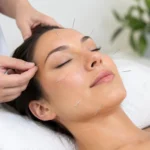
Acupuncture is one of the most commonly explored TCM therapies for knee osteoarthritis.
Treatment involves inserting thin, sterile needles into selected acupuncture points.
For knee symptoms, points may be selected around appropriate areas surrounding the knee and leg.
Distal acupuncture points elsewhere on the body may also be selected according to TCM pattern differentiation.
From a traditional perspective, acupuncture is used with the intention of promoting the circulation of Qi and Blood and addressing obstruction within relevant meridians.
Modern scientific research has also investigated acupuncture for knee osteoarthritis symptoms. Research findings vary depending on treatment protocols, comparison groups and outcomes, so acupuncture is better viewed as a potential complementary option for symptom management rather than a guaranteed treatment.
What Happens During Acupuncture for Knee Pain?
Before treatment, the TCM practitioner generally conducts an assessment.
The patient may be asked about the location of the pain.
For example:
Is the pain mainly at the front of the knee?
Does it occur around the inside or outside of the joint?
Is there discomfort behind the knee?
Is swelling present?
Does walking make it worse?
Does resting improve it?
The practitioner may also examine the surrounding area and perform traditional pulse and tongue assessment.
Acupuncture needles can then be inserted at selected points.
The exact number and location of needles varies according to the practitioner and individual treatment plan.
Can Acupuncture Regenerate Knee Cartilage?
This is an important question because people with knee osteoarthritis sometimes search for ways to “restore” cartilage.
Acupuncture should not be represented as a proven method of rebuilding cartilage that has been lost through osteoarthritis.
There is an important difference between managing symptoms and reversing structural joint degeneration.
A person may experience changes in pain or everyday function without structural osteoarthritis disappearing.
Realistic expectations are therefore important.
The objective of complementary treatment may include helping manage discomfort and supporting mobility rather than regenerating an osteoarthritic knee.
Tui Na for Knee Osteoarthritis
Tui Na is a traditional Chinese manual therapy involving techniques such as:
- Pressing
- Kneading
- Rolling
- Rubbing
- Gentle mobilisation
For knee osteoarthritis, treatment may involve appropriate areas surrounding the knee together with muscles of the thigh and lower leg.
Muscles play an important role in supporting the knee.
For example, someone experiencing knee pain may alter the way they walk or move, which can contribute to muscular tightness elsewhere.
Tui Na may therefore be considered as part of a broader treatment approach.
However, forceful treatment may not be suitable for an acutely painful or significantly swollen knee.
Chinese Herbal Medicine for Knee Osteoarthritis
Chinese herbal medicine may also be incorporated into TCM treatment.
Rather than prescribing one standard herbal product for everyone with knee osteoarthritis, practitioners traditionally select formulas according to the patient’s overall TCM pattern.
Someone with a Cold-related presentation may therefore receive a different prescription from someone whose symptoms are interpreted as involving another pattern.
Patients taking medications should tell their practitioner before using herbal products.
Chinese herbs contain biologically active substances and can potentially interact with medications.
This is particularly relevant for older adults who may already be taking several medications for chronic health conditions.
Cupping for Knee Pain
Cupping uses suction created within specialised cups placed against the skin.
Although cupping may be used in musculoskeletal TCM treatment, it is generally applied to appropriate soft-tissue areas rather than directly over severely swollen or acutely inflamed joints.
Within traditional theory, cupping is associated with promoting circulation and addressing stagnation.
It may occasionally be combined with acupuncture or Tui Na.
Temporary circular marks are a common effect of cupping.
These marks should not be interpreted as evidence that “toxins” have been extracted from the knee.
Gua Sha for Knee Osteoarthritis
Gua Sha involves repeatedly moving a smooth-edged instrument across the skin.
For knee-related symptoms, a practitioner may consider treatment around suitable muscular and soft-tissue areas of the thigh or lower leg.
Within TCM theory, Gua Sha may be used with the intention of promoting circulation.
However, Gua Sha does not rebuild cartilage or mechanically correct osteoarthritis.
Its role should therefore be considered complementary.
TCM for Knee Osteoarthritis in Older Adults
Because osteoarthritis becomes increasingly common with age, many people seeking TCM treatment for knee pain are older adults.
Treatment planning may require additional considerations in this population.
Older patients may have:
- Osteoporosis
- Diabetes
- Cardiovascular conditions
- Reduced mobility
- Previous joint surgery
- Multiple medications
Practitioners should therefore obtain an appropriate medical history.
Treatment intensity should also reflect the individual’s physical condition rather than applying aggressive therapy automatically.
Exercise and Knee Osteoarthritis
People with painful knees sometimes assume that they should avoid movement completely.
In reality, appropriately selected exercise is often an important component of knee osteoarthritis management.
Exercise can help maintain:
- Muscular strength
- Joint movement
- Balance
- Walking ability
- General physical function
Strengthening the muscles supporting the knee can be particularly useful.
Low-impact activities may be more comfortable for some individuals.
However, the appropriate programme depends on the severity of symptoms and the person’s overall physical condition.
A physiotherapist or other qualified healthcare professional can provide individualised exercise guidance where necessary.
Weight Management and Knee Osteoarthritis
Body weight can influence mechanical loading through the knee.
For individuals who are above a healthy weight, weight management may therefore form part of an overall knee osteoarthritis strategy.
This does not mean that everyone with knee osteoarthritis needs to lose weight.
The relevance depends on the individual.
Where appropriate, gradual and sustainable weight management can be considered alongside physical activity, medical treatment and complementary approaches such as TCM.
Knee Osteoarthritis TCM and Lifestyle Management
A comprehensive approach to knee osteoarthritis generally extends beyond attending treatment sessions.
Everyday habits matter.
People can consider:
Regular movement
Remaining inactive for extended periods may contribute to stiffness.
Appropriate exercise
Strength and mobility can help support everyday function.
Managing activity levels
Alternating demanding activities with appropriate recovery may be useful for some people.
Suitable footwear
Comfortable and appropriate footwear may help some individuals manage walking and daily activities.
Maintaining overall health
Sleep, nutrition and management of other health conditions can influence overall wellbeing.
TCM can therefore be considered one component of a broader strategy rather than the only intervention.
TCM and Conventional Treatment
TCM and conventional treatment do not necessarily need to be treated as opposing choices.
Someone with knee osteoarthritis may receive conventional medical assessment while also exploring acupuncture or other complementary approaches.
Conventional management can include:
- Education
- Exercise
- Physiotherapy
- Weight management where appropriate
- Medication
- Injections in selected cases
- Surgical options for advanced disease
The appropriate approach depends on symptom severity, structural changes and the individual’s functional needs.
For advanced knee osteoarthritis that substantially limits everyday life, specialist assessment may be appropriate.
When Knee Pain Requires Medical Attention
Not every painful knee represents ordinary osteoarthritis.
Seek appropriate medical assessment when knee symptoms involve:
- Significant swelling
- A hot or red knee
- Fever
- Inability to bear weight
- Severe pain following injury
- Sudden major swelling
- Locking following trauma
- Significant instability
- Rapidly worsening symptoms
- Persistent unexplained pain
A hot, swollen and very painful joint can sometimes indicate conditions requiring prompt medical attention.
It should not simply be assumed to represent osteoarthritis or treated solely with massage or acupuncture.
How Many TCM Sessions Are Needed for Knee Osteoarthritis?
There is no universal number.
Treatment frequency depends on factors including:
- Severity of osteoarthritis
- Duration of symptoms
- Pain intensity
- Mobility
- Age
- General health
- Other treatments
- Individual response
Someone experiencing mild intermittent knee stiffness may require a very different approach from someone with longstanding advanced osteoarthritis.
Progress should therefore be reassessed rather than relying on a predetermined number of treatments.
Patients should be cautious about promises that knee osteoarthritis can be permanently cured after a specific number of acupuncture sessions.
Can TCM Cure Knee Osteoarthritis?
Knee osteoarthritis involves structural and biological changes within the joint.
TCM should not be presented as a guaranteed way to reverse these changes.
Acupuncture, Tui Na and other complementary approaches may instead be explored for symptom management and functional support where appropriate.
The distinction is important.
A reduction in pain does not necessarily mean that cartilage has regenerated.
Likewise, an improvement in walking comfort does not mean the underlying osteoarthritis has disappeared.
A realistic management plan focuses on improving quality of life while appropriately monitoring the condition.
Frequently Asked Questions About Knee Osteoarthritis TCM
Can TCM be used for knee osteoarthritis?
Some people explore TCM approaches such as acupuncture as complementary methods for managing knee pain and stiffness. Suitability depends on the individual and underlying condition.
Is acupuncture used for knee osteoarthritis?
Yes. Acupuncture is commonly explored for knee osteoarthritis-related discomfort. Research has investigated its potential role in symptom management, although results vary.
Can acupuncture restore knee cartilage?
Acupuncture should not be represented as a proven method for regenerating cartilage lost through osteoarthritis.
Is Tui Na suitable for knee arthritis?
Tui Na may be considered for appropriate muscular and soft-tissue areas around the knee. Treatment should be adapted to the person’s condition and may not be suitable during significant acute inflammation.
Can Chinese herbs be used for knee osteoarthritis?
Chinese herbal medicine may be prescribed according to individual TCM pattern differentiation. Patients taking medication should discuss possible interactions with an appropriately qualified practitioner.
Is walking good for knee osteoarthritis?
Appropriate physical activity can form an important part of osteoarthritis management. The suitable amount and intensity depend on the individual’s symptoms and physical condition.
Does knee osteoarthritis always require surgery?
No. Many people manage knee osteoarthritis using non-surgical approaches. Surgery may be considered when symptoms and functional limitations become substantial and other treatments are insufficient.
Choosing TCM for Knee Osteoarthritis
For someone considering knee osteoarthritis TCM, appropriate assessment is an important starting point.
The practitioner may ask about the nature of the pain, swelling, mobility, previous injuries and other symptoms.
Traditional TCM assessment may then classify the presentation according to concepts involving:
Bi Syndrome
Qi and Blood stagnation
Wind-Cold-Dampness
Deficiency patterns
Treatment may subsequently involve acupuncture, Tui Na, Chinese herbal medicine, cupping or Gua Sha depending on suitability.
However, TCM should form part of a realistic management strategy.
It should not require ignoring conventional diagnoses or discontinuing medically necessary treatments.
Conclusion
Knee osteoarthritis TCM involves the use of Traditional Chinese Medicine approaches for people experiencing knee pain, stiffness and mobility difficulties associated with osteoarthritis.
From the traditional TCM perspective, knee symptoms may be interpreted through patterns involving Bi Syndrome, Qi and Blood stagnation, Wind, Cold, Dampness and underlying deficiency.
Depending on the individual’s presentation, TCM treatment may include acupuncture, Tui Na, Chinese herbal medicine, cupping or Gua Sha.
Among these approaches, acupuncture is one of the most commonly explored complementary therapies for knee osteoarthritis symptoms.
However, realistic expectations are important.
Knee osteoarthritis involves changes within the joint, and complementary therapies should not be represented as guaranteed methods of regenerating lost cartilage or permanently reversing osteoarthritis.
For many people, management instead focuses on reducing the impact of symptoms and maintaining mobility, strength and everyday function.
TCM can potentially form one component of this broader strategy alongside appropriate exercise, weight management where relevant, physiotherapy, conventional medical treatment and lifestyle modifications.
Most importantly, significant swelling, redness, severe pain, inability to bear weight or rapidly worsening symptoms should receive appropriate medical assessment rather than automatically being attributed to ordinary knee osteoarthritis.
Disclaimer: This article is provided for general educational and informational purposes only. It does not constitute medical advice, diagnosis or treatment. Individuals experiencing persistent, severe, swollen or worsening knee symptoms should seek assessment from an appropriately qualified healthcare professional.