A face can look less defined for reasons that have little to do with facial bone structure. Jaw clenching, tight neck muscles, fluid retention, repetitive expressions, sleep disruption, and stress can all affect how the face feels and appears. TCM Facial Bone Sculpting is a hands-on treatment approach that addresses these soft-tissue and tension patterns through Traditional Chinese Medicine principles and careful manual therapy.
Despite its name, facial bone sculpting does not reshape adult facial bones or replace medical, dental, or cosmetic procedures. A responsible treatment plan focuses on the muscles, fascia, acupressure points, and circulation around the face, scalp, jaw, and neck. The aim is to help the face feel more relaxed and supported, while encouraging a naturally balanced, refreshed appearance.
What TCM Facial Bone Sculpting Involves
TCM facial bone sculpting may combine gentle facial massage, acupressure, meridian-based techniques, and targeted work around areas where tension commonly accumulates. Depending on the individual assessment, a practitioner may also work along the scalp, temples, jawline, behind the ears, shoulders, and upper neck.
In TCM, the face is not treated in isolation. Facial puffiness, a dull complexion, jaw tension, or recurring tightness may be considered alongside sleep quality, stress levels, digestion, menstrual health, daily posture, and general patterns of circulation and balance. This wider view helps determine whether a treatment should be light and calming, more focused on muscular release, or supported by other appropriate TCM care.
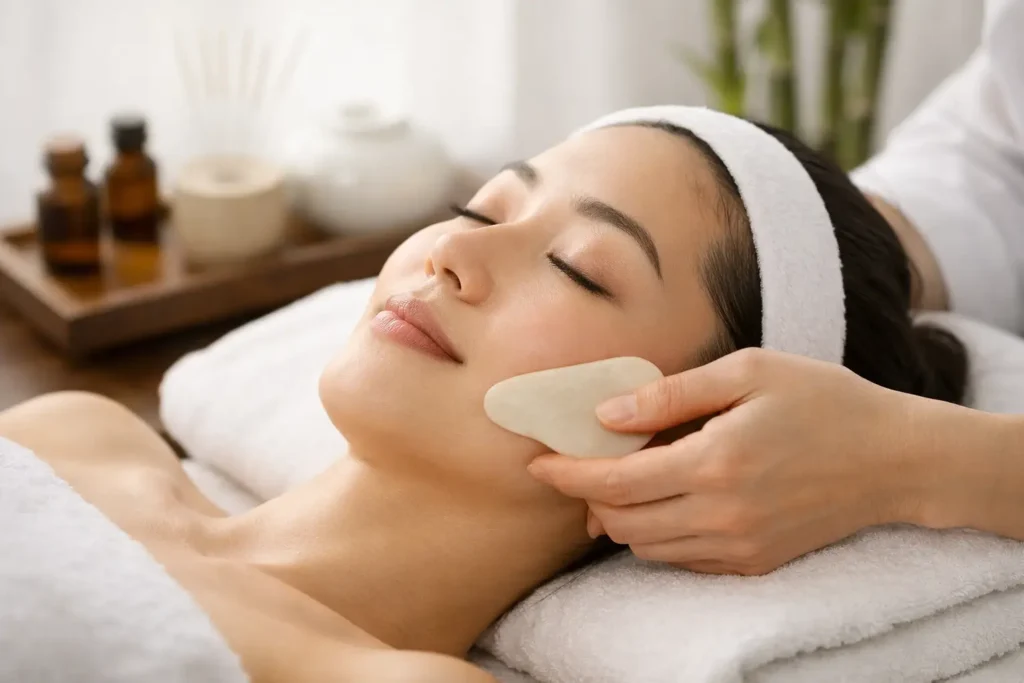
The treatment is usually performed with the hands and may involve tools used in Bojin therapy or other manual techniques when suitable. Pressure should be purposeful, controlled, and adjusted to the patient’s comfort. Stronger pressure is not automatically better, particularly around sensitive facial structures.
What It Can and Cannot Do
A clear understanding of expected results is central to safe, informed care. TCM Facial Bone Sculpting may help ease the feeling of tightness around the jaw, temples, forehead, or cheeks. Some patients also seek it when their face looks puffy after poor sleep, long workdays, travel, or periods of stress. By addressing soft-tissue tension and supporting local circulation, treatment may leave the face looking temporarily more relaxed and less congested.
For people who clench their jaw or spend long hours looking down at a screen, the neck and shoulders are often part of the picture. Releasing these connected areas can be as important as facial work itself. A treatment that only follows the jawline without assessing surrounding muscular tension may offer limited or short-lived comfort.
However, this treatment cannot permanently change bone shape, remove significant fat deposits, correct facial asymmetry caused by skeletal structure, or treat medical conditions that require diagnosis. It is not a substitute for orthodontic, dental, dermatological, surgical, or emergency medical care. Results also vary according to a person’s anatomy, lifestyle, tension patterns, and consistency of care.
Why Assessment Matters Before Facial Treatment
A facial treatment should not begin with a standard sequence applied to every patient. At a professional TCM clinic, a licensed TCM physician or experienced therapist should first understand what brings you in and whether hands-on care is appropriate.
The assessment may include questions about jaw clicking, headaches, teeth grinding, recent dental procedures, skin sensitivity, sinus symptoms, migraines, neck pain, medications, and past injuries. Your practitioner should also ask about cosmetic injectables, fillers, threads, or recent aesthetic treatments, as these can affect when and how manual facial therapy can be performed.
This is especially relevant if you have active acne inflammation, a skin infection, facial rash, unexplained swelling, recent surgery, acute dental pain, or suspected temporomandibular joint disorder. Treatment may need to be postponed, modified, or referred to another healthcare professional. Careful screening protects both comfort and safety.
What a Session May Feel Like
A session commonly begins with light contact to assess tissue tension and tenderness. The practitioner may then use slow, intentional strokes and sustained pressure around selected points. Work near the jaw and temples can feel tender when muscles are overworked, but it should not feel sharp, overwhelming, or unsafe.
Many patients describe a sense of release through the jaw, scalp, and upper neck as treatment progresses. Temporary warmth, mild redness, or tenderness can occur after manual therapy, particularly if there was substantial tightness beforehand. These effects should settle. Tell your practitioner promptly if you feel pain, numbness, dizziness, unusual bruising, or discomfort that persists.
A first appointment may focus more heavily on consultation and determining the appropriate approach. In some cases, facial work may be combined with TCM Tuina, acupuncture, or other meridian-based treatments to address the wider tension pattern. The right combination depends on your needs, not on a preset package.
Who May Consider TCM Facial Bone Sculpting?
This approach may suit adults seeking non-invasive support for facial and jaw tension, stress-related tightness, or a tired, puffy-looking appearance. It can be particularly relevant for working professionals who notice that long meetings, screen use, and concentrated tasks leave their jaw and forehead feeling tight by the end of the day.
It may also appeal to people who prefer a natural aesthetic treatment that prioritizes comfort and whole-body balance rather than aggressive techniques. Still, it is not appropriate simply because someone wants a sharper-looking face. The starting point should be a genuine assessment of tissue tension, health history, and realistic goals.
If you experience persistent jaw locking, severe headaches, facial weakness, sudden one-sided swelling, vision changes, fever, or pain after an injury, seek prompt medical evaluation rather than booking a facial treatment. These symptoms need proper medical assessment.
Supporting Results Between Appointments
The benefit of hands-on treatment is often affected by what happens between sessions. If jaw clenching, forward-head posture, irregular sleep, and dehydration continue unchanged, facial tension can return quickly. Small daily adjustments can help support comfort.
Try to notice whether your teeth are touching when you are not eating. A relaxed jaw generally allows a small space between the upper and lower teeth, with the tongue resting gently on the roof of the mouth. Taking short screen breaks, adjusting workstation height, and using slow breathing during stressful moments can also reduce habitual tightening through the face and neck.
Good sleep, regular movement, and balanced meals matter as well. In TCM, repeated patterns are often more useful than quick fixes. A personalized plan may include recommendations that fit your work schedule, stress level, and existing care routine.
Choosing a Safe Provider in Singapore
Facial manual therapy requires anatomical awareness, sound judgment, hygiene, and clear communication. Look for a clinic that explains what the treatment involves, asks about relevant health history, and does not promise permanent facial reshaping or dramatic results after one session.
You should feel able to discuss your goals, sensitivity, and concerns before treatment begins. A qualified practitioner will explain where they plan to work, check pressure regularly, and adapt the session if you have a recent procedure, an injury, or changing symptoms. At Y TCM Clinic, care begins with an individual assessment so facial treatment can be considered in the context of your overall comfort and wellbeing.
Common Questions About TCM Facial Bone Sculpting
Is TCM facial bone sculpting painful?
It should not be painful. Some areas may feel tender, especially around a tight jaw, temples, or neck, but the pressure should remain tolerable and can be adjusted immediately. Communicating during the session helps your practitioner provide appropriate care.
How many sessions will I need?
It depends on your goals and the underlying pattern. A person seeking occasional relaxation before an event may choose a single session, while someone with recurring jaw and neck tension may benefit from a course of care alongside posture and stress-management changes. Your practitioner should discuss a realistic plan after assessment.
Can I receive treatment after Botox, fillers, or other aesthetic procedures?
Possibly, but timing and technique matter. Always disclose recent procedures and follow the guidance of the provider who performed them. Your TCM practitioner may recommend waiting, avoiding certain areas, or choosing a gentler approach.
Is it suitable for jaw clenching?
It may be helpful as supportive care for muscular tension associated with clenching. If you have tooth damage, significant clicking, locking, or ongoing pain, it is wise to involve a dentist or doctor as well. A coordinated approach is often the most sensible one.
The most useful facial treatment is not the one that makes the biggest promise. It is the one that respects your anatomy, listens to what your body is signaling, and gives you a considered plan for feeling more comfortable over time.