
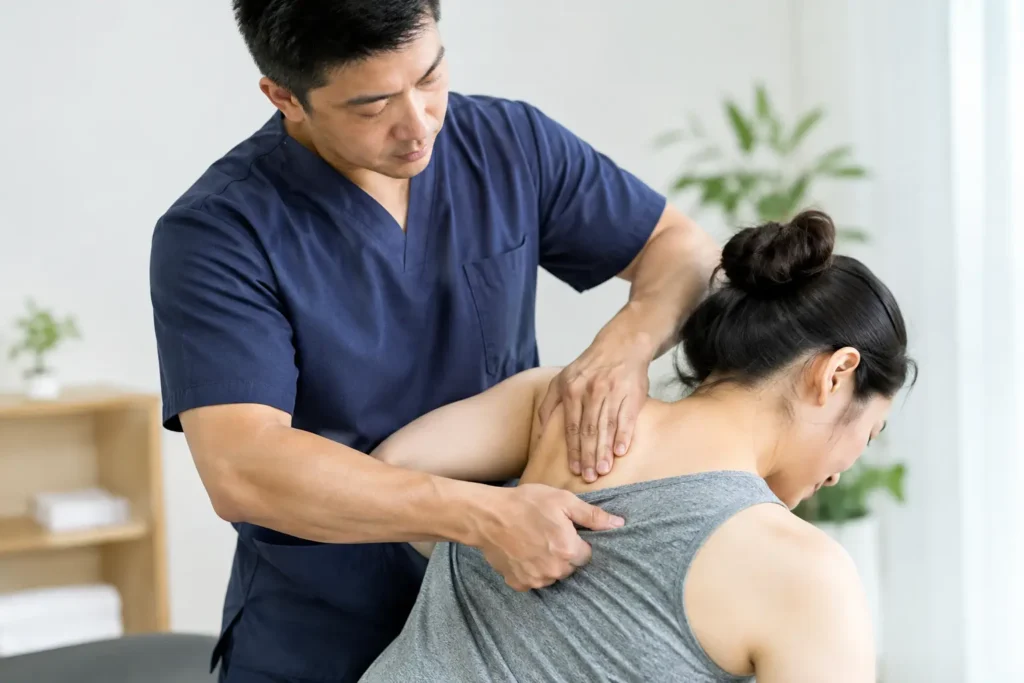
A Tuina injury rehabilitation case is rarely about one painful muscle or a single treatment session. A runner with a lingering calf strain, an office worker with neck stiffness after a minor accident, or a parent with a sore shoulder from lifting a child may all arrive with similar frustration: the sharp pain may have eased, but normal movement still does not feel reliable. Effective recovery begins by understanding what is limiting function now, not simply by pressing harder on the area that hurts.
This illustrative case shows how therapeutic Tuina may be used within a personalized Traditional Chinese Medicine care plan. Every injury, medical history, and recovery timeline is different. A licensed practitioner should assess whether Tuina is appropriate and whether medical evaluation or referral is needed first.
Tuina Injury Rehabilitation Case: A Common Pattern
Consider a recreational tennis player in her early forties who develops pain along the outside of her dominant elbow after several weeks of more frequent play. At first, she expects it to settle with rest. After a month, however, gripping a coffee mug, turning a doorknob, and using a computer mouse still trigger discomfort. She has reduced tennis but has not fully stopped the repetitive daily movements that continue to irritate the area.
At consultation, the goal is not to assume that every outer-elbow complaint is the same condition. A licensed TCM physician or trained therapist asks when symptoms began, what movements provoke them, whether there was a fall or sudden force, and whether there is numbness, weakness, swelling, or pain at rest. They also consider sleep, stress, work posture, activity level, and previous injuries because these can affect muscular tension and recovery habits.
The assessment may include observing the neck, shoulder, wrist, and elbow during movement. An elbow often works harder when the shoulder is restricted, the wrist is overused, or desk posture has encouraged prolonged tension through the upper back. Palpation helps identify areas of tenderness, guarding, and tissue tightness. In TCM terms, practitioners also consider local stagnation and the broader pattern of imbalance that may be contributing to slow recovery.
This whole-body view does not replace conventional diagnosis when one is required. Instead, it helps shape a careful treatment plan for suitable musculoskeletal complaints.
Why Assessment Changes the Treatment
A painful area is not always the only area that needs attention. In this case, treating only the elbow may provide temporary comfort, yet leave the shoulder, forearm, and hand mechanics unchanged. Conversely, treating the entire arm aggressively during an irritable phase can aggravate symptoms.
The first few sessions should therefore prioritize tolerance. If pain is easily triggered and the patient is guarding the arm, treatment may be gentler and more focused on easing surrounding tension, improving comfortable range of motion, and reducing strain in daily activities. As sensitivity settles, the plan can progress toward restoring more confident use of the wrist, hand, and elbow.
The appropriate approach depends on the stage of injury. A recent injury with bruising, marked swelling, or acute inflammation requires a different decision than a persistent problem that has become stiff and deconditioned. A professional assessment helps distinguish between these situations rather than applying a standard massage routine to everyone.
When Tuina should wait
Hands-on care is not appropriate for every painful condition. Sudden severe pain, obvious deformity, inability to use a limb, suspected fracture, fever, unexplained swelling, spreading redness, new numbness, or progressive weakness should be medically assessed promptly. Patients taking blood-thinning medication, those with certain skin conditions, or those with complex medical histories should also disclose this before treatment.
A responsible clinic will explain when Tuina can be considered, when it should be modified, and when another healthcare professional needs to be involved.
The Tuina Treatment Plan
Tuina is a therapeutic form of Chinese manual therapy. It uses controlled techniques such as pressing, kneading, rolling, and gentle mobilization to address soft-tissue tension and movement restriction. In an injury rehabilitation setting, the intention is not to make treatment intensely painful. It is to apply the right amount of pressure, in the right areas, at the right stage of recovery.
For the tennis player, treatment may begin around the upper back, shoulder, and forearm rather than concentrating immediately on the tenderest point of the elbow. The practitioner may work gradually along tight muscle groups and meridian pathways, then reassess comfort with a grip or wrist movement. Communication matters throughout. The patient should be able to say when pressure is too strong, when a technique feels sharp, or when a position increases symptoms.
If appropriate, the care plan may also include acupuncture, Bojin therapy, or other meridian-based treatments. These are not automatically added to every session. The choice depends on the assessment, the patient’s preferences, contraindications, response to care, and the practical goal of the visit. Some patients benefit from a focused Tuina session; others may need a combined plan to address persistent tension and recovery barriers.
At Y TCM Clinic, treatment planning is centered on personalized clinical care rather than a fixed sequence of wellness services. The aim is to help patients understand what is being treated, why it is being treated, and what changes to watch for between sessions.
Recovery Also Happens Between Appointments
In this case, hands-on treatment is only one part of rehabilitation. The patient may be advised to temporarily reduce the movements that repeatedly provoke pain, without becoming completely inactive unless instructed otherwise. For an elbow complaint, that could mean adjusting the computer setup, using a lighter grip on household tools, taking short breaks from repetitive tasks, and postponing high-intensity tennis until basic daily movements are more comfortable.
Simple, prescribed movement can be valuable when it is appropriate for the person and stage of recovery. The key is dosage. Too little movement can lead to stiffness and loss of confidence, while doing too much too soon can repeatedly flare symptoms. A practitioner may suggest gentle mobility work first, then gradually introduce strengthening or return-to-sport preparation as tolerance improves.
Sleep, stress, and workload also deserve attention. A patient who tenses the shoulders through long workdays and sleeps poorly may notice slower progress even if the elbow itself is improving. TCM care considers these broader influences because rehabilitation is often affected by the habits surrounding an injury.
Monitoring Progress Without Overpromising
A useful rehabilitation plan sets practical markers instead of promising a precise number of sessions. For this patient, early signs of progress might include less pain when holding a mug, fewer symptoms after computer work, improved wrist movement, or reduced next-day soreness after light activity. Later goals could include a stronger grip and a gradual return to tennis drills.
Progress is not always linear. A busy week, an unexpected lifting task, or an overly ambitious return to exercise can cause a temporary setback. That does not necessarily mean treatment has failed. It does mean the plan should be reviewed. The practitioner may adjust pressure, treatment frequency, home advice, or the pace of activity progression.
Clear follow-up also helps identify when further assessment is needed. If pain persists without meaningful change, worsens despite modification, or begins to involve neurological symptoms, the safest next step may be referral for additional medical evaluation. Complementary care works best when it respects these boundaries.
What Patients Can Expect From a Clinical Tuina Visit
For someone new to Tuina, the experience should feel considered rather than rushed. A session typically begins with questions about the complaint and relevant health history, followed by an explanation of the proposed approach. Clothing and draping should support comfort and professional boundaries, and the therapist should check pressure and response during treatment.
Afterward, mild tenderness can occur, particularly in areas that have been tense or underused. Patients should receive clear guidance on what is expected, what activities to modify, and which symptoms would warrant contacting a healthcare professional. Good injury rehabilitation is not measured by how intense a session feels. It is measured by whether care supports safer, more comfortable movement over time.
If an injury has made everyday movement feel uncertain, a careful assessment can offer a sensible place to begin. The next useful step is often not to push through pain or wait indefinitely, but to understand what your body needs to recover with greater confidence.