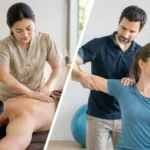
Back pain is one of the most common musculoskeletal complaints among adults in Singapore. Long hours spent sitting at a desk, frequent computer use, driving, heavy lifting, sports injuries, poor posture and age-related changes can all contribute to discomfort around the lower or upper back.
For people interested in Traditional Chinese Medicine (TCM), there are several treatment approaches that may be considered for back pain, including acupuncture, tuina massage, cupping, herbal medicine and other manual techniques.
But which TCM practice is best for back pain relief?
For many people with uncomplicated muscular or chronic back pain, acupuncture is often one of the main TCM treatments worth considering, particularly when combined with appropriate movement, exercise and lifestyle adjustments. Tuina may also be useful where muscular tightness and stiffness are prominent, while cupping is generally better viewed as an adjunct rather than the primary treatment.
There is no single treatment that is automatically best for every person. A qualified TCM physician should first assess the nature of the pain and determine whether TCM treatment is suitable.
Why Is Back Pain So Common in Singapore?
Back pain can occur for many different reasons.
In Singapore, one particularly common contributing factor is the amount of time people spend sitting.
Someone working in an office may spend eight or more hours each day looking at a computer. This can be followed by additional time commuting, driving, looking at a mobile phone or sitting at home.
Over time, prolonged inactivity may contribute to:
- Tight hip and back muscles
- Reduced mobility
- Weakness of certain supporting muscles
- Poor sitting posture
- Shoulder and neck tension
- Lower-back stiffness
- Reduced tolerance for prolonged sitting
Back pain can also occur following exercise or physical activity.
Gym training, running, football, golf, tennis, pickleball, padel and other recreational sports can place substantial demands on the muscles and joints of the back.
Heavy lifting is another common trigger.
However, back pain should not automatically be assumed to be caused by muscles.
Low back pain is a very broad category. The World Health Organization notes that low back pain is the leading cause of disability worldwide, and while approximately 90% of cases are classified as non-specific low back pain, some cases have identifiable medical causes.
This is one reason proper assessment is important before deciding on treatment.
What Does TCM Say About Back Pain?
Traditional Chinese Medicine uses a different conceptual framework from Western medicine.
Rather than diagnosing back pain purely according to muscles, joints, discs or nerves, a TCM physician may assess an individual’s overall pattern according to traditional concepts involving qi, blood, meridians and organ systems.
Assessment may include questions about:
- Where the pain occurs
- Whether it is dull, sharp or aching
- Whether movement improves or worsens it
- Whether warmth improves the symptoms
- How long the problem has been present
- Previous injuries
- Sleep
- Digestion
- Energy levels
- General health
The physician may also perform traditional pulse and tongue assessments.
A treatment plan may subsequently involve acupuncture, tuina or other TCM therapies depending on the patient’s presentation.
TCM terminology should not, however, be confused with a conventional medical diagnosis. If there are signs of significant nerve compression, infection, fracture or another underlying medical condition, appropriate medical assessment is important.
1. Acupuncture for Back Pain
Among the various forms of TCM commonly used for back pain, acupuncture is probably the best-known.
Acupuncture involves inserting very fine needles at selected points on the body.
The points selected can differ between patients depending on the physician’s assessment.
For someone seeking TCM for chronic lower-back discomfort, acupuncture is often a reasonable treatment to discuss with a registered practitioner.
Is There Evidence for Acupuncture for Lower Back Pain?
There is some evidence suggesting acupuncture may provide benefits for certain people with chronic low back pain, although the strength of the evidence varies depending on what acupuncture is compared against.
A 2026 systematic review involving eight randomised controlled trials and more than 1,100 participants found that acupuncture was associated with improvements in pain and disability compared with usual care. However, the authors rated the certainty of the evidence as low to very low, so the findings should be interpreted cautiously.
Earlier Cochrane evidence similarly found that acupuncture performed better than receiving no treatment for immediate pain and function, although differences compared with sham acupuncture were smaller and sometimes not clinically important.
The World Health Organization’s chronic low back pain guideline also evaluates needling therapies as one possible component of non-surgical management rather than suggesting that acupuncture alone is a universal solution.
The practical takeaway is therefore not that acupuncture “cures” back pain.
Instead, it may be considered as one component of an overall approach to managing persistent musculoskeletal back pain.
What Types of Back Pain Might People Seek Acupuncture For?
People commonly approach TCM practitioners regarding problems such as:
- Lower-back muscle tension
- Chronic lower-back discomfort
- Back stiffness
- Sports-related muscle soreness
- Back pain associated with prolonged sitting
- General muscular tightness
- Pain around the lumbar region
- Upper-back tension
- Back and shoulder tightness
Whether acupuncture is appropriate still depends on the underlying cause.
2. Tuina for Back Pain
Another commonly used TCM treatment in Singapore is tuina, sometimes described as Chinese therapeutic massage.
Tuina differs from ordinary relaxation massage.
A practitioner may use techniques involving:
- Pressing
- Kneading
- Rolling
- Rubbing
- Stretching
- Manipulation of muscles and soft tissues
For someone whose back pain is accompanied by pronounced muscular stiffness, tuina may be considered.
When Might Tuina Be Useful?
Imagine someone who spends approximately ten hours per day working at a computer.
By the evening, the person’s:
- Lower back feels tight
- Upper back feels stiff
- Shoulders feel tense
- Hip muscles feel tight
In such cases, manual treatment may provide temporary relief from muscular tension.
Massage is also among the physical treatments included in WHO’s broader discussion of possible interventions for chronic primary low back pain. Importantly, WHO emphasises that chronic back pain management often requires a combination of interventions rather than relying upon a single therapy.
Tuina should therefore not necessarily be regarded as an alternative to strengthening or rehabilitation.
It may instead form part of a broader management strategy.
3. Cupping Therapy for Back Pain
Cupping is another recognisable component of Traditional Chinese Medicine.
During cupping therapy, cups are placed against the skin and suction is created inside them.
This commonly produces circular marks that can remain visible for several days.
Some patients report that their muscles feel looser following cupping, especially around the:
- Upper back
- Shoulders
- Lower back
- Trapezius
- Mid-back
However, cupping would generally not be the first treatment I would describe as the “best” TCM treatment for back pain.
It is better regarded as a possible supportive treatment.
A TCM physician may combine cupping with acupuncture or tuina depending on the patient’s presentation.
4. Chinese Herbal Medicine
Chinese herbal medicine is another major branch of TCM.
A physician may prescribe herbal preparations based on the patient’s traditional TCM diagnosis.
However, people should avoid buying random herbal products online simply because they are marketed for back or joint pain.
Herbal medicine can interact with medications and may not be appropriate for everyone, particularly people who:
- Take multiple medicines
- Use anticoagulants or blood-thinning medicines
- Have liver disease
- Have kidney disease
- Are pregnant
- Have significant chronic medical conditions
Always tell both your doctor and TCM physician about medicines, supplements and herbs you are taking.
For straightforward muscular back pain, acupuncture and appropriate physical rehabilitation may often be more immediately relevant than automatically starting herbal medicine.
So Which TCM Treatment Is Best for Back Pain?
There is no universal winner, but a practical way to look at the options is:
Acupuncture — often the strongest TCM option to consider for persistent musculoskeletal back pain
Tuina — potentially helpful where muscle tightness and stiffness are prominent
Cupping — potentially useful as an adjunct for muscular tension
Herbal medicine — may be considered depending on the individual’s overall TCM assessment
In many TCM clinics, these therapies are not necessarily used separately.
A physician may recommend acupuncture together with tuina, for example.
Acupuncture Plus Exercise May Be More Sensible Than Acupuncture Alone
One particularly important point for someone looking for the “best TCM treatment” is that back pain frequently requires more than passive treatment.
Someone might receive acupuncture and feel better temporarily.
But if the person then returns to:
- Sitting for 12 hours per day
- Doing no exercise
- Using poor lifting technique
- Sleeping poorly
- Having a workstation that encourages uncomfortable posture
the original aggravating factors remain.
The WHO recommends an integrated and person-centred approach to chronic primary low back pain. Possible treatments can include education, structured exercise, selected physical therapies, psychological interventions and medications where appropriate.
Therefore, a sensible treatment programme could involve:
TCM treatment + exercise + movement + ergonomic changes + lifestyle management
rather than depending upon acupuncture alone.
What Should a Good TCM Back Pain Consultation Include?
If you visit a TCM clinic in Singapore for back pain, the physician should ideally spend time understanding your condition before beginning treatment.
You may be asked:
When did the pain start?
Where exactly is the pain?
Does the pain travel down your leg?
Is there numbness?
Is there tingling?
Is there weakness?
Did the pain start after an injury?
Does bending forward make it worse?
Does sitting make it worse?
Does walking improve it?
How does the pain affect your sleep?
Have you previously had imaging such as an X-ray or MRI?
Are you currently undergoing physiotherapy or medical treatment?
You should also tell your TCM physician about existing medical conditions and medications.
Choosing a TCM Physician in Singapore
The practitioner is at least as important as the therapy being offered.
Traditional Chinese Medicine practitioners in Singapore are regulated by the Traditional Chinese Medicine Practitioners Board (TCMPB).
Applicants for full registration as TCM physicians are required to hold an approved qualification, pass qualifying requirements required by the Board and meet suitability requirements for registration.
Consumers can therefore check whether the practitioner treating them is registered with the TCMPB.
Singapore’s healthcare authorities specifically state that TCM practitioners are regulated by the TCMPB and that members of the public can verify a practitioner’s registration.
When choosing a clinic for back pain, consider factors such as:
Experience With Musculoskeletal Conditions
Ask whether the physician regularly treats patients presenting with back, neck and other musculoskeletal complaints.
Proper Assessment
Avoid clinics that immediately promise a fixed course of treatment before assessing you.
Back pain varies substantially between patients.
Clear Explanation
A practitioner should be able to explain:
- What treatment is being recommended
- Why it is being recommended
- What you may feel during treatment
- Possible side effects
- How frequently treatment might be considered
Realistic Expectations
Be cautious about absolute promises such as:
“One session will cure your slipped disc.”
or:
“Acupuncture permanently cures all back pain.”
Healthcare outcomes cannot be guaranteed.
How Many TCM Sessions Are Needed for Back Pain?
There is no fixed number.
Someone with recent muscular tightness may have a completely different experience from someone who has experienced chronic back pain for five years.
Treatment frequency may depend on:
- Duration of symptoms
- Severity
- Cause
- Lifestyle
- General health
- Response to treatment
- Whether rehabilitation is also being performed
A TCM physician may initially suggest a short treatment period before reviewing progress.
The key concept should be reassessment.
If several treatments have been completed without meaningful improvement, the treatment strategy should be reconsidered rather than continuing indefinitely without review.
When Should You See a Doctor Instead?
This is especially important.
Not all back pain should be managed using TCM alone.
Seek prompt medical attention if back pain occurs alongside symptoms such as:
- Significant weakness in one or both legs
- Loss of bladder control
- Loss of bowel control
- Numbness around the groin or saddle region
- Severe pain following a major fall or accident
- Fever associated with back pain
- Unexplained weight loss
- Severe night pain
- Known cancer with new back pain
- Progressive neurological symptoms
Back pain following significant trauma should also be medically assessed.
These features can occasionally indicate conditions requiring urgent investigation.
What About a Slipped Disc?
People frequently search for “TCM for slipped disc Singapore.”
A disc problem is different from ordinary muscle tightness.
Someone with a diagnosed disc herniation may experience:
- Lower-back pain
- Buttock pain
- Pain travelling down the leg
- Tingling
- Numbness
- Weakness
Some patients use acupuncture as part of their symptom-management strategy, but acupuncture should not be presented as physically pushing a herniated disc back into place.
If neurological symptoms are significant or worsening, conventional medical assessment is particularly important.
Is TCM Suitable for Office-Related Back Pain?
Office workers represent one group that commonly considers TCM treatment.
A typical scenario might involve someone who sits from 9am until 6pm, frequently uses a laptop and spends additional hours looking at a phone.
The person gradually develops:
- Neck stiffness
- Shoulder tension
- Mid-back tightness
- Lower-back discomfort
Acupuncture or tuina may be considered to address symptoms, while longer-term prevention should also involve factors such as:
- Getting up periodically
- Regular walking
- Strength training
- Improving workstation ergonomics
- Maintaining mobility
- Avoiding prolonged static positions
The objective should not simply be treating pain whenever it appears.
Reducing the factors contributing to recurring pain is equally important.
Is TCM Suitable for Sports-Related Back Pain?
People involved in sports may also develop back discomfort.
Examples include:
- Golfers
- Runners
- Weightlifters
- Tennis players
- Pickleball players
- Padel players
- Cyclists
- Martial artists
Some athletes use acupuncture, tuina or cupping to manage muscular soreness.
However, recurring sports-related back pain may indicate problems involving training volume, technique, mobility, strength or injury.
Treatment should therefore be accompanied by an appropriate examination where necessary.
Can TCM and Physiotherapy Be Used Together?
They can play different roles.
Physiotherapy may focus heavily on areas such as:
- Strength
- Mobility
- Movement patterns
- Rehabilitation
- Exercise progression
TCM treatment may focus more heavily on symptom management through acupuncture or manual therapies.
For some patients, an integrated approach can therefore be sensible.
It does not necessarily have to be:
TCM versus physiotherapy.
It could be:
TCM + physiotherapy + exercise + lifestyle modification.
This reflects the broader principle supported by modern chronic back pain guidelines: back pain often responds best to a package of care rather than relying upon one passive therapy alone.
What Is the Best TCM Practice for Back Pain Relief in Singapore?
If you are specifically choosing between the common forms of Traditional Chinese Medicine for back pain, acupuncture would generally be one of the first options worth discussing with a registered TCM physician.
It has been studied considerably more extensively for chronic low back pain than many other traditional therapies.
However, this does not mean acupuncture works for everyone.
For someone experiencing substantial muscular tightness, tuina may also be useful.
Cupping can be used as an adjunct where appropriate.
For certain patients, a TCM physician may also consider herbal treatment following an individual assessment.
The most appropriate approach may therefore look something like:
Assessment → acupuncture and/or tuina → monitor response → appropriate exercise and movement → reassessment.
Rather than searching for one “miracle” treatment, it is better to find a practitioner who properly assesses your condition and adapts the treatment according to your response.
Final Thoughts
Back pain is extremely common, particularly among adults who spend long periods sitting, working at computers, driving or participating in repetitive physical activities.
For people looking into Traditional Chinese Medicine for back pain in Singapore, acupuncture is arguably the TCM treatment with the strongest case for consideration, particularly for persistent non-specific lower-back pain. Research suggests that some patients may experience improvements in pain and function, although the quality and magnitude of evidence vary and acupuncture should not be treated as a guaranteed cure.
Tuina may also be considered where muscular stiffness and tension are prominent, while cupping may be used as a supporting therapy.
Most importantly, good back pain management should look beyond short-term symptom relief.
For chronic or recurring pain, the best approach commonly includes a combination of professional assessment, appropriate physical activity, strengthening, movement, lifestyle adjustment and suitable treatment.
If you are considering TCM for back pain in Singapore, look for a TCMPB-registered TCM physician, explain your symptoms fully and seek medical assessment when symptoms suggest that something more serious may be involved.
This article is intended for general educational information only and should not be regarded as medical advice, diagnosis or a substitute for consultation with a qualified healthcare professional.