A lingering sense of coldness, tight muscles that do not fully settle, or recurring fatigue can leave people looking for care that feels both gentle and considered. Moxibustion Singapore patients seek is not simply a warming wellness ritual. In a clinical TCM setting, it is a traditional therapy selected after assessment and adjusted to the individual, their symptoms, comfort level, and wider treatment plan.
What Is Moxibustion?
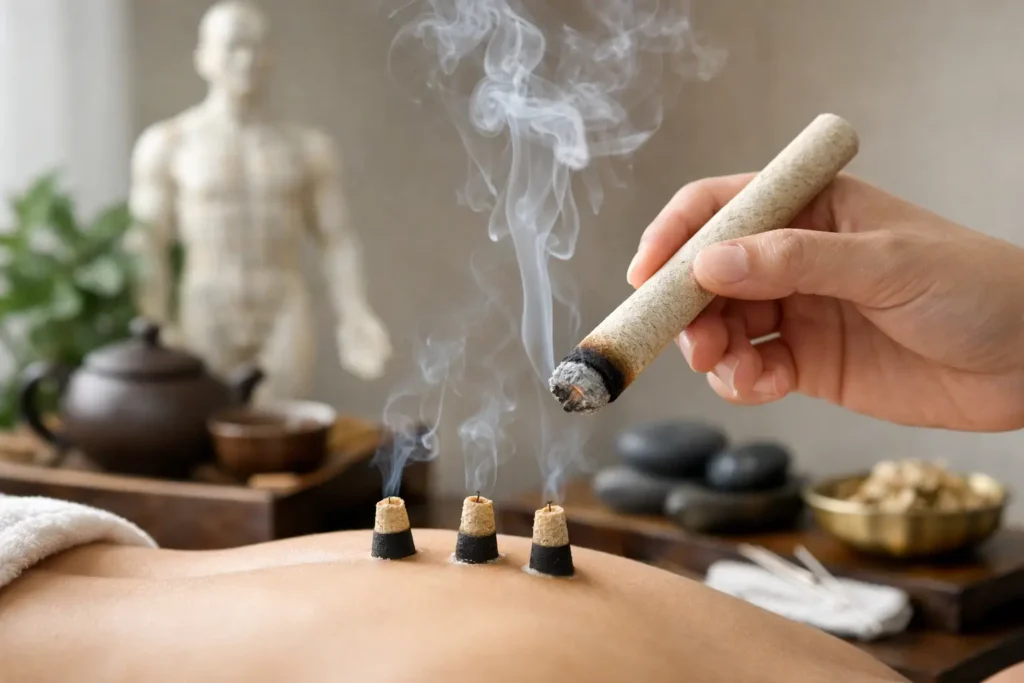
Moxibustion is a Traditional Chinese Medicine therapy that uses heat from processed mugwort, known as moxa, to warm specific acupuncture points or areas of the body. In TCM theory, warmth may be used to support the smooth flow of qi and blood, disperse cold and dampness patterns, and encourage the body’s natural balance.
The treatment may be delivered with a moxa stick held at a safe distance from the skin, or with other controlled methods that allow the practitioner to direct warmth precisely. The goal is a comfortably warm sensation, not pain. A licensed TCM physician should check in throughout the session and adjust the distance, duration, or technique if the heat feels too strong.
Moxibustion is often used alongside acupuncture, Chinese herbal medicine, Tuina therapeutic massage, or meridian-based treatments. Whether it is appropriate as a standalone therapy or part of a combined plan depends on the patient’s presentation. A person recovering from muscle strain, for example, may need a different approach from someone seeking support for recurring digestive discomfort or menstrual concerns.
When Moxibustion May Be Considered
In TCM practice, moxibustion is commonly considered for patterns associated with coldness, low energy, stiffness, or discomfort that tends to feel better with warmth. Some patients also seek it as part of care for muscle tension, joint discomfort, sports-injury recovery, women’s wellness concerns, or general constitutional support.
That does not mean warmth is suitable for every ache or every person. Redness, swelling, acute inflammation, fever, certain skin conditions, or symptoms that worsen with heat can change the treatment decision. A careful consultation matters because similar symptoms can have very different underlying causes. Persistent, severe, sudden, or unexplained symptoms should also be assessed by an appropriate medical professional.
For many patients, the value of moxibustion lies in how it fits into a broader plan. Gentle heat may help the body feel more relaxed before manual therapy, while acupuncture or herbs may be considered where they match the physician’s TCM assessment. There is no benefit in applying the same protocol to everyone.
What to Expect From Moxibustion in Singapore
A professional appointment should begin with questions, not with heat. Your physician may ask about the main concern, when it began, what makes it better or worse, sleep, digestion, stress, activity levels, medical history, medications, and previous treatments. In TCM, the assessment may also include observation of the tongue and pulse.
This discussion helps determine whether moxibustion is appropriate and where it may be applied. The physician should explain the proposed approach in plain language, including what you are likely to feel and any practical precautions. You can share preferences around smoke, heat sensitivity, modesty, or past skin reactions before treatment begins.
During the session, the therapist or physician positions the moxa so that you feel steady, soothing warmth. Some methods produce an herbal aroma and visible smoke, while smokeless options may be available in some settings. The right option depends on the treatment goals, the clinic’s protocol, and individual comfort.
A treatment area may feel warm or lightly flushed afterward. Many people describe a sense of relaxation, though responses vary. You may be advised to keep the treated area warm, hydrate, and notice how your body responds over the following day. If you experience persistent pain, blistering, marked irritation, dizziness, or any unexpected symptom, contact the clinic promptly and seek medical advice where needed.
Choosing a Moxibustion Singapore Clinic With Care
Moxibustion involves heat, so practitioner training and hygiene should be central to your decision. It is reasonable to ask who will assess you, whether the TCM physician is licensed, how the clinic manages heat safety, and what happens if treatment needs to be modified. Clear answers are a sign that your comfort is being taken seriously.
Look for a clinic that takes time to understand your concern rather than offering a fixed package before an assessment. Personalized care may involve moxibustion, but it may also mean recommending acupuncture, Tuina, herbs, self-care measures, a referral, or no moxibustion at all. Good clinical care is not measured by how many therapies are used in one visit.
The treatment environment matters as well. Clean linens, appropriate ventilation, careful handling of moxa materials, and attentive monitoring all support a safer experience. Patients should never be left to tolerate excessive heat or feel pressured to continue when something does not feel right.
At Y TCM Clinic, licensed TCM physicians consider moxibustion within a thorough assessment and a personalized care plan. This allows treatment to be paced around each patient’s needs, from a busy professional managing recurring tension to an active adult working through recovery after training.
Questions Worth Asking Before Treatment
If you are new to moxibustion, ask what the physician is treating, why heat is being recommended, and how many sessions may be reasonable before reviewing progress. It is also helpful to ask whether there are home-care steps that may support your comfort between visits.
Be open about pregnancy, attempts to conceive, allergies, skin sensitivity, diabetes, circulation concerns, implanted medical devices, recent procedures, and all medications or supplements. These details do not automatically rule out care, but they can affect the method, treatment area, or whether another approach is more appropriate.
Comfort, Safety, and Realistic Expectations
Moxibustion should not be presented as a cure-all. Individual response depends on the nature and duration of the concern, general health, daily habits, and whether the treatment plan suits the patient. Some people notice a feeling of ease after one session; others need a course of care, particularly when discomfort has been recurring for months or is linked to repetitive strain.
A responsible TCM physician will review your response over time. If symptoms are not changing as expected, the plan may be adjusted or further assessment may be recommended. This ongoing review is particularly valuable for pain that disrupts sleep, limits movement, or returns despite treatment.
It is also reasonable to choose another therapy if moxibustion does not appeal to you. Some patients prefer acupuncture without moxa, hands-on Tuina, herbal support, or a combination of approaches. Treatment should feel collaborative, with enough explanation for you to make an informed choice.
A Gentle Next Step for Persistent Discomfort
For the right person and the right TCM pattern, moxibustion can be a calm, warming part of a broader recovery or wellness plan. The most useful place to begin is not by deciding which therapy you need, but by booking a thoughtful consultation with a licensed practitioner who can listen to your symptoms, assess your needs, and recommend care at a pace that feels appropriate.