
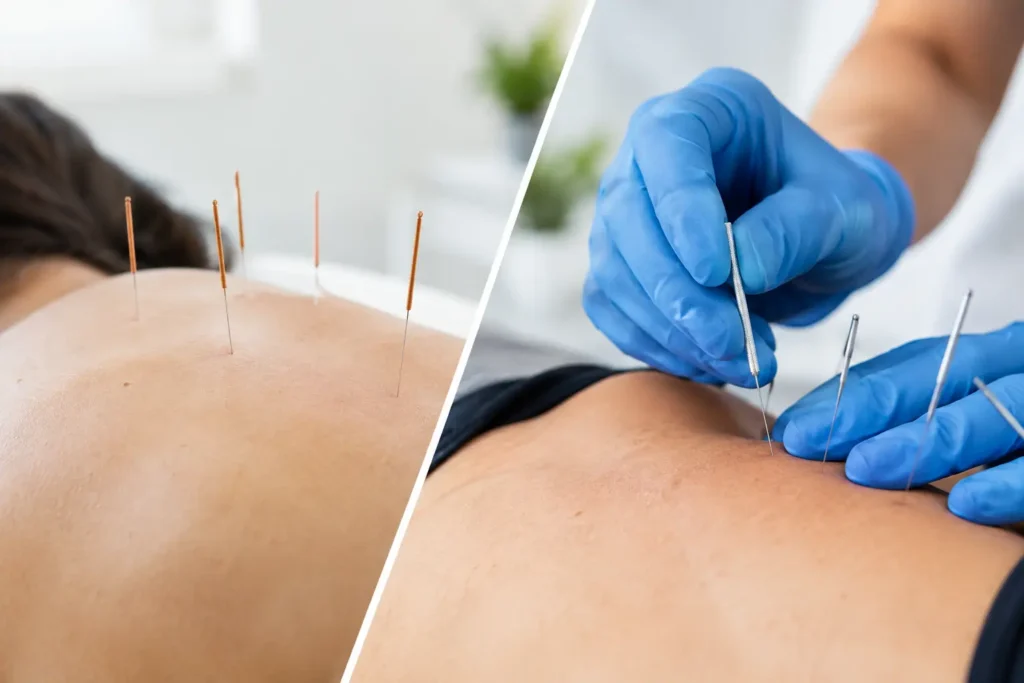
A tight shoulder after long desk hours, a recurring calf strain, or back pain that returns after a weekend of activity can make needle-based treatment worth considering. Yet acupuncture versus dry needling is not simply a choice between two names for the same service. Both may use fine needles, but their clinical frameworks, treatment goals, and practitioner training can be quite different.
For patients seeking care for pain, muscle tension, or sports-related recovery, understanding those differences makes it easier to ask informed questions and choose treatment that fits their needs. The right option depends on your symptoms, health history, comfort level, and the assessment performed by a qualified practitioner.
Acupuncture versus dry needling: the central difference
Acupuncture is a core treatment within Traditional Chinese Medicine. A licensed TCM physician assesses the person as a whole, considering the location and nature of discomfort alongside sleep, energy, digestion, stress, activity patterns, and other relevant health factors. Treatment is then personalized using acupuncture points selected to support the body’s balance while addressing the patient’s main concern.
For musculoskeletal discomfort, acupuncture may be used to help ease pain, reduce muscle tension, and support recovery. However, a TCM consultation does not view a painful area in isolation. For example, recurring neck tightness may be considered alongside posture, stress, sleep quality, headaches, or upper-back tension. This broader assessment is one reason acupuncture plans may evolve over several sessions.
Dry needling is generally a musculoskeletal technique used within a Western anatomical framework. It is commonly directed at myofascial trigger points, tight bands of muscle, or tissues associated with a movement-related pain pattern. The immediate aim is often to release local muscle tension, reduce sensitivity, and help restore more comfortable movement.
The needles may look similar, but the treatment reasoning is not identical. Dry needling is usually focused on a specific dysfunctional muscle or movement system. Acupuncture may also address a local painful area, while incorporating TCM pattern assessment and points elsewhere on the body as clinically appropriate.
How treatment sessions can feel different
During dry needling, a practitioner may place a needle directly into a trigger point and use techniques intended to create a local twitch response. Some people experience a brief cramp-like sensation, followed by temporary soreness in the treated muscle. Others notice improved range of motion or reduced tightness after the session, though results and reactions vary.
Acupuncture needles are commonly retained for a period of rest after insertion. The sensation can range from minimal to a dull, spreading, warm, heavy, or tingling feeling around the point. Needle placement may be local to the painful area or may include points farther away, based on the TCM physician’s assessment and treatment strategy.
Neither treatment should be approached as a test of pain tolerance. A skilled practitioner should explain what they are doing, check in throughout the session, and adjust the approach if you are uncomfortable. Some post-treatment tenderness, fatigue, or lightheadedness can occur, but severe or persistent symptoms should be discussed promptly with a healthcare professional.
Training and credentials matter
The label on a treatment matters less than the professional standards behind it. Acupuncture should be performed by an appropriately licensed and trained TCM physician who can assess whether it is suitable for your condition. In a clinical setting, this includes a careful history, hygienic practice, clear consent, and the use of sterile, single-use needles.
Dry needling training and scope of practice differ by location and professional discipline. Depending on where you receive care, it may be provided by a physical therapist or another healthcare practitioner with relevant training. Before booking, ask about the provider’s qualifications, experience with your concern, infection-control procedures, and approach to managing potential adverse reactions.
This is particularly relevant when treatment is being considered near the chest, neck, jaw, or other anatomically sensitive areas. Any needle-based procedure carries risk, even when complications are uncommon. Competent assessment, precise technique, and appropriate referral when needed are essential safeguards.
Which approach may suit your concern?
If your main goal is targeted support for a clearly identified tight muscle, trigger point, or movement restriction, dry needling may be part of a rehabilitation-focused plan. It is often considered alongside strengthening exercises, mobility work, and changes to training load or ergonomics. Needling alone may not address the habits or movement patterns contributing to recurring symptoms.
Acupuncture may be a good fit for people who want a broader, personalized TCM assessment for pain, tension, stress-related physical symptoms, fatigue, or recurring discomfort. It can also be considered by patients who prefer a treatment plan that may combine acupuncture with other appropriate TCM therapies, such as therapeutic Tuina or herbal medicine, when clinically indicated.
There is no universally better choice. A recent muscle strain, persistent shoulder stiffness, migraine-associated neck tension, and generalized fatigue are different presentations. The most appropriate treatment should follow a thorough assessment rather than a one-size-fits-all recommendation.
Safety questions to raise before treatment
Tell your practitioner about medications, supplements, allergies, pregnancy, recent surgery, bleeding or clotting conditions, immune concerns, skin infections, and any history of fainting with needles. If you take blood-thinning medication or have a complex medical condition, it is especially important to seek individualized advice before treatment.
It is also wise to share any new, severe, or unexplained symptoms. Chest pain, significant weakness, fever, loss of bladder or bowel control, sudden numbness, or pain following serious trauma requires prompt conventional medical evaluation. Complementary care should not delay assessment of urgent conditions.
A responsible practitioner will be comfortable discussing expected benefits, limitations, alternatives, and when referral is appropriate. Be cautious of promises that a single session will cure a long-standing condition, or of treatment plans that are not explained clearly.
What to expect at an acupuncture consultation
A thoughtful acupuncture visit begins before any needles are used. Your physician should ask about your symptoms, medical history, daily routine, and treatment goals, then explain whether acupuncture is appropriate and what the session may involve. You should have time to raise concerns about needle sensation, modesty, prior injuries, or previous experiences with treatment.
At Y TCM Clinic, personalized care begins with this kind of thorough assessment. The aim is not simply to treat the spot that hurts, but to understand the factors that may be contributing to discomfort and develop a plan that respects your needs and pace of recovery.
Common questions about acupuncture and dry needling
Are acupuncture and dry needling the same?
No. Both can involve fine needles, but acupuncture is rooted in Traditional Chinese Medicine and uses a broader diagnostic framework. Dry needling is typically based on anatomy and focuses on muscles, trigger points, and movement-related dysfunction.
Is one more effective for pain?
It depends on the cause and pattern of pain, the quality of assessment, the practitioner’s skill, and the overall care plan. For many musculoskeletal concerns, progress may also depend on sleep, activity modification, rehabilitation exercises, stress management, and time.
How many sessions will I need?
There is no fixed number. Some people notice a change early, while long-standing or recurring symptoms may require a series of sessions and adjustments to the treatment plan. Your response should be reviewed regularly rather than assumed in advance.
Choosing needle-based care should feel informed, not pressured. A calm conversation with a qualified practitioner can help you decide whether acupuncture, a rehabilitation-focused approach, or another form of care is the most sensible next step for your body.