
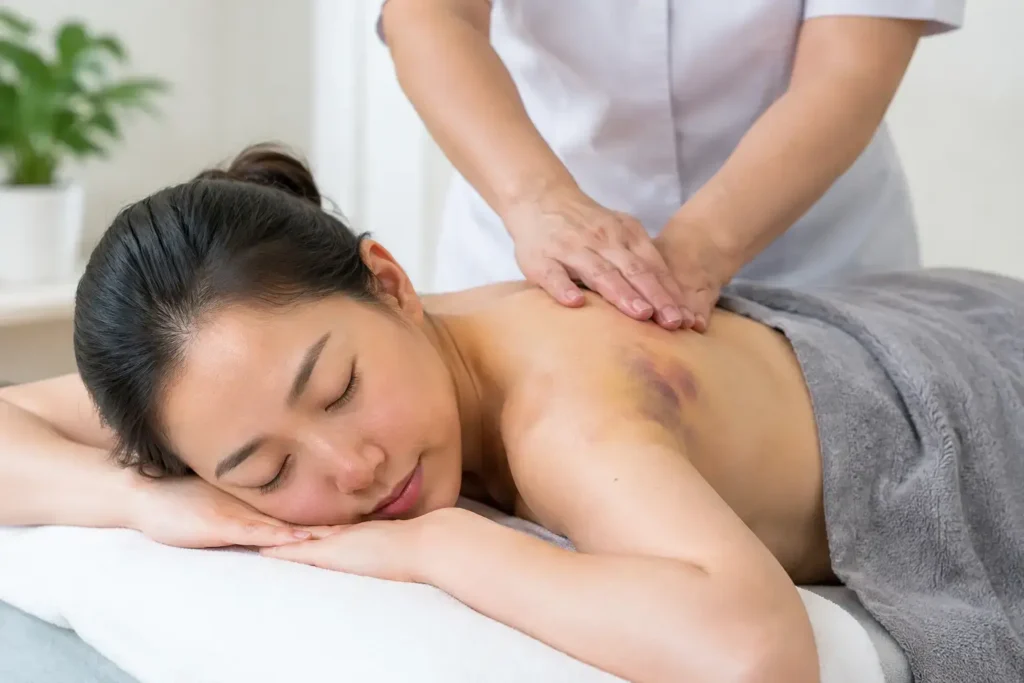
A small purple mark after a bodywork session can be unsettling, especially when you sought treatment for pain relief or recovery. So, does Tuina cause bruising? It can happen occasionally, particularly after deeper work on tight, sensitive, or recently injured tissues, but significant bruising should not be treated as an expected sign of a successful treatment.
Tuina is a hands-on therapeutic technique within Traditional Chinese Medicine. A licensed TCM physician or trained therapist may use pressing, kneading, rolling, grasping, stretching, and mobilization techniques to address muscle tension, restricted movement, and discomfort. The appropriate pressure varies greatly from person to person. Careful assessment and communication are what help keep treatment both effective and comfortable.
Does Tuina Cause Bruising in Most Patients?
Most patients do not develop obvious bruising after a properly tailored Tuina session. It is more common to experience temporary warmth, mild tenderness, or redness in the treated area, especially after work on muscles that have been tense for a long time. These sensations generally settle within a day or two.
A bruise occurs when tiny blood vessels beneath the skin are disrupted and blood collects in the surrounding tissue. In Tuina, this may happen when tissue is particularly sensitive, pressure is deeper than the body tolerates well, or the area has already been affected by strain, impact, or inflammation. A person may also bruise more easily because of individual health factors.
There is an important distinction between mild, short-lived tenderness and a visible bruise that becomes increasingly painful, swollen, or extensive. More pressure is not automatically better. Therapeutic care should be adjusted to your condition, your comfort, and your recovery goals.
Why Bruising May Occur After Tuina
Muscles under prolonged stress can feel dense, guarded, and tender. When a therapist works on these areas, the tissues may react more strongly than relaxed, healthy muscle. This is one reason people with neck and shoulder tension, lower back tightness, or sports-related muscle strain may feel sore afterward.
Recent injury can also change how the body responds. A muscle that has been overworked or affected by a minor strain may already have small areas of tissue irritation. Direct work over an acute injury is not always appropriate, and the timing and technique must be chosen carefully. This is why a proper consultation matters before treatment begins.
Some people are naturally more prone to bruising. Age-related skin changes, fragile capillaries, nutritional factors, and certain medical conditions can all contribute. Medications and supplements may also affect clotting or make bruises more likely. These can include prescription blood thinners, antiplatelet medicines, regular anti-inflammatory medication, and some supplements. Do not stop prescribed medication for a Tuina appointment. Instead, tell your practitioner what you take so the treatment can be adapted or postponed if needed.
Redness, Soreness, and Bruising Are Not the Same
After Tuina, temporary redness is often caused by increased circulation near the skin surface and friction from manual techniques. It may look noticeable but usually fades relatively quickly. Mild muscular soreness can feel similar to what follows unfamiliar exercise, particularly when an area has been stiff or underused.
A bruise typically changes color over several days and may be tender when touched. It is not a required therapeutic outcome and should never be used as proof that knots have been “released” or that treatment was effective. The aim of Tuina is to support function, comfort, and recovery with an appropriate amount of pressure, not to leave marks.
Traditional therapies may involve other techniques that intentionally create temporary skin discoloration, such as certain forms of cupping or scraping therapy. These marks are different from bruising caused by unintended tissue trauma. They should be discussed clearly before treatment, including what to expect, how long marks may remain, and whether the technique is suitable for you.
How a Personalized Tuina Session Reduces the Risk
Safe Tuina begins before any manual technique is applied. A clinician should ask about your main concern, the location and pattern of pain, recent injuries, medical history, medications, skin sensitivity, and any past reactions to massage or bodywork. They should also assess whether Tuina is appropriate for the area at that time.
During treatment, pressure should be responsive rather than fixed. A treatment that feels therapeutic to one patient may feel excessive to another. Let your practitioner know immediately if the pressure feels sharp, pinching, burning, or too intense. You do not need to endure pain for the session to be beneficial.
At Y TCM Clinic, care is centered on thorough assessment and personalized treatment planning. Licensed TCM physicians and experienced therapists can modify the depth, pace, and techniques used according to the patient’s presentation, whether the goal is easing everyday muscle tension, supporting sports-injury recovery, or improving mobility after persistent discomfort.
When Tuina May Need to Be Modified or Avoided
There are situations where direct, deep manual work may not be suitable. An area with unexplained swelling, an open wound, active skin infection, severe varicose veins, a suspected fracture, or a recent serious injury should be assessed before massage is considered. Tuina may also need to be modified during pregnancy, after surgery, or for people with known bleeding disorders.
If you take blood-thinning medication or have a history of easy bruising, be open about it during your consultation. This does not always mean you cannot receive Tuina, but it may mean lighter techniques, avoiding certain areas, or choosing a different supportive treatment. A responsible practitioner will explain these decisions rather than applying a one-size-fits-all approach.
Seek prompt medical evaluation for pain that is severe or worsening, sudden weakness or numbness, major loss of movement, fever, unexplained bruising, or bruising that occurs frequently without a clear reason. These symptoms may require medical assessment beyond hands-on therapy.
What to Do If You Notice a Bruise After Treatment
If you notice a small bruise and otherwise feel well, avoid further deep pressure on the area until it has settled. You may use a cool compress wrapped in a cloth for short periods during the first day if it is tender. Rest from strenuous activity that aggravates the area, and monitor whether the mark and discomfort are improving.
Contact your practitioner if the bruise is large, very painful, rapidly spreading, accompanied by significant swelling, or not improving as expected. It is also wise to seek medical advice if you experience dizziness, unusual bleeding, or multiple unexplained bruises. Clear follow-up is part of safe care, not an inconvenience.
For future sessions, mention the reaction before treatment begins. Your practitioner can review what may have contributed and make practical adjustments. This might mean using gentler pressure, working for a shorter time in one region, allowing more recovery time between sessions, or focusing on adjacent areas rather than the most tender point.
Questions Patients Commonly Ask
Should I expect pain during Tuina?
You may feel pressure, stretching, or temporary tenderness when tight tissues are treated, but sharp or overwhelming pain is not the goal. Good treatment involves ongoing communication and adjustment.
How long should post-Tuina soreness last?
Mild soreness often improves within 24 to 48 hours. If discomfort is getting worse rather than better, or lasts longer than expected, contact your practitioner or seek medical advice.
Can I receive Tuina if I bruise easily?
Possibly, but your practitioner should know in advance. Your health history, medications, and the reason you bruise easily will help determine whether Tuina can be modified safely or whether another approach is more appropriate.
A well-planned Tuina session should leave you feeling cared for, informed, and supported in your recovery. If you are concerned about bruising, bring it up before your appointment. That conversation gives your practitioner the information needed to tailor treatment with greater comfort and confidence.


