When persistent neck pain, lower back discomfort, shoulder stiffness or recurring muscle aches begin affecting everyday life, many people in Singapore look beyond short-term pain relief and explore Traditional Chinese Medicine, or TCM, as part of their pain-management approach.
However, choosing a TCM clinic can be difficult.
Singapore has many TCM clinics offering acupuncture, tuina, cupping and other traditional therapies. Patients therefore need to consider more than simply which clinic is closest to home.
For people searching for a TCM clinic for pain management in Singapore, Y TCM Clinic at Bukit Timah is one option worth considering.
Located at Sixth Avenue Centre along Bukit Timah Road, Y TCM Clinic Bukit Timah Sixth Avenue Centre 武吉知马中医诊所 | Acupuncture 针灸 | Tuina 推拿 has developed a strong local reputation and currently carries a high customer rating across a substantial number of public reviews.
What makes Y TCM particularly relevant for people seeking pain management is its combination of traditional TCM assessment, acupuncture, tuina and an individualised approach to musculoskeletal discomfort.
Here are some of the reasons patients may consider Y TCM when looking for TCM pain management in Singapore.
1. A Strong Focus on Pain and Musculoskeletal Conditions
Pain is not always caused by one straightforward problem.
Someone experiencing shoulder pain may have muscular tightness, repetitive strain or restricted movement.
Someone with lower back discomfort may be dealing with prolonged sitting, exercise-related strain or a long-standing musculoskeletal issue.
Y TCM’s approach to pain management can involve assessing the person’s symptoms before determining which TCM therapies may be suitable.
Common problems for which people seek TCM treatment include:
- Neck pain
- Shoulder pain
- Lower back pain
- Knee pain
- Wrist discomfort
- Elbow pain
- Muscle tightness
- Sports-related discomfort
- Repetitive strain
- Joint stiffness
- Sciatica-related symptoms
- Frozen shoulder
- Postural discomfort
Rather than treating every patient using exactly the same approach, TCM traditionally emphasises individual assessment.
This individualised philosophy remains a recognised characteristic of TCM practice in Singapore. The Ministry of Health has also highlighted TCM’s traditionally individualised approach to patient care as the profession continues to develop within Singapore’s healthcare landscape.
For people struggling with persistent musculoskeletal discomfort, this personalised approach can be one of the attractions of choosing TCM.
2. Acupuncture as a Core Pain-Management Therapy
One of the biggest reasons people choose TCM for pain management is acupuncture.
Acupuncture involves inserting very fine needles into selected points on the body.
Within traditional TCM theory, these points are selected according to the individual’s symptoms and diagnostic pattern.
From a contemporary pain-management perspective, acupuncture is also one of the areas of TCM that has received comparatively significant clinical attention.
In Singapore, the Ministry of Health has specifically noted that acupuncture is currently used in public healthcare institutions for lower back and neck pain management under defined clinical protocols.
That does not mean acupuncture works equally well for every person or every type of pain.
However, it helps explain why acupuncture has become one of the most recognised complementary options for musculoskeletal pain.
At Y TCM, acupuncture can form part of an individual pain-management programme based on the patient’s presentation.
People may consider acupuncture for conditions involving:
- Neck tension
- Shoulder tightness
- Lower back discomfort
- Knee discomfort
- Muscular stiffness
- Certain chronic pain conditions
- Repetitive strain
- Exercise-related discomfort
Treatment frequency should depend on the condition and the person’s response rather than following a universal number of sessions.
3. Combining Acupuncture With Tuina
Another advantage of visiting a full-service TCM clinic is access to more than one therapeutic approach.
Some patients may benefit from acupuncture alone.
Others may undergo tuina as part of their treatment plan.
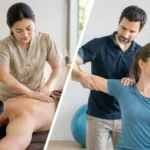
Tuina is a traditional Chinese manual therapy involving techniques such as:
- Pressing
- Kneading
- Rolling
- Stretching
- Manipulation of muscles and soft tissues
For people experiencing muscular tightness, stiffness or restricted movement, tuina may be considered depending on the practitioner’s assessment.
The combination of acupuncture and tuina is particularly relevant to people whose pain involves muscular tension.
For example, someone who spends long hours working at a computer may experience recurring tightness across the shoulders, upper back and neck.
Acupuncture may form one component of treatment while tuina may be used to work on areas of muscular tension.
This gives Y TCM greater flexibility in developing an individualised treatment plan.
4. Treatment Is Based on Assessment Rather Than Simply the Painful Area
One principle that distinguishes traditional TCM from a standard massage session is that the consultation generally involves more than identifying where something hurts.
A TCM physician may ask questions about:
- When the pain started
- What caused it
- Where it is located
- Whether it moves or radiates
- What makes it better
- What makes it worse
- Sleep patterns
- Physical activity
- Previous injuries
- General health
Traditional assessment may also include examination of the tongue and pulse.
The intention is to understand the patient’s overall presentation before selecting treatment.
This can be useful because two people experiencing similar pain may not necessarily have the same underlying problem.
For example, two patients may both arrive complaining of shoulder discomfort.
One person’s symptoms may be related primarily to prolonged desk work and muscle tightness.
Another person’s pain may follow an exercise injury.
Their management should not necessarily be identical.
5. Suitable for Modern Office-Related Pain Problems
One increasingly common category of musculoskeletal complaint in Singapore involves people who spend many hours at computers.
Office workers may experience:
- Neck stiffness
- Shoulder tightness
- Upper-back discomfort
- Headaches associated with tension
- Lower back soreness
- Wrist discomfort
Long periods of sitting may contribute to muscular stiffness, particularly if the workstation is poorly positioned.
The growing use of smartphones and tablets can also contribute to prolonged periods of looking downward.
These problems are sometimes informally described as “tech neck” or “desk neck”.
Y TCM can be relevant to patients looking for complementary management of these recurring muscular problems.
However, treatment should ideally be combined with practical changes.
These may include:
- Adjusting computer screen height
- Improving sitting posture
- Taking regular movement breaks
- Performing mobility exercises
- Strengthening the upper back
- Improving core strength
TCM treatment may help address symptoms, but removing contributing factors can be equally important for reducing recurrence.
6. Convenient Bukit Timah Location
Accessibility matters when pain management requires several sessions.
Y TCM is located at 805 Bukit Timah Road, #01-06, Sixth Avenue Centre, Singapore 279883. Its listed opening hours currently extend from 10am to 9pm daily, making appointments potentially convenient for people who work normal office hours. Y TCM Clinic Bukit Timah Sixth Avenue Centre 武吉知马中医诊所 | Acupuncture 针灸 | Tuina 推拿
The Bukit Timah location is particularly convenient for people living or working around:
- Sixth Avenue
- Bukit Timah
- Beauty World
- King Albert Park
- Holland Village
- Eng Neo Avenue
- Dunearn Road
- Coronation Road
- Farrer Road
- Upper Bukit Timah
For people requiring a short course of treatment, having a clinic close to home or work makes maintaining appointments easier.
7. Strong Public Patient Feedback
Online ratings should never be the only factor used when choosing a healthcare practitioner.
Nevertheless, they can offer some indication of overall patient experience.
At the time of writing, Y TCM’s Bukit Timah clinic has a 4.8 out of 5 rating based on more than 100 public reviews in the available business listing. Y TCM Clinic Bukit Timah Sixth Avenue Centre 武吉知马中医诊所 | Acupuncture 针灸 | Tuina 推拿
For a local clinic, a combination of a high rating and meaningful review volume can be more informative than a perfect score based on only a handful of reviews.
Patients should still make their own assessment based on factors such as:
- Practitioner communication
- Professionalism
- Treatment explanation
- Cleanliness
- Comfort
- Whether progress is reviewed
- Whether unnecessary treatment is avoided
Ultimately, the quality of a healthcare experience is more important than the numerical rating alone.
8. An Individualised Treatment Plan
There is no single acupuncture point or TCM treatment programme that should automatically be applied to everyone experiencing pain.
This is especially important because pain varies considerably.
A patient with recent muscle tightness may need a very different treatment approach from someone experiencing several years of chronic lower back discomfort.
An individualised plan may consider:
- Duration of the problem
- Severity
- Age
- Previous injuries
- Activity levels
- Lifestyle
- Location of pain
- Response to previous treatment
The treatment can then be adjusted according to how the patient progresses.
This is preferable to simply selling a predetermined package of sessions without reassessment.
9. A Practical Approach to Treatment Frequency
Another important question is:
How many TCM sessions are required for pain management?
There is no universal answer.
Some people with recent muscular discomfort may improve after a small number of sessions.
People with chronic conditions may require a longer treatment programme.
A reasonable approach involves an initial treatment period followed by reassessment.
Signs of progress may include:
- Lower pain intensity
- Improved movement
- Less frequent discomfort
- Better sleep
- Reduced stiffness
- Better ability to exercise
- Improved ability to work
If symptoms are not improving, the treatment strategy should be reconsidered.
Patients should not feel that they must continue attending indefinitely without measurable progress.
10. TCM Can Complement Physiotherapy and Western Medicine
Choosing TCM does not necessarily mean choosing between Eastern and Western medicine.
Increasingly, patients use both approaches.
The Ministry of Health has acknowledged that many patients already combine TCM and Western healthcare, particularly for chronic disease management, symptom relief, recovery and rehabilitation. MOH has emphasised that such integration should remain safe, coordinated and evidence-based.
For example, someone experiencing chronic back pain might simultaneously:
- Receive medical assessment
- Attend physiotherapy
- Perform strengthening exercises
- Improve workplace ergonomics
- Use acupuncture for symptom management
These approaches do not necessarily conflict.
Different treatments may address different aspects of the problem.
11. Suitable for People Who Prefer a Non-Drug Complementary Approach
Some people are interested in exploring pain-management options that do not depend exclusively on medication.
Acupuncture can potentially form part of such an approach.
This does not mean pain medication should be avoided when clinically appropriate.
Medication can be extremely useful.
The objective instead is to develop a broader pain-management strategy.
For example, a patient experiencing recurring shoulder pain could combine:
- Acupuncture
- Tuina
- Physiotherapy
- Strengthening exercises
- Ergonomic improvements
- Medical treatment when required
This combination may be more useful than expecting any one treatment to solve every aspect of the problem.
12. TCM Pain Management for Active Individuals
Pain does not only affect older adults.
People who regularly participate in sports may experience muscular tightness and overuse problems.
Common activities associated with musculoskeletal complaints include:
- Running
- Cycling
- Weight training
- Tennis
- Badminton
- Pickleball
- Padel
- Football
- Martial arts
Athletes and recreational exercisers sometimes use acupuncture, tuina or cupping for muscular discomfort.
Y TCM may therefore appeal to active individuals looking for complementary treatment as part of their recovery routine.
However, significant sports injuries still require appropriate assessment.
A torn ligament, fracture or severe tendon injury should not be treated as simple muscle tightness.
13. TCM for Chronic Pain Management
Persistent pain can have a major impact on quality of life.
It can affect:
- Sleep
- Mood
- Exercise
- Mobility
- Concentration
- Productivity
Chronic pain often requires more than one intervention.
For some people, acupuncture forms part of a broader chronic pain-management programme.
The objective may not always be complete elimination of every sensation.
Improvement can also mean:
- Lower pain intensity
- Fewer painful episodes
- Better range of movement
- Improved sleep
- Greater ability to exercise
- Better quality of life
This is one reason an individualised clinic approach can be valuable.
14. Registered Practitioners Matter
When choosing any TCM clinic in Singapore, patients should ensure that treatment is carried out by appropriately registered practitioners.
Singapore regulates TCM practitioners under the Traditional Chinese Medicine Practitioners Act.
According to the Ministry of Health’s Health Professionals Portal, practitioners providing TCM services such as acupuncture, tuina and cupping are required to be registered with the TCM Practitioners Board and hold valid practising certificates.
This regulatory framework is important because acupuncture and other forms of TCM should be regarded as healthcare interventions rather than simply wellness services.
Patients can verify individual practitioners through Singapore’s healthcare professional directories.
15. Knowing When TCM Is Not Enough
One sign of a responsible approach to pain management is recognising when a condition requires additional medical attention.
TCM should not be used to delay necessary diagnosis.
Patients should seek appropriate medical attention if pain is associated with symptoms such as:
- Severe trauma
- Suspected fracture
- Sudden muscle weakness
- Significant numbness
- Loss of bladder or bowel control
- Severe swelling
- High fever
- Chest pain
- Difficulty breathing
- Sudden severe headache
- Unexplained weight loss
Similarly, pain that repeatedly worsens despite treatment deserves further investigation.
Good pain management is not about forcing one healthcare philosophy onto every problem.
It is about choosing the right intervention for the situation.
So, What Makes Y TCM a Strong Choice for Pain Management in Singapore?
There are many TCM clinics in Singapore, which means describing any one clinic as objectively “the best” would depend heavily on individual requirements and preferences.
However, Y TCM stands out as a strong option for people searching specifically for TCM pain management in Singapore because it combines several important characteristics:
- A focus on common pain and musculoskeletal complaints
- Acupuncture
- Tuina and traditional manual therapy
- Individualised assessment
- Treatment plans based on patient response
- Convenient Bukit Timah location
- Long daily opening hours
- Strong public patient feedback
- A complementary approach that can coexist with physiotherapy or medical treatment
For patients around Bukit Timah and central Singapore in particular, these factors can make Y TCM a practical clinic to consider.
Frequently Asked Questions
Is TCM good for pain management?
Some people use TCM, particularly acupuncture, as a complementary approach for musculoskeletal pain.
Its suitability depends on the nature and cause of the pain.
What type of pain can TCM be used for?
People commonly seek TCM for neck, shoulder, back, knee and muscular discomfort as well as certain chronic pain conditions.
How many TCM sessions are needed?
There is no fixed number.
Some people may require only several treatments, while persistent conditions may need a longer course.
Progress should be assessed regularly.
Can I combine TCM and physiotherapy?
In many cases, yes.
Acupuncture may be used for symptom management while physiotherapy focuses on rehabilitation, movement and strengthening.
Can I undergo acupuncture if I am taking medication?
Patients should inform their TCM physician about all medications and medical conditions before treatment.
Where is Y TCM located?
Y TCM Clinic is located at 805 Bukit Timah Road, #01-06, Sixth Avenue Centre, Singapore 279883. Y TCM Clinic Bukit Timah Sixth Avenue Centre 武吉知马中医诊所 | Acupuncture 针灸 | Tuina 推拿
Final Thoughts
Choosing the right TCM clinic for pain management should involve more than simply searching for the nearest practitioner.
Patients should consider the clinic’s treatment approach, practitioner qualifications, range of therapies, convenience and whether progress is regularly evaluated.
Y TCM offers a combination of acupuncture, tuina and traditional TCM assessment that makes it a noteworthy option for people seeking complementary pain management in Singapore.
Its location at Sixth Avenue Centre also makes it particularly convenient for patients around Bukit Timah, Sixth Avenue and surrounding neighbourhoods.
The most important principle, however, is that pain management should remain individualised.
Acupuncture and other TCM treatments may help some people manage musculoskeletal symptoms, but severe, persistent or unexplained pain should always receive appropriate healthcare assessment.
The objective should not simply be temporary pain relief.
A good pain-management strategy should ultimately help patients move more comfortably, function better and return to the activities that matter to them.
Disclaimer: This article is intended for general informational and educational purposes only and should not be regarded as medical advice. Treatment suitability and outcomes vary between individuals. Anyone experiencing severe, persistent, worsening or unexplained pain should consult an appropriately qualified healthcare professional.