
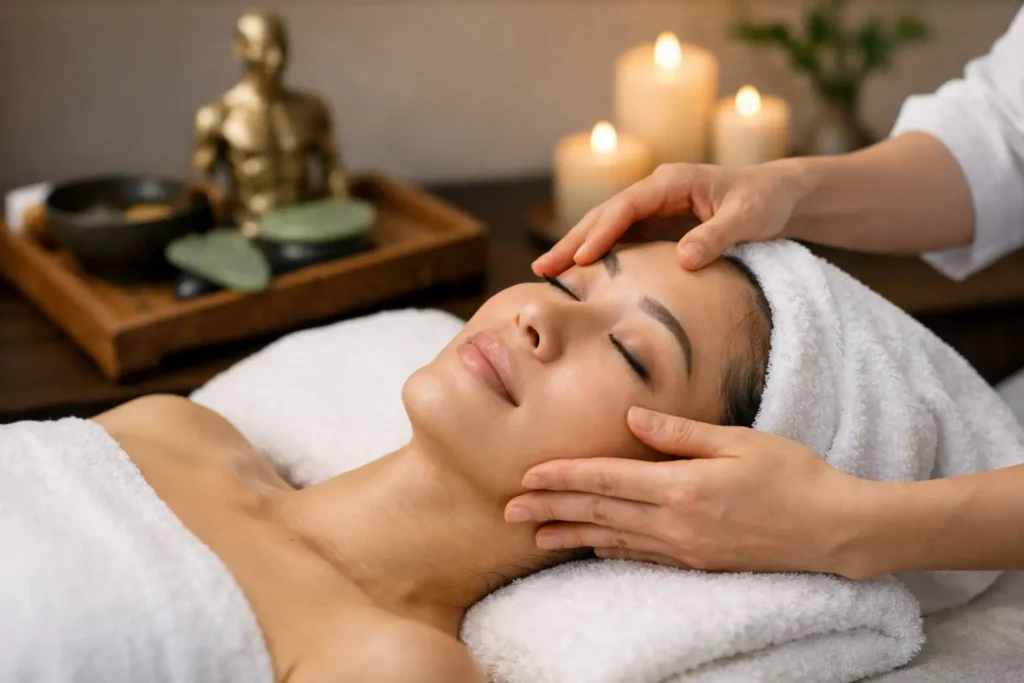
A face can look tired even after a full night’s sleep. Jaw clenching, screen time, stress, sinus pressure, and tight neck muscles can all contribute to a puffy, drawn, or less rested appearance. TCM Face Lifting Massage is a hands-on treatment that approaches these concerns through the relationship between facial muscles, circulation, meridians, and whole-body balance.
Rather than attempting to force dramatic changes, this treatment uses measured, personalized techniques to release areas of tension and encourage a more relaxed, refreshed appearance. It may suit people who prefer a natural aesthetic approach, especially when facial tightness, puffiness, or stress-related tension is part of the picture.
What Is TCM Face Lifting Massage?
TCM face lifting massage is a Traditional Chinese Medicine-inspired facial treatment that combines therapeutic massage with an understanding of acupressure points, facial muscle tension, and meridian pathways. Depending on an individual assessment, a practitioner may use gentle lifting strokes, kneading, acupressure, and work around the scalp, jaw, neck, and shoulders.
The word “lifting” can create unrealistic expectations. A massage cannot replace surgery, injectable treatments, or medical care for skin conditions. Its role is more supportive: helping relax overworked muscles, easing fluid congestion, and promoting a temporarily brighter, more rested look through careful manual therapy.
In TCM, the face is not treated in isolation. Facial dullness, puffiness, tension, and uneven comfort may be considered alongside sleep quality, stress, digestion, menstrual health, activity levels, and the overall pattern a licensed TCM physician identifies. This is why a proper consultation matters more than following a standard facial routine.
Why Facial Tension Can Change How You Look and Feel
The face contains many small muscles that work constantly. We speak, chew, squint, frown, smile, and hold expressions without noticing. When the masseter muscles around the jaw remain tight, for example, the lower face may feel heavy or tired. Tension around the forehead and temples can also contribute to discomfort, especially for people who spend long hours at a computer.
Fluid retention may be another factor. A salty meal, poor sleep, allergies, hormonal shifts, prolonged sitting, and reduced movement can all leave the face looking puffier than usual. Gentle massage may support temporary drainage and comfort, but persistent or sudden swelling needs medical assessment rather than cosmetic treatment.
Neck and shoulder tension also deserves attention. A forward-head posture can place added strain on the neck, jaw, and scalp. For this reason, an experienced therapist may not focus only on the cheeks or forehead. Addressing connected areas can make facial work feel more comfortable and may support a more natural result.
What Happens During a Professional Session
A responsible facial treatment begins with questions, not pressure. Your practitioner should ask about your main concerns, current health conditions, medications, recent procedures, allergies, skin sensitivity, and any history of jaw pain, migraines, or facial nerve concerns. They should also check whether there are reasons to postpone or modify treatment.
During the session, you can expect a calm, hygienic setting and a treatment plan adjusted to your comfort level. The practitioner may begin with the neck, shoulders, upper back, or scalp before working on the face. This can help reduce the pulling sensation that sometimes occurs when facial muscles are addressed without releasing surrounding tension.
Facial techniques are generally controlled rather than aggressive. Pressure should not feel sharply painful. Some acupressure points may feel tender, particularly around the jawline, temples, brows, or cheekbones, but you should be able to communicate comfortably throughout the session. Tell the therapist immediately if you experience pain, dizziness, numbness, burning, or discomfort that feels unusual.
A session may include Bojin-style tools or other meridian-based techniques when clinically appropriate. These should never be treated as a one-size-fits-all add-on. Tool use, pressure, and treatment areas should be selected with care, particularly for sensitive skin, active inflammation, or clients who bruise easily.
Potential Benefits and Realistic Expectations
People commonly seek this treatment to feel less tense and to look more rested before an event, after a demanding work period, or as part of a regular wellness routine. The potential benefits may include a temporary reduction in facial puffiness, improved comfort around tight jaw and temple muscles, relaxation, and a fresher appearance after the session.
Results vary. Someone whose main concern is morning puffiness may notice a change sooner than someone hoping to improve established skin laxity. Similarly, a client with pronounced jaw clenching may require a broader plan involving facial massage, neck and shoulder treatment, posture awareness, stress management, or referral for dental assessment if teeth grinding is significant.
Consistency can be helpful, but more frequent treatment is not automatically better. The appropriate schedule depends on skin sensitivity, lifestyle, goals, and whether there are underlying health concerns. A licensed practitioner can recommend a measured plan instead of selling a fixed package that may not suit your needs.
When to Delay Treatment or Seek Medical Advice
Natural aesthetic treatments still require sensible screening. Facial massage may need to be delayed if you have an active skin infection, open wound, severe acne flare, sunburn, unexplained rash, recent facial surgery, or a recent injectable or thread procedure. The timing after cosmetic procedures should be confirmed with the clinician who performed them.
It is also wise to seek medical advice promptly for sudden facial drooping, new numbness, severe headache, significant one-sided swelling, difficulty speaking, vision changes, or chest symptoms. These are not concerns to manage with massage.
If you take blood-thinning medication, have a bleeding disorder, are prone to bruising, have rosacea or highly reactive skin, or are receiving treatment for a medical condition, share this information before booking. Treatment can often be modified, but clear disclosure supports safer care.
How to Support the Effects Between Appointments
The most useful home care is usually simple. Stay hydrated, prioritize regular sleep where possible, and avoid pressing or scraping the face aggressively in pursuit of faster results. Harsh tools and excessive pressure can irritate skin, trigger bruising, or worsen inflammation.
For jaw tension, notice when your teeth are touching during the day. At rest, the tongue can sit lightly against the roof of the mouth while the teeth remain slightly apart. Short breaks from screen work, gentle neck movement, and warm compresses may also be more helpful than repeatedly massaging one sore spot.
A basic skincare routine that suits your skin type matters as well. Massage cannot compensate for irritation caused by unsuitable products, inadequate sun protection, or repeated picking at the skin. If you have persistent acne, pigmentation, eczema, or rosacea, consult an appropriate healthcare professional for an individualized plan.
Choosing a Safe TCM Facial Treatment
The quality of assessment and practitioner training matters as much as the technique itself. Look for a clinic that explains what the treatment can and cannot do, maintains professional hygiene, and welcomes questions about credentials, pressure, and aftercare. You should not feel rushed into a service or pressured to accept claims that sound too good to be true.
At Y TCM Clinic, facial and meridian-based treatments are considered within a broader picture of muscle tension, lifestyle, and individual wellness needs. A thorough assessment helps determine whether a gentle facial approach is suitable and whether related care for the neck, shoulders, stress, or body balance may better support your goals.
Is TCM face lifting massage painful?
It should not be painful. Some areas may feel tender when muscles are tight, but the practitioner should adjust pressure promptly. Bruising, intense soreness, and skin irritation are not signs that a treatment has worked better.
How long do results last?
A refreshed or less puffy appearance may be noticeable after a session, but the duration varies with sleep, stress, hydration, diet, hormones, and the source of the concern. Regular care may support ongoing comfort, while structural changes and medical skin concerns require realistic expectations and, where needed, appropriate medical guidance.
A thoughtful treatment should leave you feeling cared for, not overworked. If facial tension, puffiness, or jaw discomfort is affecting how you feel day to day, a consultation can clarify whether TCM facial massage is an appropriate part of your personal care plan.